The Miss Universe Organization was meant to enter a new era in 2024, but instead its leadership has erupted into an international spectacle. Raúl Rocha Cantú, the Mexican businessman who serves as president of the Miss Universe Organization, is locked in a very public power struggle with Nawat Itsaragrisil, the Thai entrepreneur who owns the Thailand franchise and is hosting this year’s competition. Their dispute, rooted in opposing visions of what Miss Universe should become, now threatens to overshadow the Nov. 21 coronation and derail attempts to revive one of the world’s most recognizable pageants.
Rocha advocates for a traditional Latin American style of pageantry, one built on scripted glamour, powerful national fandoms and the idea of the contest as a platform for women’s empowerment. Nawat, by contrast, wants to transform Miss Universe into a turbocharged influencer economy where contestants market products, push social engagement and drive online commerce, particularly through TikTok. His approach reflects the changing digital landscape in Thailand, where social commerce already accounts for a significant share of retail and where viral videos translate directly into revenue.
Their conflict boiled over in Bangkok after Nawat pressured contestants to boost their social media engagement by posting promotional content, with a livestreamed dinner promised for the top performers. The Miss Universe Organization responded with a formal warning stating that such practices violated the pageant’s values. Matters escalated further when Nawat berated Miss Universe Mexico, Fatima Bosch, during a pre-pageant event for failing to post his required content. The confrontation prompted a walkout by several contestants and led Rocha to issue a video statement accusing Nawat of malicious behavior, demanding he “stop,” and declaring his intent to limit Nawat’s role in the event.
Instead of backing down, Nawat launched into an emotional press conference, tearfully defending his $2 million investment and insisting that the pageant must embrace new commercial strategies to survive. He called beauty contests a “sunset industry” and argued that clinging to old formats would only doom them in the era of algorithms and short attention spans.
Their feud comes at a defining moment for Miss Universe, which has spent decades mirroring global culture. Born in 1952 as a swimsuit promotion, the pageant evolved into a Cold War cultural weapon, later becoming a massive international phenomenon during its broadcast golden age. Under Donald Trump’s ownership from 1996 to 2015, it fused nationalism, entertainment and celebrity spectacle. But as Western audiences turned away, viewing pageants as outdated or objectifying, ratings collapsed and the brand lost ground—except in parts of Asia and Latin America where fandom remains fierce.
Anne Jakrajutatip’s 2022 acquisition of Miss Universe for $20 million aimed to modernize the franchise with inclusivity initiatives and aggressive consumer-brand expansion. Her sale of half the organization to Rocha and Nawat’s purchase of the Thailand franchise this year set the stage for a volatile power triangle now playing out in real time. While Nawat’s social-commerce-driven model thrives locally, Rocha’s more traditional, televised format continues to succeed in Latin America. Yet analysts say neither strategy alone can rescue the global brand amid shrinking viewership and rising cultural polarization.
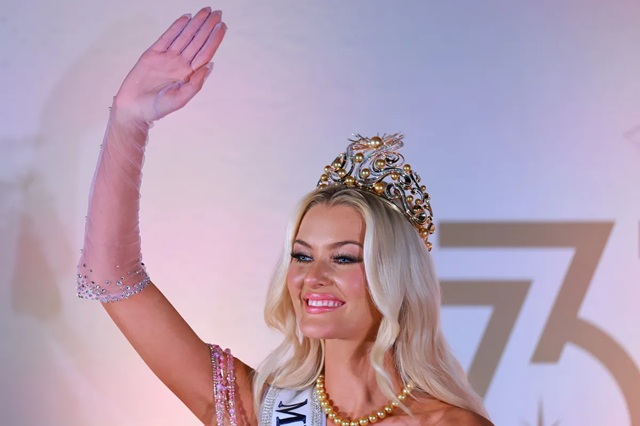
Fans around the world are watching this feud with both fascination and concern, seeing it as a symbolic crisis for an aging institution unsure of its identity. The tension between modern digital spectacle and old-school glamour reflects broader cultural debates about authenticity, empowerment and the meaning of beauty in a hyper-connected world. Even recent controversies—such as Donald Trump Jr. and Elon Musk reacting online to Denmark’s Victoria Theilvig becoming the first blonde Miss Universe in 20 years—underscore the pageant’s ongoing struggle to navigate shifting political and social landscapes.
Despite the turmoil, observers say Miss Universe has always adapted to the times, reflecting the world’s changing values. Yet this year’s drama reveals just how fragile its future may be. Whether it emerges reinvented or diminished now depends on whether its leaders can stop fighting long enough to agree on what Miss Universe should be in the decades ahead.