Morocco is entering a more assertive phase of its foreign policy, buoyed by international backing that has strengthened Rabat’s confidence and encouraged it to revisit questions of territorial sovereignty beyond the Western Sahara. At the centre of that shift are the country’s relationship with the United States under Donald Trump, its growing ties with Israel and the renewed sensitivity surrounding the Spanish territories of Ceuta and Melilla.
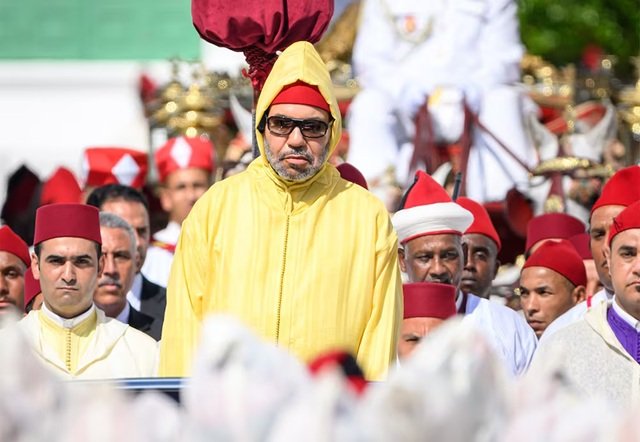
The crisis in Ceuta has made one element of Morocco’s current position particularly clear: Rabat has acted with the confidence that comes from knowing it has powerful international support. That is the central argument of an analysis published by El País, which describes King Mohammed VI as increasingly emboldened by the backing of Trump and Israel.
The development cannot be separated from a decision made in Washington in 2020. Donald Trump recognised Moroccan sovereignty over Western Sahara, a move that represented a major diplomatic gain for Rabat. According to El País, that recognition has given Morocco greater freedom to expand its foreign policy and has helped revive the question of Moroccan sovereignty over Ceuta and Melilla.
For decades, the Western Sahara dispute has been at the heart of Morocco’s external relations. The American recognition of Morocco’s sovereignty over the territory changed the diplomatic environment surrounding that dispute and strengthened Rabat’s position internationally.
The consequences have extended beyond the immediate question of Western Sahara. Morocco has increasingly used the support it has secured from major international partners to reinforce its wider diplomatic position. The result is a country more willing to pursue its interests with confidence, including on questions that directly affect its relationship with Spain.
Ceuta and Melilla occupy a particularly sensitive place in that relationship. The two Spanish territories on the North African coast have long been viewed by Morocco as part of its territorial claims. The renewed attention surrounding their sovereignty comes at a moment when Rabat’s broader international position has become stronger.
The significance of the change lies not simply in the language surrounding the territories, but in the political circumstances in which that language is being revived. Morocco now operates with the knowledge that its position on Western Sahara has received explicit backing from the United States. That has altered the calculations surrounding its foreign policy.
The role of Israel is also becoming increasingly important. Morocco’s relationship with Israel has developed alongside its strengthened ties with Washington, creating another important source of international support. The combination has contributed to a wider diplomatic and strategic alignment that has increased Rabat’s room for manoeuvre.
For Morocco, the issue is therefore no longer confined to a single territorial dispute. Western Sahara remains central, but the confidence generated by international backing has opened space for the country to raise other questions of sovereignty and territorial interest.
The crisis in Ceuta has provided the clearest recent demonstration of this more confident approach. It has brought the relationship between Morocco and Spain under renewed pressure while placing the question of Ceuta directly into a broader international discussion about borders, sovereignty and the changing balance of influence in North Africa.
The shift also illustrates how decisions taken by major powers can have consequences far beyond the original dispute. Trump’s 2020 recognition was centred on Western Sahara, but its political effect has extended into Morocco’s wider foreign policy. By strengthening Rabat’s diplomatic position, it has encouraged a broader assertion of Moroccan interests.
That does not necessarily mean that Morocco’s position on Ceuta and Melilla has fundamentally changed. Rather, the current circumstances have provided a more favourable environment in which those claims can once again become part of the political conversation.
The distinction is important. Morocco’s growing confidence does not by itself establish a new territorial strategy towards the Spanish enclaves. But it does demonstrate how the country’s strengthened international position has changed the context in which those questions are discussed.
For Spain, the development carries obvious sensitivity. Ceuta and Melilla are not simply historical or diplomatic questions; they are territories whose position places them directly within the complex relationship between Spain, Morocco and the wider Mediterranean region.
The wider significance extends beyond the two territories. Morocco’s ability to cultivate support from major powers demonstrates the growing importance of alliances in determining how territorial disputes evolve. Washington’s decision in 2020 provided Rabat with a significant diplomatic advantage over Western Sahara, while its relationship with Israel has added another dimension to the country’s international position.
The result is a Morocco that appears increasingly willing to test the boundaries of its foreign-policy ambitions.
As El País has reported, the crisis in Ceuta has made that confidence visible. The combination of American backing, closer ties with Israel and the unresolved Western Sahara dispute has given King Mohammed VI greater room to pursue Morocco’s interests on the international stage.
The immediate question is therefore not whether Morocco has suddenly transformed its territorial policy, but how far its new diplomatic confidence will carry it.
Western Sahara remains the central issue. Yet Ceuta and Melilla have returned to the conversation at a moment when Rabat feels stronger, its international partnerships have deepened and the balance of diplomatic support has shifted in its favour.
For Spain and its European partners, that development presents a sensitive new reality: territorial questions that once appeared confined to the margins of bilateral relations can quickly acquire wider international significance when backed by changing alliances.
Morocco’s growing confidence may therefore prove to be as important as any individual territorial claim. The crisis in Ceuta has shown that Rabat believes its international position has strengthened. The question now is how that confidence will shape its next moves.