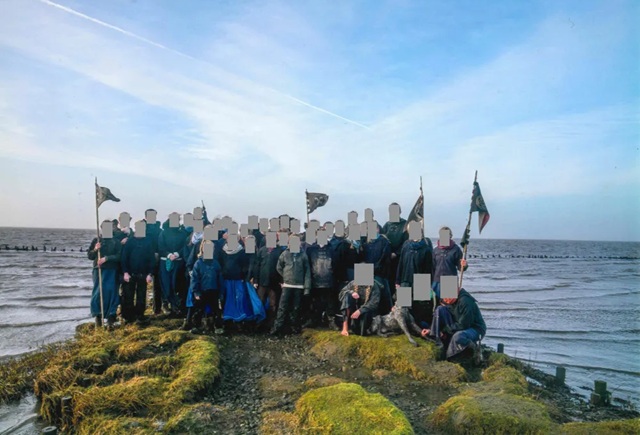
A shadowy youth organization known as Jungadler is under investigation by Berlin’s public prosecutor over suspicions that it may be continuing the banned far-right legacy of the Heimattreue Deutsche Jugend (HDJ) — a neo-Nazi group outlawed in 2009 for indoctrinating children in National Socialist ideology.
The revelations come from an in-depth investigation published by the German weekly newspaper DIE ZEIT in cooperation with the public broadcast program ARD Kontraste. According to the report, Jungadler has been operating in secrecy, using language, symbols, and training practices strongly reminiscent of the Hitler Youth and its post-war successor, the HDJ.
Disturbing Parallels with Nazi-Era Practices
One of the most alarming findings includes a document inviting youth members to a so-called “Führerschule” (Leader School), a term directly borrowed from the Nazi era. The invitation lists required gear like a compass, hatchet, and waterproof poncho, and tasks participants with listing and defending their top ten figures in German history — at any time of day or night. It closes with a stark message in Gothic script: “Some things can be experienced hard or soft — we experience them hard.”
A Network of Families with Far-Right Roots
The group appears to be closely linked to individuals and families with ties to the HDJ. Among them is Laurens Nothdurft, a former HDJ leader and now AfD (Alternative für Deutschland) member and local politician in Saxony-Anhalt. According to documents obtained by ZEIT, one of Nothdurft’s children was invited to the Jungadler Führerschule and is seen in photos from training camps.
Despite these connections, a purported Jungadler leader denied any political motives in an interview with ZEIT, claiming the group is unpolitical and inspired by the bündische Jugend — an apolitical scouting tradition. Nevertheless, internal materials include references to Nazi authors and propagandists like Dieter Vollmer and Hans-Ulrich Rudel, and even Holocaust denier Manfred Roeder.
National Reach and Coded Operations
Documents reviewed by ZEIT suggest that Jungadler has organized activities across Germany, from Rügen in the north to the Eifel region in the west, including summer camps, training sessions, and ideological education. A “Thing” — a term with Germanic-pagan and Nazi connotations — appears to function as a national assembly.
Though security agencies in a few states acknowledge awareness of the group, most authorities remain silent. Notably, Jungadler avoids any online presence, refrains from public recruitment, and emphasizes internal loyalty. A leadership manual advises members to be cooperative with police but tight-lipped about the organization.
Concerns of Continued Indoctrination
Dr. Gideon Botsch, a political scientist at the University of Potsdam and expert on far-right youth movements, reviewed the materials obtained by ZEIT. He described them as demonstrating a “dense network” of ideological references to the Nazi era. In Botsch’s view, the Jungadler appears to be fulfilling similar functions as the HDJ — blending outdoor adventure with ideological grooming, potentially preparing children for extremist beliefs and even violence.
Hidden, but Not Harmless?
While a student from Dresden claiming to be in Jungadler’s leadership insists the group is harmless and devoted to shaping free, independent youth, he also admits that many members come from HDJ families. Despite his attempts to portray Jungadler as an innocent cultural initiative, the organization’s secrecy, symbolism, and content raise deep concerns.
As Germany grapples with rising far-right sentiments and the growing influence of the AfD, the resurgence of groups like Jungadler — cloaked in tradition but steeped in extremism — poses a serious challenge to democratic oversight and the protection of children from ideological exploitation.