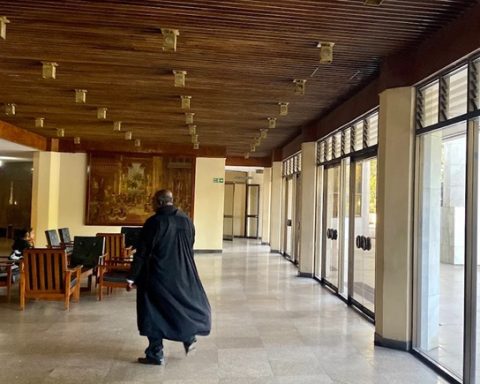

On a stifling morning in Singapore, I approached the formidable glass-and-steel structure housing the INTERPOL Innovation Centre, located within the INTERPOL Global Complex for Innovation. Despite the calm of its landscaped surroundings, the building stood as a sentinel of high-stakes security, safeguarding some of the most advanced criminal investigation technologies in the world. This was not just a research facility—it was a crucible where modern tools, global collaboration and centuries-old principles of justice coalesced in response to the rapidly shifting nature of crime.
As I moved through its secure corridors and laboratories, I was struck not only by the sheer technological sophistication but also by the genuine human commitment underlying every project. It is tempting to assume that the future of policing will be driven solely by machines—autonomous systems, facial recognition, forensic robotics and artificial intelligence—but the conversations I had inside the Innovation Centre pointed to a more nuanced reality. One where the tools of tomorrow are only as effective as the wisdom, training and ethical restraint applied in wielding them.
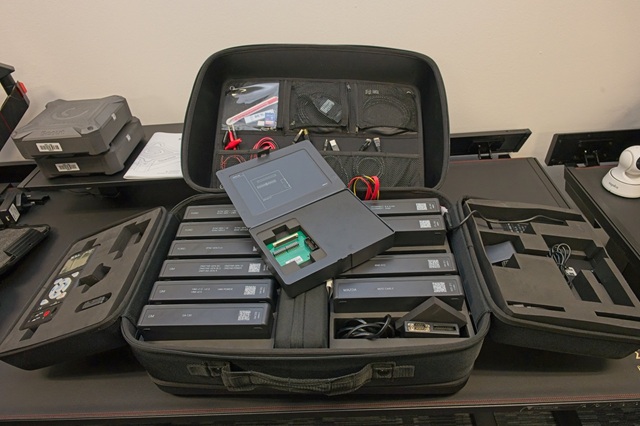
In one of the Centre’s inner offices, I met Fabio Bruno, Assistant Director Applied Innovation pro tempore. Having begun his policing career in Italy in 1999 and having worked extensively in organised crime investigations in Sicily, his journey embodied the convergence of old and new. As we spoke, he elaborated on the evolution of criminality and the increasing complexity brought on by digitisation. Traditional boundaries that once offered some measure of jurisdictional certainty have eroded. A crime can be initiated in one continent, executed in another, and monetised in a third—all within minutes. Fabio’s expertise in digital forensics, where vast volumes of encrypted or fragmented data must be retrieved, interpreted and preserved for legal scrutiny, forms a critical line of defence.
What remained most poignant in his words was not the enumeration of tools but the insistence on human preparedness. Constant training, acute awareness and a collective sense of responsibility, he said, are fundamental pillars of crime prevention. Without them, even the most advanced technologies amount to little more than sterile metal and code. He highlighted the real-world difficulties faced by police agencies globally—resource scarcity, language barriers and inconsistent access to modern technologies—which persistently hamper the equitable implementation of crime-fighting strategies. In his view, these are not peripheral concerns, but central challenges requiring coordinated international remedies.
The urgency of this coordination becomes even more apparent when considering the rising threat posed by unmanned aerial systems. Drones, once the domain of hobbyists and filmmakers, have now become tools of illicit surveillance, contraband delivery and even tactical disruption. Against this backdrop, INTERPOL’s Project Courageous emerged as a direct and forward-thinking response. Developed with support from the European Union, the project aims to craft a standardised methodology for testing and selecting counter-drone technologies that can be deployed in diverse operational environments—from border checkpoints and correctional facilities to critical infrastructure and urban no-fly zones.
During my visit, it was explained to me that trials were carried out in Belgium, Greece and Spain. These live validation exercises simulated specific threat scenarios in real-time and under controlled conditions, allowing a comparative evaluation of how effectively a system can detect, track and identify not just the drone but its pilot as well. The vision is to develop an internationally accepted test framework that will allow law enforcement agencies to make evidence-based decisions when investing in counter-UAS capabilities. The implications extend well beyond procurement. They represent a necessary step toward levelling the playing field between criminal misuse of drones and legitimate public security responses.
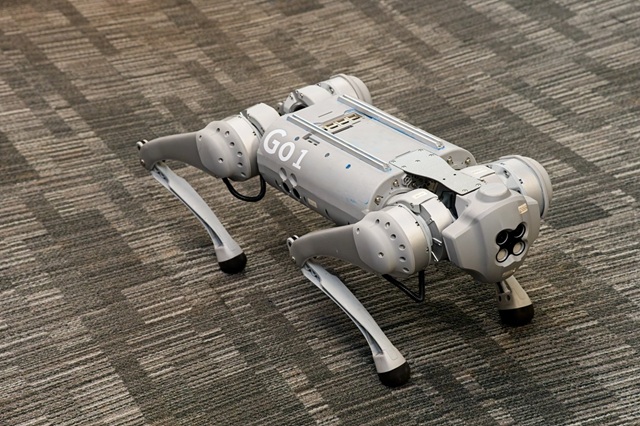
No discussion about the future of crime prevention can be complete without addressing the meteoric rise of artificial intelligence. AI is not a hypothetical concept in this environment—it is an operational tool already in use, supporting emergency call centres, facial recognition, risk profiling, and the identification of victims of exploitation. Yet the same technologies also carry risks: bias, opacity, misuse, and unintended consequences that could infringe on rights or perpetuate inequality.
To address these concerns, INTERPOL, together with the United Nations Interregional Crime and Justice Research Institute (UNICRI), has developed and published the Toolkit for Responsible AI Innovation in Law Enforcement. Released in June 2023 and funded by the European Union, this comprehensive resource seeks to guide law enforcement agencies at every stage of their AI journey—from concept and development to deployment and review. It includes seven core resources and a detailed user guide that together establish a framework grounded in policing ethics, human rights, and public trust.
What is particularly noteworthy about this initiative is its inclusivity. The Toolkit is not merely for technologists or data analysts, but also intended to encourage participation from civil society, legal practitioners, policy-makers and academic institutions. It calls for a shared dialogue, recognising that responsible AI cannot flourish in isolation but must be subjected to continuous scrutiny from diverse voices.
Supporting this effort is the INTERPOL Responsible AI Lab (I-RAIL), which is working to disseminate awareness, facilitate specialised training, and initiate pilot projects with INTERPOL’s member countries. The lab’s function is both practical and philosophical. It seeks to demystify AI for police officers on the ground, while also cultivating a mindset in which innovation is synonymous not just with progress, but with accountability.

This philosophy was echoed in my conversation with Huanzhang Fu, Assistant Director Strategic Innovation and one of the Centre’s leading voices on AI innovation. With his background in the Chinese police service and his role in shaping the Innovation Centre’s administrative foundations, Huanzhang embodies the global perspective that the Centre fosters. He spoke of the immense complexity facing modern law enforcement—from the proliferation of AI-enabled fraud to the growing sophistication of cross-border cybercrime. Huanzhang illustrated how digital threats now carry consequences that extend far beyond the virtual world. In his view, the key to confronting these challenges is not only technical literacy but also cross-cultural understanding and continuous education. Equipping officers with the necessary knowledge, he said, is not an option but a necessity.
What emerged from these dialogues and demonstrations was a picture of law enforcement that is neither blindly technocratic nor mired in nostalgia. Rather, it is one that understands the necessity of duality—of coupling the most advanced tools available with the unquantifiable power of institutional knowledge, lived experience and human collaboration. The value of traditional skills—interrogation, negotiation, cultural fluency and local intelligence networks—remains not only intact but vital. They serve as the moral compass guiding the use of technology, ensuring that what can be done is always tempered by what should be done.

Crime prevention in the 21st century is not a solitary pursuit but a shared global responsibility. It demands not only innovation in algorithms and sensors, but in trust, solidarity, and justice itself. The Innovation Centre stands as both a symbol and a reality of this convergence—a place where software engineers and field officers, forensic analysts and diplomats, policy-makers and community leaders come together in pursuit of a safer, fairer world.
In leaving the Centre, I carried with me not only admiration for its technological prowess but a deeper respect for the humility and integrity with which its work is conducted. In an era where crime defies borders and technology redefines both threat and opportunity, the true strength of global policing lies not in dominance, but in shared vigilance. INTERPOL’s Innovation Centre is not just preparing for the future—it is inviting the world to shape it together.