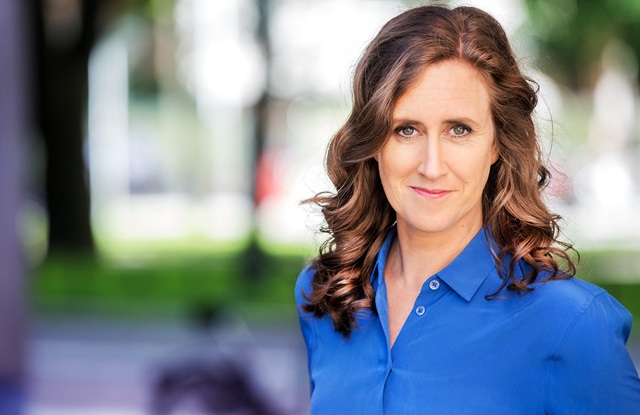
The new head of the Nobel Foundation has issued a stark warning about the increasing threat to scientific learning and free inquiry in an age of rising disinformation and political interference. Hanna Stjärne, who took on the role of executive director in January, emphasized that the prestigious Nobel Prizes must “stand up” for the values of scientific integrity and the freedom to pursue knowledge without fear of suppression.
In an interview with the Financial Times, Stjärne expressed concern over the growing pressures faced by scientific institutions, particularly in the United States. While she refrained from directly criticizing President Donald Trump’s administration, her remarks came amid a broader context of cuts to research funding and restrictions on certain areas of inquiry, including climate change and vaccine research. Stjärne stressed that in such turbulent times, the Nobel Foundation’s mission to protect and promote scientific knowledge was more critical than ever. “Our mission will always be to stand up for knowledge, and to stand up for the profound work that scientists do,” she stated.
Stjärne’s comments come as the Nobel Prizes, founded by Alfred Nobel over 120 years ago, are increasingly seen as reflecting broader political and societal trends. The potential for controversy is high, especially as the Trump administration’s approach to science and research has sparked protests from movements like “Stand Up for Science,” which opposes cuts to science funding and curbs on research in fields like diversity and climate science.
Notably, the Nobel Peace Prize has become a point of contention for President Trump, who has publicly voiced his frustration at not being awarded the honor. Despite this, Stjärne remains focused on the broader goal of safeguarding the integrity of the Nobel Prizes. “There are so many people that want the Nobel Prizes,” she said, noting the daily stream of suggestions she receives.
Stjärne, the first female executive director of the Nobel Foundation, also acknowledged the ongoing criticism regarding the lack of diversity among science laureates. In recent years, all of the Nobel science prizes were awarded to men, and the proportion of female laureates remains low. She emphasized that the Nobel committees are aware of these concerns and are actively discussing ways to improve diversity in future awards.
As the Nobel Prizes continue to be awarded, the focus on scientific integrity and the protection of free inquiry will likely become even more central, especially as the world grapples with the challenges posed by misinformation and political influence. The Nobel Foundation, under Stjärne’s leadership, appears committed to upholding its mission to promote knowledge and intellectual freedom in an increasingly complex and polarized world.