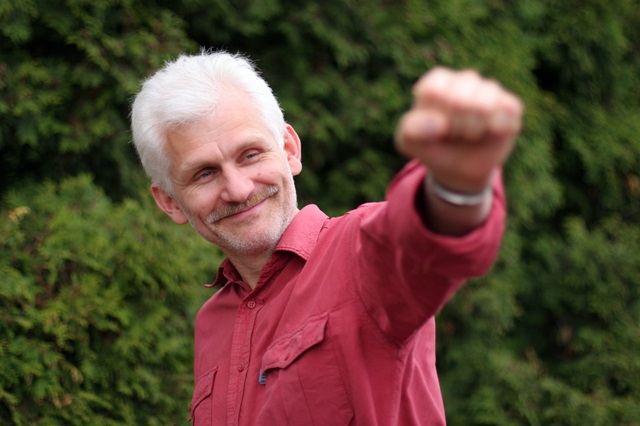
Ales Bialiatski, the Nobel Peace Prize-winning activist and head of the Viasna human rights centre, has given a harrowing account of life under Alexander Lukashenko’s authoritarian rule. Speaking to Times UK from his new home in Norway, Bialiatski emphasized that international sanctions were crucial to his survival and the release of dozens of other political prisoners. “Without political and economic sanctions, we would have remained in prison,” he said. “If you survive, it means you were lucky.” His words underscore the deadly conditions faced by dissidents in Belarus, where the regime systematically crushes opposition and civil society.
Bialiatski’s most recent imprisonment was particularly brutal. After being sentenced to ten years for “smuggling cash” and supporting anti-government protests, he was transferred to a notorious hard-labor facility in Horki, likened by some to a Second World War-era concentration camp. There, he endured 38 days in isolation in a freezing cell, waking each morning shivering, and performing exhausting labor making pallets and crates for the military. Prisoners received minimal food, often just watery soup or gruel, and were systematically denied medical care. Bialiatski described watching fellow inmates die after being refused treatment, and recalled that fruit and vegetables were almost non-existent; in 2025, the only fresh produce he ate was a single apple.
He also described the psychological torment of near-complete isolation. News from the outside world arrived only through Russian state television or word of mouth from other prisoners. Letters from his wife and correspondence from international figures, including former UK Foreign Secretary David Lammy, were intercepted or withheld. Manuscripts he had written during imprisonment were confiscated upon his release. “You cannot express yourself, cannot influence anything, and you feel completely powerless,” he said.
Bialiatski stressed that Lukashenko’s regime systematically eradicates political opposition, independent journalism, and cultural initiatives. “The regime does not have any political opponents. It does not have any democratic journalists. It has crushed cultural and youth initiatives,” he said. He accused the president of destroying Belarusian national identity through decades of russification and warned that the country continues to serve as a launchpad for Russian military aggression.
The activist’s release in December was part of a U.S.-brokered deal freeing 123 political prisoners, a rare concession made possible by mounting international sanctions and economic pressure. Bialiatski highlighted that the regime only sought compromise after a sharp deterioration in Belarus’s economic situation. He cautioned that any relaxation of sanctions by the UK or Europe could embolden Lukashenko and leave dissidents vulnerable once again.
Bialiatski’s activism stretches back to the final years of the Soviet Union, when he published suppressed works of Belarusian poet Yanka Kupala and later founded the Viasna human rights centre, which has continuously opposed authoritarian rule for over 30 years. During the 2020 election crisis, he joined opposition efforts alongside Sviatlana Tsikhanouskaya, staying in Belarus when she was forced into exile. Since then, over 1,400 political prisoners have been detained, with only about 500 released under international pressure.
Despite the brutality he endured, Bialiatski remains convinced that Lukashenko’s regime is unsustainable. Drawing parallels with Spain after Franco and Czechoslovakia during the Velvet Revolution of 1989, he said, “There are many different options. But I am convinced that in Belarus these changes are inevitable, because today this junta that holds power has no support from the people.”
Bialiatski’s testimony paints a vivid picture of life under one of Europe’s last dictatorships, emphasizing both the physical and psychological dangers faced by political prisoners and the vital role of sustained international pressure. His warning to the world is clear: abandoning sanctions risks the lives of countless activists still behind bars. Times UK reporting underscores the urgency of global attention to Belarusian human rights abuses.