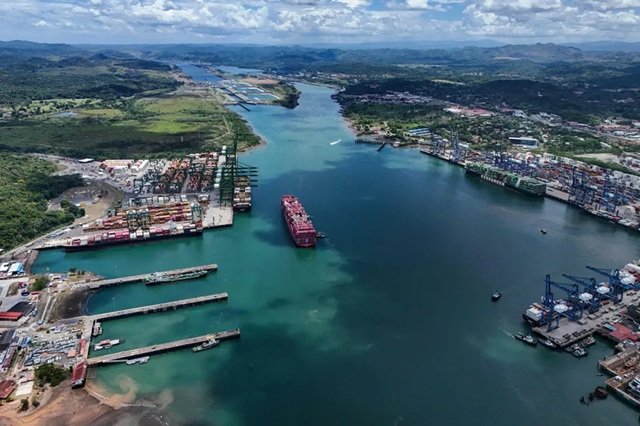
The Panama Canal Authority (ACP) will increase the number of vessels permitted to transit the waterway each day from 32 to 33 starting October 15, 2026, following improved rainfall in the canal watershed and the restoration of the maximum authorised draft for Neopanamax vessels to 49 feet.
The increase comes as the ACP raises daily capacity at the Neopanamax locks from nine to 10 transits. The Panamax locks will continue to handle 23 vessels a day, three fewer than their usual average of 26. The authority said the decision was based on current and projected levels of Gatun Lake, the main water source for the canal’s lock system alongside Alhajuela Lake, as well as near-average rainfall and water-saving measures.
The ACP restored the maximum authorised draft for Neopanamax vessels to 14.94 metres (49 feet) on Monday, with the limit remaining in force until further notice. A vessel’s draft is the depth of its submerged portion and affects the amount of cargo it can carry. The restored limit remains below the canal’s maximum operational draft of 50 feet (15.24 metres).
The latest adjustment reverses part of a series of restrictions imposed during 2026 as the canal dealt with a water deficit associated with the El Niño phenomenon. In July, the maximum draft was reduced from 50 feet to 49.5 feet. It was lowered to 49 feet on July 24 and to 48.5 feet on August 15. During September and October, it remained at 48 feet, with a scheduled reduction to 47.5 feet. On September 3, daily Neopanamax transits were also reduced from 10 to nine.
Despite the recent improvement, the ACP warned that the water deficit in the canal watershed persists. The authority said the Transit Reservation System, known as the “Booking System”, therefore remains the only means of guaranteeing a transit date.
As of noon on Monday, 53 vessels had reservations to cross the canal, while one vessel did not have a reservation. The total number of ships waiting to transit stood at 63.
The canal’s capacity is closely tied to water availability because its lock system depends on freshwater reserves. The ACP said its latest decision reflected both current and projected levels in Gatun Lake, together with rainfall conditions and measures designed to conserve water.
The waterway has operated since 1914, linking the Atlantic and Pacific Oceans. According to the source, it handles between 3% and 5% of global maritime trade and connects 180 maritime routes and 1,920 ports in 170 countries.
The United States, China and Japan are the canal’s primary customers. Among its busiest routes are those linking the US East Coast with Asia and the west coast of South America, as well as routes between Europe and the west coast of South America.
The increase in October will therefore restore one daily transit while leaving other restrictions in place. The Panamax limit will remain at 23 vessels a day, and the 49-foot draft restriction for Neopanamax ships will continue until the ACP announces otherwise.