Ever since India attained independence, the countrymen have been remembering the great national leaders and freedom fighters on their birth anniversaries, particularly Mahatma Gandhi and Jawaharlal Nehru. Continuing this trend, Prime Minister Modi, after assuming office as Prime Minister of India in 2014, has been remembering freedom fighters on their birth anniversaries, particularly Sardar Vallabhbhai Patel and Netaji Subhash Chandra Bose.
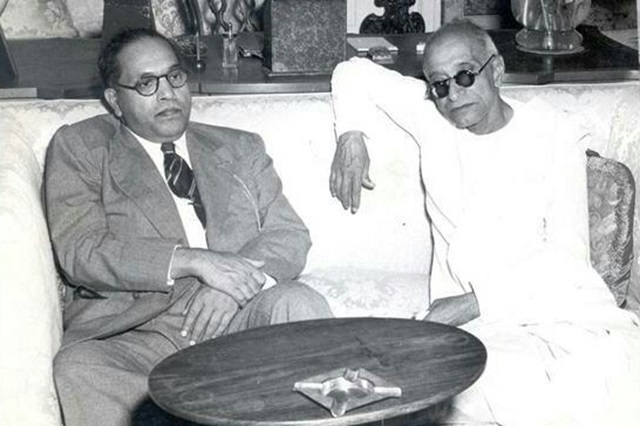
While the country has done well to remember and honour these leaders, there are many other leaders who fought for India’s freedom and made personal sacrifices, suffering jail terms. Among such leaders, Rajaji (C. Rajagopalachari) was one.
Rajaji was a multifaceted personality who involved himself not only in fighting for India’s freedom but also in efforts to restore probity in public life and build democratic traditions in India after independence. Rajaji wrote and spoke extensively on Indian philosophical thought, the promotion of ethical standards in public life, and on social issues such as prohibition, with characteristic courage of conviction.
Of the many thoughts and ideas that Rajaji advocated, the most striking was his advocacy of promoting free enterprise to accelerate the industrial and economic growth of India. Rajaji expressed himself very strongly against the government getting involved in setting up industrial and other projects, except in selected areas. He pointed out with characteristic eloquence that “government is to govern and not to do business.”
After India attained independence, in the name of promoting socialism and equality in society, public sector enterprises were largely encouraged, and the focus on the private sector was certainly much less. Several restrictions were placed to discourage the private sector, by imposing what Rajaji called the “permit–licence–quota raj.” Massive public sector projects to produce steel, fertilizer and other products were set up, a few of which incurred losses and others operating at marginal profit levels.
Rajaji’s view was that self-interest and setting personal goals to excel in specific pursuits are natural human instincts and should not be considered wrong or self-centred in any way. He also said that profit-making is a legitimate objective, so long as the methodology adopted for earning profit is fair, ethical, and reflects a healthy competitive spirit.
Rajaji placed great trust in the potential of individuals and the private sector to grow rapidly and, in the process, take India to a high level of growth and development. He repeatedly argued that without enabling the private sector to operate with responsible freedom, it would not be possible for India to achieve a major leap forward in development.
His consistent view, which he stated until his last breath, was that economic and social inequality in India could be overcome only through massive investments and the setting up of projects, for which encouragement to the private sector is a prerequisite and vitally necessary.
After experimenting with socialistic concepts for several decades in independent India, it was found that the country’s economic growth was not in line with its needs. The governments gradually began realizing the importance of boosting private-sector investment as much as possible and giving it due place in contributing to national growth.
After becoming Prime Minister in 2014, Prime Minister Modi has largely focused on encouraging private initiatives and supporting private-sector growth wherever possible.
Rajaji was not against the public-sector concept as such, but he insisted that the growth of the public sector should not be promoted at the cost of the private sector. This is precisely the policy and approach that the Prime Minister has been following for the last eleven years. For example, the Prime Minister has announced that the government would open the nuclear sector to private players. Such an approach is bringing positive results, as seen in India emerging as the world’s fourth-largest economy.
Prime Minister Modi’s recognition of the importance of individuals and the private sector is clearly evident from his efforts to reform the mindset of citizens in a progressive direction by promoting Yoga culture, the Clean India campaign, the Start-up India programme, the Atmanirbhar (self-reliant) scheme, and several others.
Rajaji’s view on the potential of individuals and the private sector to achieve quick progress, expressed several decades ago, shows his foresight. In short, it can be said that Rajaji was the champion of free enterprise in India.
Rajaji’s contribution to promoting the concept of free enterprise in India must be recognized and remembered by Prime Minister Modi.
Rajaji’s birthday is on 10 December and his death anniversary is on 25 December. Obviously, December is the right time to remember Rajaji with gratitude and recognize his contribution to the national thought process.