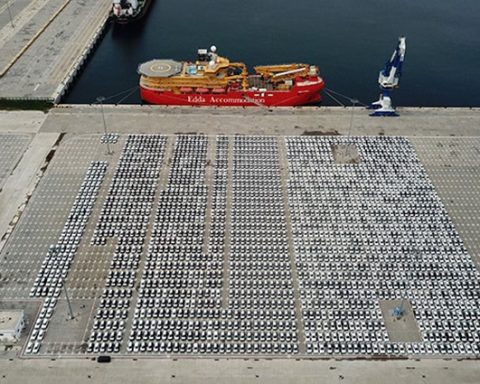
Shipowners have placed record orders for container vessels, driven by strong profits and signaling a potential shift in the global shipping landscape. According to a report from the Financial Times, the total capacity of container ships on order reached an all-time high of 8.4 million 20-foot containers in November, surpassing the previous record set during the disruption of the Covid-19 pandemic. This surge in orders comes despite an uncertain outlook for global trade, prompting concerns about overcapacity in the container shipping sector.
Jonathan Roach, a container market analyst at Braemar, noted that while shipowners have the funds to invest in fleet expansion, the risk of overcapacity looms large, especially in a volatile global economy. The increase in orders follows a surge in profits driven by factors such as attacks by the Houthi militant group on vessels in the Red Sea, which disrupted shipping routes and drove up costs. However, with the future of such disruptions uncertain, experts warn that the industry’s current trajectory could lead to an excess of vessels and a sharp downturn in earnings.
The world’s largest shipping company, Mediterranean Shipping Company (MSC), has led the charge with 107 container vessels on order. Close behind is CMA-CGM with 103 vessels, signaling a trend among the largest players in the industry to stock up on ships while profits remain high. However, experts caution that if the Red Sea disruptions cease or global protectionism intensifies, as suggested by incoming US president Donald Trump’s stance on trade, the industry’s fortunes could quickly turn.
Peter Sand, chief analyst at shipping market tracker Xeneta, warned that the current spending spree may create significant overcapacity. If shipping lines return to the Red Sea routes, freight rates could plummet, exacerbating the situation. According to Bimco, container shipping supply is expected to grow by 46% by 2026, while demand is forecast to increase by only 22%, leading to a potential imbalance.
Furthermore, the upcoming implementation of the Hong Kong Convention in June, which imposes stricter environmental and labor standards on ship recycling, could slow down the removal of older vessels from the fleet, adding to the industry’s capacity challenges.
While some shipowners, like MSC, are expanding their fleets due to strategic decisions, such as ending alliances with competitors, others are concerned about the cumulative effect of widespread fleet expansion. Niels Rasmussen, head of shipping market analysis at BIMCO, pointed out that while individual decisions to order ships may make sense in the short term, the overall impact could be excessive.
Despite these concerns, some industry leaders remain optimistic. Maersk, which had initially braced for a significant loss in 2024, now projects a profit of up to $5.7 billion. Maersk’s chief ocean product officer, Johan Sigsgaard, acknowledged the volatility in global trade but remained confident that vessels would continue to avoid the Red Sea for the foreseeable future.