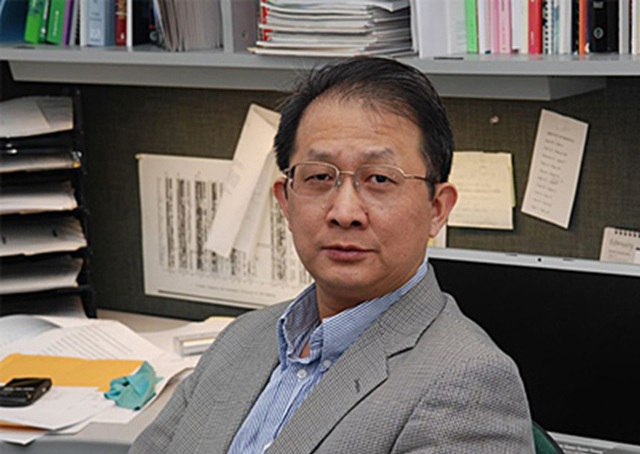
Distinguished liver cancer expert Feng Gensheng has returned to China after a 40-year scientific career in North America, stepping down from his position at the University of California, San Diego (UCSD) to lead the Cancer Research Institute at Shenzhen Bay Laboratory (SZBL).
Feng, promoted earlier this year to distinguished professor at UCSD, will now direct cancer research efforts at SZBL, a Guangdong province initiative designed to foster cutting-edge science and technology innovation. His move coincides with significant funding reductions to US public universities under the Trump administration, which have impacted research operations nationwide.
A native of Jiashan, Zhejiang province, Feng’s groundbreaking work centers on liver cancer recurrence and immunotherapy. Among his most notable achievements is the discovery of SHP2, an enzyme that regulates protein stability and enzyme activity, offering critical insights into cell regeneration and differentiation. His 1993 Science publication on SHP2 earned him international recognition in tumour immunology.
“I have fully joined SZBL and ended my role at UCSD as of July 31, 2025,” Feng confirmed. His departure reflects a broader trend of Chinese scientists returning home amid challenges facing US research institutions.
Feng’s academic journey began at Hangzhou University (now Zhejiang University) where elective courses in tumour biology and immunology sparked his passion for cancer research. He earned a master’s degree in immunology from the Second Military Medical University before completing a PhD in molecular biology at Indiana University Bloomington in 1990. Subsequent postdoctoral research in Toronto further shaped his expertise.
Over the past three decades, Feng held professorships at Indiana University School of Medicine, the Burnham Institute for Medical Research (now Sanford Burnham Prebys), and UCSD, where he became a tenured professor in 2009.
His recent investigations focus on the anticancer potential of classic oncogenic proteins and the discovery of new intercellular mediators to develop novel immunotherapy strategies for liver cancer beyond conventional immune checkpoint inhibitors.
As China invests heavily in expanding its biomedical research capabilities, Feng’s leadership at SZBL is expected to accelerate advances in liver cancer treatment and immunotherapy, contributing to the nation’s growing prominence in life sciences innovation.