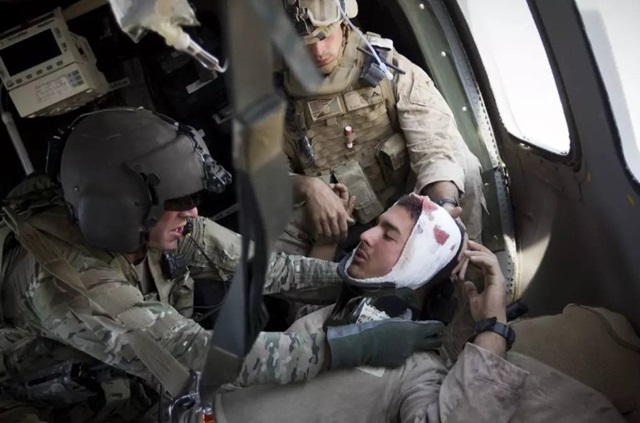
As many as 150 United States troops have been wounded so far in the ongoing conflict with Iran, according to two sources familiar with the matter who spoke to Reuters. The figure is significantly higher than previously disclosed publicly. The Pentagon did not immediately comment on the report, leaving questions about the scale of the injuries and the evolving situation on the ground.
Iran’s Islamic Revolutionary Guard Corps (IRGC) claims its air defense forces have shot down 104 drones since hostilities intensified. According to Iranian officials, the drones included models such as Hermes, Heron, Orbiter, and the MQ-9. Iranian authorities say one Hermes drone was captured intact and claim that roughly 95 percent of the drones were armed and intercepted before completing their missions. These claims have not been independently verified.
At the same time, U.S. strikes have reportedly targeted Iranian naval assets. Among the vessels allegedly hit were a Shahid Soleimani–class corvette, a submarine, and several smaller boats. The maritime dimension of the conflict is drawing increasing concern due to the strategic importance of regional shipping routes.
U.S. intelligence officials have also detected indications that Iran may be preparing to deploy naval mines in the shipping lanes of the Strait of Hormuz, according to reporting by CBS News. The mines would reportedly be placed using small boats capable of carrying two or three devices at a time. Estimates suggest Iran’s stockpile could range from 2,000 to 6,000 mines, raising fears that key global energy supply routes could be threatened if the conflict intensifies.
Meanwhile, U.S. Defense Secretary Pete Hegseth has claimed that Iranian forces are launching missiles from within civilian infrastructure, including schools. The statement has emerged amid controversy over the bombing of a school in Minab that reportedly killed 165 pupils and 15 teachers, with critics arguing the claim could be an attempt to justify the strike.
Beyond the Middle East, the conflict is also influencing military deployments across Europe. Romanian media report that the United States is relocating aircraft and troops to the country, prompting Romanian President Nicușor Dan to convene the Supreme Council for National Defense to consider Washington’s request to station additional troops and equipment there. A decision is expected soon and is widely anticipated to approve the deployment.
The troop movement follows reports that at least six KC-135R Stratotanker aircraft recently departed Prince Sultan Air Base and relocated to other NATO bases in Europe. Romania’s 57th Mihail Kogălniceanu Airbase has previously played a role in U.S. operations against Iran, including during Operation Midnight Hammer in the earlier 12-day war.
The airbase, located near the Black Sea coast, is undergoing a major expansion that includes a second runway, a new air traffic control tower, and additional aircraft hangars. When the project is completed in 2027, the installation is expected to surpass the size of Ramstein Air Base in Germany. However, its proximity to the region also places it within range of Iran’s Khorramshahr-4 missile system, potentially making it a strategic target.
The shifting deployments have fueled debate about broader strategic changes in the region. Observers note that while the United States is reinforcing positions in Eastern Europe, some analysts interpret the move as evidence of longer-term Iranian efforts to push American forces out of the Middle East. The redeployments also come months after former U.S. President Donald Trump ordered troop reductions in parts of Europe, highlighting the fluid nature of the current military posture.