The global shipping industry is experiencing a significant shift in vessel demand, with shipowners moving away from ordering the massive container ships that once defined the boom in global trade. According to a report by the Financial Times, this trend is being driven by the rerouting of trade away from China, increased environmental concerns, and recent disruptions to international shipping, such as attacks on ships in the Red Sea.
In 2025, only six container ships capable of carrying more than 17,000 20-foot containers (known as TEUs) are expected to be delivered, a sharp drop from the 17 delivered in 2020. Meanwhile, mid-sized vessels, typically measuring between 12,000 and 16,999 TEUs, are seeing an increase, with 83 set to be completed in 2025 — nearly five times the number built five years ago.
Jonathan Roach, a container market analyst at Braemar, pointed out that the 16,000-TEU vessel has become the new standard for liner companies. The demand for ultra-large ships has waned due to “tepid” global trade and a saturation of massive vessels in the market. Additionally, the threat of environmental regulations and the heightened risks of trade disruptions — including attacks on vessels in the Red Sea last year — have further dampened the appeal of these massive carriers.
The changing landscape of global trade, especially with China, has also contributed to this shift. Peter Sand, chief analyst at Xeneta, explained that supply chains are diversifying beyond China to smaller manufacturing hubs in countries like India and Vietnam. As demand for the largest ships relies heavily on a concentration of cargo, it becomes increasingly economically unfeasible to use these giant vessels without consistent high-volume shipments from a few ports.
The rising popularity of smaller vessels reflects a broader industry shift that has been building for years. However, after a surge in profits for the container shipping industry in 2024, demand for ships larger than 18,000 TEUs has again gained traction. As of December 2024, 76 vessels of this size were on order, compared to 45 at the same time in 2023. Mediterranean Shipping Company, the industry leader, ordered 10 ships measuring 21,000 TEUs in September alone.
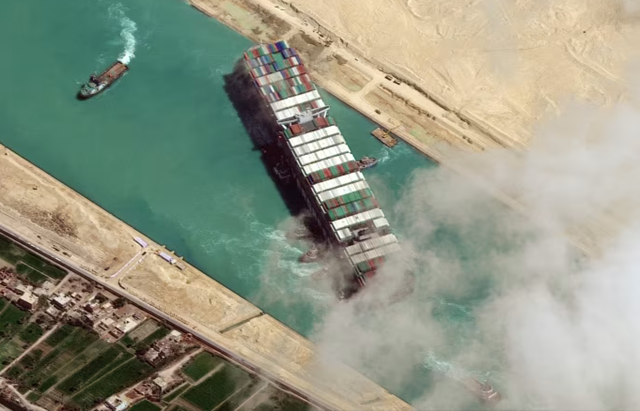
The trend towards smaller ships, especially in light of recent geopolitical tensions such as the attacks by Yemen’s Houthi militants, highlights the importance of flexibility in the shipping industry. With ships being diverted due to disruptions in key trade routes, including the Suez Canal, smaller vessels are proving more versatile, able to adapt more easily to shifting macroeconomic conditions.
While the push for larger ships was once seen as a natural response to booming global trade, experts are now questioning whether investing in ultra-large vessels is a wise decision in light of rising environmental pressures and uncertain future fuel requirements. The industry’s regulatory body, the International Maritime Organization, aims to achieve net-zero emissions by 2050, adding further uncertainty about the future direction of vessel design.