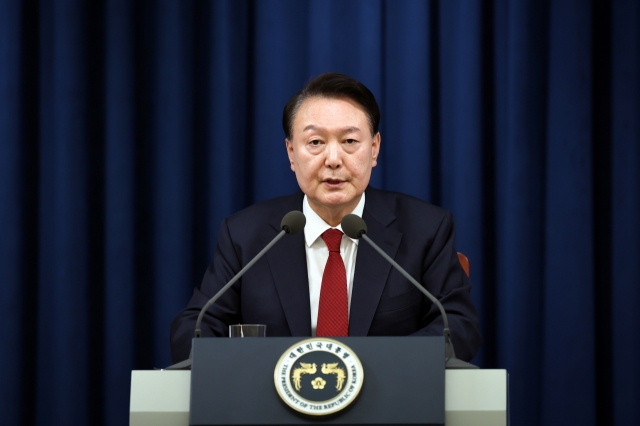
South Korean President Yoon Suk Yeol was suspended from his duties on Saturday after the National Assembly passed a motion to begin his impeachment process. The motion was approved by a 204-85 vote, with three abstentions and eight invalid votes, making Yoon the third South Korean president to face impeachment.
The motion was fueled by growing criticism of Yoon’s recent declaration of martial law, which he imposed on December 3, citing threats from “anti-state forces.” The controversial move was withdrawn after just six hours but had already sparked intense national outrage. Yoon is also under criminal investigation for insurrection in relation to the martial law order.
In accordance with South Korea’s constitutional procedures, with Yoon suspended, Prime Minister Han Duck-soo has assumed the role of acting president while the Constitutional Court conducts a review to determine whether the impeachment will stand or if Yoon will be reinstated.
The martial law declaration, although brief, raised serious concerns about Yoon’s handling of state security and governance, leading to mounting pressure for his resignation. South Koreans, already on edge after years of political instability, viewed the move as a dangerous overreach of presidential powers, while his critics accuse him of attempting to quell opposition forces.
This impeachment marks a historic moment for South Korea, as it joins the ranks of other nations with leaders who have faced such a drastic measure. It remains to be seen whether Yoon will be removed from office permanently or reinstated following the court’s deliberations.
In the meantime, Acting President Han Duck-soo, a seasoned bureaucrat, will lead the country during this uncertain period. Han has already called for calm and vowed to stabilize the government amid the ongoing political turmoil.