Spain said overnight migrant crossings into its North African enclave of Ceuta had fallen to virtually zero after authorities moved swiftly to reinforce border controls following an unprecedented mass crossing that claimed at least 67 lives.
Spanish authorities said approximately 50,000 people crossed into Ceuta by land and sea from Thursday in an extraordinary surge at one of the European Union’s only land borders with Africa. According to the government, more than 48,000 of those who entered returned to Morocco within 48 hours as Spanish authorities restored control over the territory.
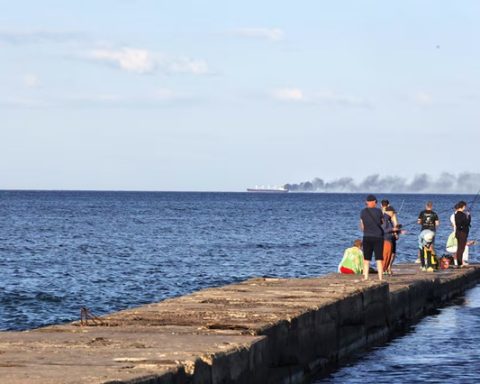
Footage from Tarajal beach on Saturday showed Spanish soldiers and police patrolling the coastline, which had become largely deserted following the dramatic influx. The area, frequently used by migrants attempting to reach the Spanish enclave, was heavily monitored as authorities implemented additional security measures.
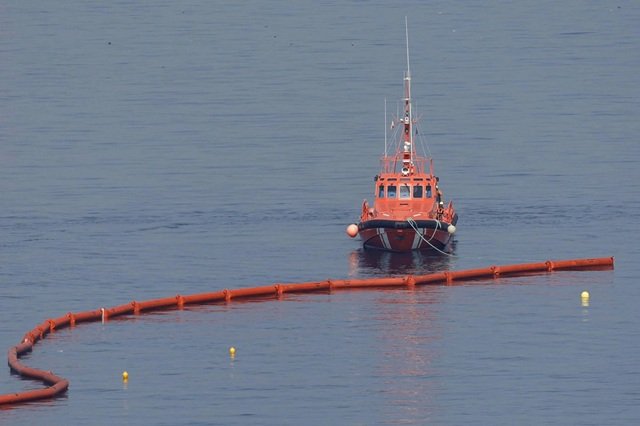
At 7:50 a.m. on Saturday, officers from Spain’s Civil Guard began installing a new 500-metre floating barrier along the Tarajal breakwater, one of the principal entry points into Ceuta. According to a government statement, the pneumatic barrier, together with a line of anchored naval buoys, is designed to rise between 30 and 70 centimetres above the water while extending up to one metre below the surface. A navigable channel between the barriers will enable Civil Guard vessels to continue patrolling the area.
The deadly crossing has heightened concerns across the European Union. In response, 22 member states sent a joint letter calling for coordinated action to strengthen the bloc’s external borders and implement additional measures to address the crisis. Ireland, which currently holds the rotating presidency of the European Union, announced that it had convened an emergency video conference of EU interior ministers for Tuesday to discuss the situation.
Spain’s centre-left Prime Minister Pedro Sanchez also criticised Italy’s decision to suspend passport-free Schengen travel arrangements with Spain for one month. In a letter addressed to the presidents of the European Commission and the European Council, Sanchez argued that the European Union could not afford what he described as a “selfish, polarizing and unlawful reaction” amid the current international environment.
Authorities said at least 67 bodies had been recovered on the Spanish side of the frontier after migrants attempting to reach Ceuta drowned or were crushed while trying to climb the breakwater and border fence. Officials said many of those making the journey had been driven by economic hardship and influenced by rumours circulating on social media.
Spanish Interior Minister Fernando Grande-Marlaska accused people-smuggling networks of exploiting vulnerable migrants by spreading misleading interpretations of a recent ruling by Spain’s Supreme Court. According to the minister, traffickers had falsely suggested that migrants intercepted at sea could not be summarily returned if no physical barrier existed.
Speaking from Ceuta, Grande-Marlaska said Spain had largely restored order within 24 hours but cautioned that the emergency had not yet formally ended. Reinforced deployments of police and military personnel would remain in place for as long as necessary, he said, although attempted overnight crossings had effectively ceased.
The minister also stressed that Morocco remained “a fully reliable partner” and rejected suggestions that the neighbouring country posed any threat to Ceuta or the rest of Spain. He added that Spanish authorities had received no intelligence indicating that a mass crossing was imminent.
The AUGC union representing Spain’s Civil Guard called for the deployment of at least 200 additional officers, warning that further measures would be required to prevent migrants from swimming around the newly installed inflatable barrier.
Spanish authorities also reiterated that migrants entering Ceuta irregularly cannot continue to mainland Spain or elsewhere within the Schengen area. The foreign ministry said all travellers departing Ceuta by sea or air undergo police identity checks, providing an additional layer of border control beyond the land frontier with Morocco.
Although Spain has maintained a comparatively open approach to migration by introducing a programme that grants residency to more than half a million undocumented people, the government rejected claims that the policy had encouraged the surge into Ceuta. Officials noted that applicants must demonstrate residence in Spain before 1 January 2026 and provide evidence of five continuous months of residence at the time of application.