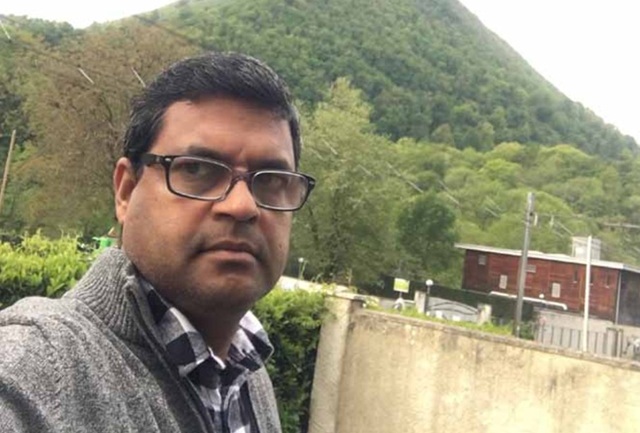
More than a decade and a half after the guns fell silent in Mullivaikkal, the story of the Liberation Tigers of Tamil Eelam remains contested, emotional, and deeply political. For many, the LTTE’s defeat is explained through overwhelming military force, international isolation, and the Sri Lankan state’s final all-out offensive. But Saththiri, a former LTTE member turned writer now living in France, offers a far more unsettling interpretation: that the organisation was fatally weakened long before 2009 by its own leadership, internal paranoia, and disastrous intelligence decisions. Speaking at length to Jaffna Monitor following the release of his novel Aayutha Eluthu – II, Saththiri argues that the Tigers did not simply lose a war — they dismantled themselves from within.
Saththiri’s journey mirrors that of an entire generation of Sri Lankan Tamils shaped by the violence of the early 1980s. In the wake of the 1983 anti-Tamil pogrom, he joined the LTTE as a young militant, adopting the nom de guerre Siyam. He was attached to the explosives division, which earned him the nickname “Sakkai Siyam” among fellow cadres, and later worked within the LTTE’s international network under K. Pathmanathan, better known as KP. Years later, after breaking away from the movement and resettling in France, he resurfaced under the pen name Saththiri as a writer whose fiction and essays draw heavily on his experiences inside the organisation. Unlike many former cadres, his work is notable for its refusal to romanticise the past.
In Aayutha Eluthu – II, Saththiri levels his most severe criticism at Pottu Amman, the LTTE’s long-serving intelligence chief. According to him, Pottu Amman was “in every sense” responsible for the organisation’s eventual defeat, not because of external espionage successes but because of internal destruction. Saththiri traces the origins of the LTTE’s intelligence wing to its early incarnation as “Verkal,” or Roots, a loosely organised structure with rotating leadership and little professional training. The transformation of this unit into a disciplined intelligence apparatus, he says, occurred only in the late 1980s under Ragunathan, widely known as Mathavan Master, who established the LTTE’s first formal intelligence training camp in Palamottai in the Vanni.
Mathavan Master’s trainees — including figures such as Kapil Amman, Saleem, Mathagal Rajan, Newton, Charles, and Akila — went on to execute some of the LTTE’s most effective intelligence operations. Saththiri describes them as the real backbone of the Tigers’ intelligence successes. Pottu Amman, by contrast, inherited an already functioning system but undermined it through ambition, suspicion, and reckless decision-making. Central to this was his alleged role in framing Mahattaya, the LTTE’s deputy leader, on accusations of collaborating with Indian intelligence.
Mahattaya’s execution, along with that of senior cadres loyal to him, unleashed a wave of paranoia that Saththiri says devastated the organisation. Trust between commanders collapsed, witch-hunts became common, and many experienced cadres either defected or withdrew in fear. Saththiri insists that the claim Mahattaya betrayed Kittu, the LTTE’s iconic Jaffna commander, is entirely false. He argues that Mahattaya lacked both the technical knowledge and the operational access required to leak information about Kittu’s movements, and that even Prabhakaran himself did not know which vessel Kittu was traveling on when the Indian Navy intercepted it. The precision of that interception, Saththiri believes, points to satellite tracking and foreign intelligence involvement, not internal betrayal.
Another pivotal moment in Saththiri’s account is the assassination of former Indian Prime Minister Rajiv Gandhi in 1991, which he describes as a strategic catastrophe from which the LTTE never recovered. Tamil Nadu had been the organisation’s most critical sanctuary, providing shelter, medical care, training space, and political sympathy. By choosing Tamil Nadu as the operational base for the assassination, Saththiri argues, the LTTE ensured that India would permanently turn against it. He places responsibility for this decision squarely on Pottu Amman, noting that alternative plans had existed in Delhi and Visakhapatnam before the Tamil Nadu operation was finalised.
Saththiri goes further, suggesting that the Rajiv Gandhi assassination cannot be understood solely as an LTTE operation. Citing findings and hints from the investigation and the Jain Commission, he claims that foreign intelligence agencies, particularly from the United States, may have indirectly exploited the LTTE’s anger toward India. At the time, India’s close alignment with the Soviet Union made it difficult for Washington to draw New Delhi into its strategic orbit. The political realignments that followed Rajiv Gandhi’s death, Saththiri argues, ultimately benefited U.S. interests, regardless of the LTTE’s intentions.
Yet even this, he says, was only the LTTE’s first self-inflicted wound. The second came in 2002, when Prabhakaran abruptly dismantled KP’s international network and handed control of the global secretariat to Castro. Saththiri describes this decision as inexplicable and disastrous. KP’s network, though imperfect, had sustained the LTTE’s arms procurement, shipping, and finances for decades. Castro, by contrast, was physically disabled, largely confined to bed, and had almost no direct experience of the outside world beyond a single medical trip to Tamil Nadu.
Under Castro’s leadership, inexperienced cadres were placed in key international roles. One such figure, Stephen, tasked with arms procurement, was arrested in Indonesia after arousing suspicion at an airport. His laptops, seized by authorities, reportedly contained exhaustive details of the LTTE’s global arms purchases, shipping routes, financial transactions, and supplier networks. According to Saththiri, the CIA quickly became involved and made a calculated decision not to dismantle the network immediately, but to monitor it in full, mapping every connection before striking.
The consequences were devastating. Between 2005 and 2006, intelligence shared with Sri Lankan authorities enabled the Navy and Air Force to systematically destroy LTTE arms ships as they entered waters off Mullaitivu. Nine arms ships and two cargo vessels were sunk, even as the LTTE leadership in the Vanni remained unaware that their network had been compromised. Saththiri recounts how an FBI-led undercover operation later lured Murugesu Vinayagamoorthy, a London-based operative appointed by Castro to negotiate missile purchases, into the United States, where he was arrested after being shown dummy missile models and fake bank accounts.
Following Vinayagamoorthy’s arrest, more than thirty individuals across the United States, Canada, and Europe were detained, and numerous vessels seized. By 2006, Saththiri says, the LTTE’s international arms procurement network — which had evaded intelligence agencies for nearly twenty-five years — had been completely dismantled under U.S. leadership. From that point onward, the Tigers were unable to acquire even basic ammunition from abroad, a collapse that directly shaped the military defeats that followed in Sri Lanka.
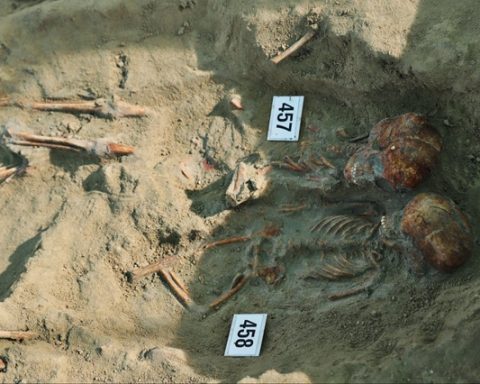
Saththiri does not spare the LTTE leadership when discussing the final phase of the war. In his interview with Jaffna Monitor, he confirms that disabled women cadres, including those housed at Mayuri Illam, were gathered and killed in explosions on orders from Pottu Amman. He describes similar incidents involving injured women cadres placed in buses near Iraddai Vaikkal and blown up, acts he characterises as grave human rights violations. For Saththiri, these events symbolise the moral collapse of the leadership, which chose annihilation over accountability.
He extends this criticism to the LTTE’s treatment of civilians who followed the organisation from Mannar to Mullivaikkal, trusting repeated assurances that there was a plan for their safety. What unfolded instead, Saththiri says, was a profound betrayal. Civilians were trapped, cadres were sacrificed, and the leadership refused to acknowledge reality until it was too late. In his view, the LTTE leadership must be held accountable not only for military failure but for the destruction of the very people it claimed to protect.
The interview also revisits Tamil–Muslim relations, challenging narratives that portray hostility as inevitable. Saththiri recalls a time before the 1990s when hundreds of Muslims fought within the LTTE and were honoured as martyrs. He argues that the breakdown of trust between Tamils and Muslims was the result of cumulative actions by Tamil militant groups, Muslim politicians, paramilitaries, and racist state regimes, rather than the fault of a single community. Instead of revisiting blame, he calls for rebuilding trust and reconciliation, suggesting that the current political climate offers an opportunity to do so.
Saththiri’s reflections on rival Tamil militant groups are equally unsparing. He describes atrocities committed by the EPRLF, including forced child recruitment, while rejecting attempts to rank atrocities by scale. Every armed group of that era, he says, has blood on its hands. Accountability, in his view, must rest with leadership figures, particularly Varatharajaperumal, whom he accuses of bearing moral and political responsibility for crimes committed under the EPRLF during the period when he was elevated by India to lead the merged NorthEastern Provincial Council.
What sets Saththiri’s account apart is its breadth. It weaves together personal memory, organisational history, regional politics, and global intelligence operations into a single narrative of collapse. While many of his claims remain controversial and are likely to be disputed, they force an uncomfortable reconsideration of the LTTE’s legacy. Rather than a movement crushed solely by external enemies, Saththiri portrays it as one undone by its own leadership’s inability to tolerate dissent, accept political compromise, or act with moral restraint.