The following account draws from a series of letters exchanged between Rohana Wijeweera’s mother, his younger brother Ananda Wijeweera, and the lawyer Bala Thampo during the period of intense state repression that followed the April 1971 uprising. Marking 55 years since that historic moment, the uprising stands as a decisive and transformative phase in Sri Lanka’s social evolution. At the time, the country existed within a rigid and hierarchical social order, where ordinary people lived under the shadow of authority figures such as the police, village headmen, local elites, and economic power holders. Rural society, in particular, had long been conditioned to submit quietly to injustice, bowing its head in the face of exploitation and abuse. It was within this deeply unequal structure that Rohana Wijeweera emerged, challenging the prevailing order and instilling a sense of courage, discipline, and ideological purpose among a generation of young people who had previously felt powerless.
Following the suppression of the 1971 uprising, the political environment became increasingly authoritarian. The government adopted what can be described as a Bonapartist stance, consolidating power while suppressing dissent with force. At that time, Sri Lanka lacked any established human rights organizations capable of defending citizens against state abuses. In this vacuum, only a handful of individuals and institutions stepped forward. Among them, the Lanka Mercantile Union, led by Advocate Bala Thampo, stood out as the only organized body that consistently and fearlessly defended the rights of those subjected to arrest, detention, and torture. Thampo not only appeared in court on behalf of young detainees but also confronted political leaders, including Prime Minister Sirimavo Bandaranaike, as well as senior police officials, without hesitation. Alongside him, a small number of lawyers such as Prince Gunasekara, S. Nadesan, and M. B. Ratnayake attempted to challenge the repression. International attention was minimal, with only isolated figures such as Lord Avebury from the British Parliament visiting Sri Lanka to observe the situation.
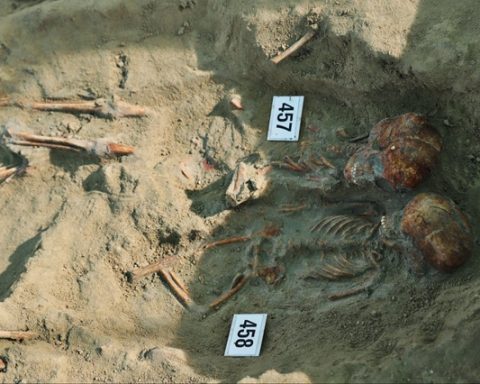
The period was marked by widespread and often brutal human rights violations, many of which have faded from public memory. The torture and killing of the young woman Premawathi Manamperi in Kataragama became one of the most shocking examples of state violence. There were also reports of individuals being burned alive with tires, executed without trial, and their bodies disposed of in canals and rivers. It is estimated that more than 10,000 people lost their lives across the country during this time. In such a climate of fear and repression, the trust placed in Bala Thampo by ordinary citizens is reflected in the large number of letters he received from desperate families seeking assistance, justice, and even basic information about their loved ones.
One of the most moving among these is the letter written by Wijeweera’s mother to the Prime Minister. In it, she carefully recounts the sequence of events surrounding the arrests of her two sons. Her eldest son, Rohana Wijeweera, had first been arrested on May 12, 1970, just days before the general election, by the police of the United National Party government. After the Sri Lanka Freedom Party came to power, he was released by the Nuwara Eliya Court on July 9, 1970, and resumed addressing public meetings with the knowledge of the new government. However, this period of relative openness was short-lived. On March 13, 1971, he was arrested again in Ampara, shortly after addressing a public rally. From that moment onward, his mother was plunged into uncertainty, as she received no information about his condition or whereabouts for months.
Her attempts to see him were repeatedly denied. Although she wrote to the Prime Minister on March 26, 1971, requesting permission to visit her son, she received a formal reply from the Ministry of Defence stating that such access could not be granted. It was only on July 11, 1971—nearly four months later—that she was finally allowed to see him, and even then, only one visitor was permitted. What she discovered during that visit was devastating. Her son had reportedly contracted typhoid fever in December, yet had not been provided with proper medical care. He described being confined in a dark, enclosed cell, surrounded by filth, with minimal access to light. The prolonged isolation had affected his eyesight, and he suffered from skin diseases such as boils, eczema, and even symptoms resembling leprosy. As a mother, she struggled to articulate the extent of the torture and abuse he described, particularly at the hands of high-ranking officers of the Criminal Investigation Department.
Her suffering was compounded by the arrest of her younger son, Ananda. After Rohana was transferred to Welikada Prison in June 1972, Ananda had been responsible for bringing him food, clothes, and medicine. On November 21, 1972, Ananda left home for this purpose and did not return. It was only six days later, through a newspaper report, that his mother learned he had been arrested. Desperate for information, she traveled to Colombo with her sister and sought the assistance of Bala Thampo, who intervened on her behalf and obtained permission for her to visit her son. However, even this permission proved futile. When she arrived at the CID headquarters, she was informed that Ananda had been taken elsewhere for questioning. A new date was arranged, but when she was finally allowed to see him, she was not given the opportunity to speak with him. Shortly thereafter, she learned that he had been transferred to the remote Hammanhill Prison in the north.
During this period, she also became aware of the severe torture Ananda had endured while in custody. The emotional toll of these events is evident in her letter, where she describes the deep psychological anguish she experienced. Her home life, too, was disrupted by continuous harassment. She recounts how, shortly after Rohana’s arrest, a group of police officers arrived at her house in the early hours of the morning, shot her dog, and stormed inside, making disturbing and threatening remarks. Later, following Ananda’s arrest, unidentified individuals and suspected police officers repeatedly visited her home at night, creating disturbances, throwing stones, and instilling fear. On several occasions, officers forcibly entered her house and remained there for hours. Living with two young girls, she expressed constant anxiety about their safety and well-being. Her appeals to local police brought little reassurance, as even they claimed ignorance or suggested that the harassment was being carried out by other units.
In her letter, she ultimately turns to the Prime Minister not only as a political leader but as a fellow mother, appealing for compassion and basic human decency. She requests that she and her daughter be granted reasonable access to visit her sons and that they not be subjected to further mistreatment while in custody. Her words reflect both dignity and desperation, revealing the human cost of political repression at the level of the family.
Parallel to this personal appeal is the formal intervention made by Bala Thampo, who wrote to the Prime Minister highlighting the legal and constitutional implications of the emergency regulations imposed in March 1971. He drew attention to specific orders that allowed for the arrest and detention of individuals without warrants and granted sweeping powers to police and military officials, including the authority to dispose of bodies without judicial oversight. These regulations effectively nullified existing legal protections under the Penal Code, enabling widespread abuses under the guise of maintaining public order. Thampo pointed out that there was already substantial evidence suggesting that these powers were being used excessively and arbitrarily, leading to grave violations of fundamental rights. He questioned how public safety and justice could be ensured in a system where such unchecked authority prevailed.
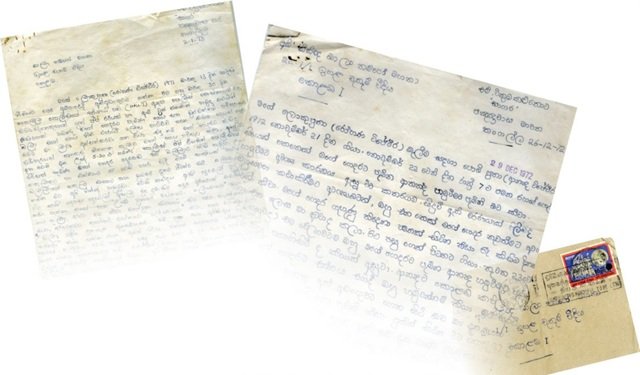
Amid these voices of protest and suffering, the letter written by Ananda Wijeweera from Hammanhill Prison offers a deeply human perspective from within the system of detention. Writing to his mother, he recounts the circumstances of his arrest in Kottawa at midnight and his subsequent transfer through various detention centers, including the Maradana Police Station, the fourth floor of the CID, the Aluthkade courts, and Welikada Remand Prison, before finally being sent to Hammanhill. He explains the strict regulations governing visits, noting that they were permitted only once a month and required prior written approval.
Despite these hardships, Ananda’s tone is marked by resilience and a deliberate effort to reassure his mother. He insists that he is doing well and urges her not to worry. He describes a sense of camaraderie among the detainees, emphasizing that they live together like members of a single family. He asks her to write regularly, sharing both joys and sorrows, but discourages her from making the difficult journey to visit him. His concern extends beyond his own situation, as he advises her to take care of the household, look after their livelihood, and ensure the well-being of the family. He also reflects an awareness of the political circumstances surrounding his detention, acknowledging that accusations and suspicions have led to his imprisonment.
His closing words carry a quiet emotional weight, as he asks his mother not to cry and to remain strong, reminding her that worry will not change their situation. He expresses a sense of acceptance and even calm, suggesting that under such conditions, survival depends as much on emotional endurance as on physical resilience.