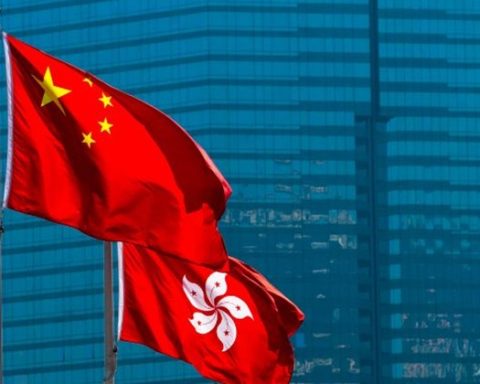
Today’s world faces numerous interlinked challenges, making it difficult to isolate one issue from another. The emergence of China as an aspiring superpower, determined to assert its influence in the so-called “rules-based” world, has further complicated the global landscape. History teaches us that when a nation becomes the second-largest economy and a formidable military power, it is natural for its economic and military strength not only to be noticed but also respected. In a previous piece, I argued that “capitalism alone does not lead a country to prosperity.” The success of state capitalism in driving the economic development of South Korea under Park Chung Hee’s military regime, as well as in China, Taiwan, and Vietnam, challenges the notion that only capitalism aligned with Western values can lead to national prosperity.
THE RISE OF CHINA AND REASONS FOR ITS GROWTH
China today is the second-largest economy in the world. However, its growth has recently been hampered by the outbreak of the coronavirus disease, which has effectively quarantined the country from the rest of the world. Given that China accounts for 16% of global output, this health crisis has inevitably had a global economic impact, particularly on smaller Asian nations linked to China, which lack sufficient financial buffers and may slide into recession.
A Reuters report (London, February 20) sounded an optimistic note, suggesting that epidemics typically have severe but relatively short-lived effects on economic activity, with disruptions to manufacturing and consumption measured in weeks or, at worst, a few months. Even pandemics such as the Black Death, Spanish influenza, Asian influenza, and Hong Kong influenza, which caused large numbers of deaths, had only brief economic impacts. China’s coronavirus outbreak is expected to follow this pattern of a severe downturn followed by a swift recovery—provided it does not trigger a broader cyclical slowdown in the already fragile global economy.
China’s economic growth rate in 2019 was 6.1%, the slowest in recent years. The International Monetary Fund predicts further declines to 6% in 2020 and 5.8% in subsequent years. The coronavirus outbreak has impacted consumer spending in China, which could further strain its economy and affect trade agreements with the U.S. Federal Reserve Chairman Jerome Powell has highlighted the significant role of China’s economy in the global landscape, stating that a slowdown in China affects the U.S. economy, albeit less than it impacts neighboring countries or major trading partners such as Western European nations.
The coronavirus aside, the efficacy of state capitalism as an economic strategy remains debatable. Some governments have justified this repressive approach using John Maynard Keynes’ distinction between investments for productive purposes and speculative activities. However, critics of state capitalism argue against the artificial imposition of ceilings on investment, advocating instead for market-driven interest rates and competition among financial institutions.
JOSEPH STIGLITZ, THE GREAT DIVIDE, AND THE GREAT GATSBY CURVE
Despite recent signs of slowing growth in China, Nobel laureate Joseph Stiglitz (in The Great Divide, 2012) argued that inequality results from conscious political decisions, leading to a world of super-rich elites, a shrinking middle class, and growing poverty. Stiglitz also questioned the efficacy of governments that embrace “political capitalism”—a system where the rich and powerful influence governmental choices, resulting in a “nasty, brutish,” and ultimately self-serving governance that protects elite interests.
Political capitalism can be defined as an economic and political system where economic and political elites collaborate for mutual benefit. To illustrate the impact of such systems, one may examine the “Great Gatsby Curve,” introduced by Alan Krueger, Chairman of the Council of Economic Advisers in 2012. This curve demonstrates how the wealth of one generation facilitates the success of subsequent generations, while the lack of wealth in poorer households denies their offspring the opportunity to climb the social and economic ladder.
Stiglitz has consistently criticized the “trickle-down” policies of liberalism and neoliberalism. However, he supports lowering trade barriers and promoting free trade, a core tenet of the laissez-faire economic model.
HOW CHINA CAN ECONOMICALLY AND POLITICALLY CHALLENGE THE U.S.
Stiglitz argued that the U.S., not China, is responsible for the so-called “trade war,” as the U.S. has a significant trade deficit compared to China’s trade surplus. He advised that China could impose targeted sanctions on the U.S. to inflict economic and political pain, for example, by reducing purchases of U.S. goods in vulnerable or influential congressional districts. This strategy, he suggested, could amplify domestic political pressure in the U.S.
Stiglitz emphasized that China, with its government’s tight control over the economy, might withstand economic disruptions better than the U.S. He argued that while China is transitioning from an export-driven to a domestic demand-driven growth model, the U.S. could face more severe consequences from halting globalization.
DEGLOBALIZATION: IMPACT ON U.S. IMPORTS AND EXPORTS
Stiglitz warned that turning away from globalization might reduce U.S. imports, but it would simultaneously decrease exports, likely resulting in a net loss of manufacturing jobs. Trade barriers and restrictions on the movement of goods, people, and ideas would ultimately harm the U.S. economy.
However, Stiglitz has also revised some of his earlier views. In February 2017, he argued that wage declines and the disappearance of well-paying jobs in the U.S. were not due to globalization but rather to technological advancements and economic progress. Yet, in December 2017, he attributed wage declines to multinational corporations’ actions rather than globalization or trade imbalances.
In 2016, Stiglitz expressed concern about the critical state of the U.S. economy, citing research by economists Anne Case and Angus Deaton, which highlighted declining life expectancy among middle-aged white Americans due to rising rates of suicide, drug abuse, and alcoholism. The National Center for Health Statistics reported that U.S. life expectancy had declined for the first time in over 20 years. Meanwhile, the incomes of the bottom 90% of Americans had stagnated for decades, compounding these troubling trends.
CONCLUSION
As previously mentioned, any discussion on global growth must address China, the second-largest economy in the world. A report by Kimberly Amadeo (October 2020) highlighted that China’s spectacular growth was fueled by massive government spending. The government owns strategically important companies that dominate key industries, such as PetroChina, Sinopec, and the China National Offshore Oil Corporation (CNOOC). These state-owned enterprises allowed the government to prioritize high-impact projects.
China also requires foreign companies operating within its borders to share their technology, enabling domestic firms to replicate and produce goods themselves. The People’s Bank of China tightly controls the yuan’s exchange rate against the dollar to maintain competitive export prices.
China’s growth has significantly reduced poverty, with only 3.3% of the population living below the poverty line. As the nation’s wealth increases, its citizens are expected to consume more, making China the largest consumer market in the world. This consumer-driven growth has reduced reliance on exports and fostered the development of a more market-oriented economy, emphasizing privately-owned enterprises over state-owned ones.
To further enhance growth, President Xi Jinping authorized the “Made in China 2025” plan. However, challenges remain. China’s debt-to-GDP ratio is among the highest globally, and domestic consumer demand is relatively low, leaving the country heavily reliant on exports. These factors are contributing to a slowdown in economic growth.
The Chinese Communist Party continues to oversee all aspects of life, ensuring control to avoid unrest akin to the 1989 Tiananmen Square protests—a scenario deemed unlikely in the current context. Nevertheless, China’s economic strategies and its ability to adapt in a rapidly changing global environment will remain pivotal in shaping the future of global growth and economic power dynamics.