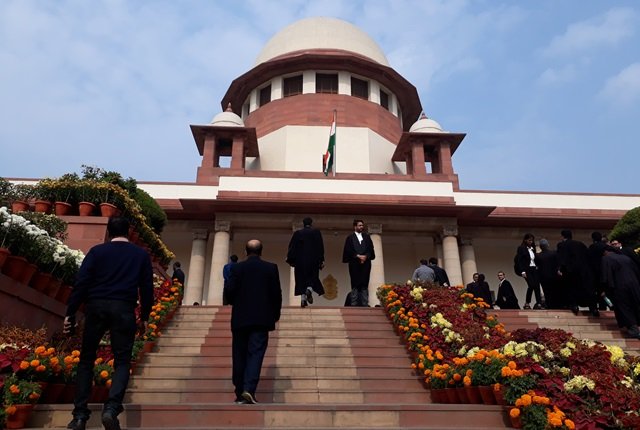
India’s Supreme Court has used its extraordinary powers under Article 142 of the Constitution to quash criminal cases registered against Gen Z protesters involved in nationwide demonstrations following the NEET-UG 2026 question paper leak.
A three-judge Bench headed by Chief Justice of India Surya Kant ruled on Tuesday, September 1, that the FIRs would not be investigated and would be “closed for all intents and purposes”. The decision followed a request from the Union government and a reversal by Delhi Police, which told the court that it no longer wished to pursue the cases.
The move came amid the prospect of a Cockroach Janta Party (CJP) march in Delhi on September 5, only days before the BRICS summit scheduled for September 12 and 13. The CJP emerged from the student protests following oral remarks by the Chief Justice in the same courtroom referring to “cockroaches” and “parasites”.
The Supreme Court clarified that its order was not limited to Delhi. It extended to all States and Union Territories where protests took place, while the Centre was given authority to ensure that no fresh FIRs were registered in connection with CJP-led protests held between July 20 and July 25.
The court nevertheless made an important exception. Delhi Police was permitted to file a “fresh and specific” FIR against 2,873 individuals with criminal antecedents who had been identified through facial recognition technology at the Jantar Mantar protest site in central Delhi. The court said such proceedings should not prejudice their rights and that those individuals must be given every opportunity to defend themselves.
The original FIRs followed a police crackdown on July 20, during which tear gas and pellet guns were deployed against fleeing students. Police had accused protesters of offences including rioting, attempt to murder and damage to public property.
The government’s change of position came on August 31, when Delhi Police approached the Supreme Court after the Chief Justice’s Bench had refused to halt the planned CJP march ahead of the BRICS summit. Solicitor General Tushar Mehta, appearing for Delhi Police, subsequently joined lawyers representing the petitioners in seeking a broader order preventing States from registering fresh cases linked to the protests.
Four BJP-ruled States — Maharashtra, Assam, Bihar, and West Bengal — also filed separate applications asking the Supreme Court to exercise Article 142 powers to quash the FIRs. Mehta told the court that the applications were “verbatim” the same as that submitted by Delhi Police.
The court also directed the Centre to formulate a pan-India policy for compensating families of students who took their own lives following the NEET-UG 2026 paper leaks, with payments to be made within three months. It separately asked the Centre to formulate modalities for compensation for protesters injured during police action.
The Bench said its decision to invoke Article 142 was taken primarily with the “future prospects of the young protestors” in mind. After the order, Chief Justice Kant advised students to “concentrate on careers to establish and create a space in a competitive world”.
The hearing ended with the CJP agreeing to suspend its planned September 5 march. CJP co-convenor Saurav Das, who was present in court, told the Bench that the organisation would withdraw the protest in view of the government’s assurances and the judicial order.
“In view of the positive assurances of the Government of India [to close the FIRs] and the judicial sanctity bestowed upon them today… the CJP deems it appropriate to withdraw the call for the march on September 5 and looks forward to compliance with today’s order,” Das said.
The Supreme Court’s intervention brings an extraordinary chapter of the NEET-UG protests to a temporary close, combining the closure of criminal cases for protesters across India with a narrowly defined exception for those identified as having criminal antecedents. The decision also places responsibility on the Centre to implement compensation measures while giving protesters a judicial assurance that the FIRs covered by the order will no longer be pursued.