In a recognition that underscores the fragile future of global agriculture, the Svalbard Global Seed Vault has been awarded the Princess of Asturias Award for International Cooperation, honouring its mission to protect the world’s crop diversity against catastrophic loss. The report, originally published by El País, describes the facility as a critical “insurance policy for humanity” at a time of accelerating environmental and ecological risk.
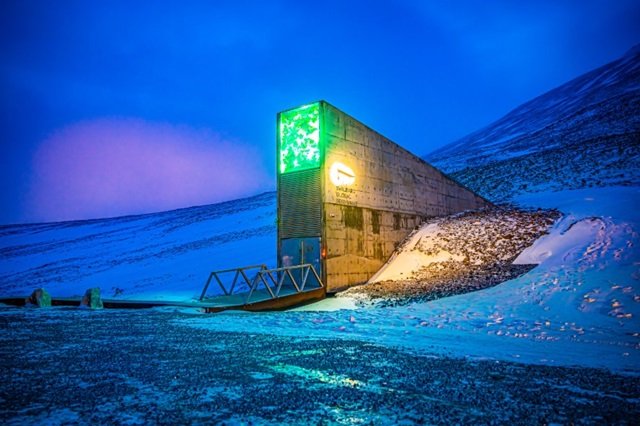
Located deep within the permafrost of a remote Norwegian island, the seed vault sits 1,400 kilometres from the North Pole in the Svalbard archipelago, near the settlement of Longyearbyen. Built into a frozen mountainside, the facility stores more than one million seed samples representing roughly 6,500 plant species from every continent. Its mission is simple but profound: to preserve global agricultural biodiversity in case of war, climate disaster or widespread crop failure.
The structure is often described as a modern-day Noah’s Ark for plant life. Constructed from reinforced concrete and embedded in permanently frozen ground, the vault maintains an internal temperature of around -18°C, ensuring long-term preservation of genetic material. According to the El País report, it contains everything from staple crops such as wheat and rice to culturally significant species like the olive tree, including 1,000 samples of Spanish olive varieties contributed by research institutions in Córdoba and Granada.
The facility is jointly managed by the Norwegian government, the international organisation Crop Trust supported by the Food and Agriculture Organization of the United Nations, and the Nordic Genetic Resource Centre. Norway financed the original construction, a project costing roughly nine million euros, and the vault was inaugurated in 2008 as a global backup system for agricultural biodiversity.
Over time, the seed vault has become a shared repository for nearly every country in the world. Governments periodically deposit seeds to safeguard them against disasters affecting their national gene banks. The collections include material from countries as diverse as Mexico, Ethiopia, Canada, the United States and even North Korea, illustrating the rare scientific cooperation that persists even amid geopolitical tensions.
Despite its Arctic location, the facility is not entirely isolated. It is connected to the outside world via Longyearbyen Airport, which operates year-round, allowing for regular deliveries and maintenance. Yet access to the vault itself is tightly restricted. The structure is designed to open only a few times each year, primarily for the deposit of new seed samples or technical inspections, in order to preserve its internal climate stability.
One of the vault’s defining features is its strict security-like system. Seeds are stored in sealed packages, and only the original depositors retain rights to request their withdrawal. In practice, it functions much like a safety deposit box for the planet’s agricultural heritage. Current estimates suggest it holds roughly half of the world’s known plant diversity, with capacity for millions more samples still available.
However, the El País report highlights that even this frozen fortress is not immune to climate change. In 2017, unusually high Arctic temperatures caused permafrost meltwater to seep into the entrance tunnel, raising alarm among scientists and forcing improvements to the facility’s drainage and waterproofing systems. The incident underscored a paradox: a global climate refuge itself is vulnerable to the very crisis it was designed to mitigate.
The urgency behind the seed vault’s mission is rooted in a broader global decline in agricultural diversity. Experts warn that modern industrial farming has led to the disappearance of vast numbers of crop varieties, leaving food systems more vulnerable to disease, pests and environmental stress. Historical examples such as the 19th-century phylloxera outbreak, which devastated European vineyards, are often cited as warnings of what can happen when genetic diversity collapses.
The El País feature also points to stark statistics: in the United States, around 90% of historical crop varieties have disappeared since the 19th century, while China has lost roughly 90% of its traditional varieties since 1950. In Mexico, approximately 80% of maize diversity has been lost since the early 20th century. Such losses, scientists argue, increase dependence on a narrow range of high-yield crops that may not withstand future climate conditions.
The concentration of control over seeds in the hands of a small number of multinational corporations has further intensified concerns. As reported by El País, critics argue that intellectual property regimes and commercial seed systems have reduced farmer autonomy and narrowed the genetic base of global agriculture, making systems more fragile in the face of disruption.
At the same time, researchers point to the seed vault as a critical safeguard. It preserves genetic traits that could prove essential in adapting crops to rising temperatures, drought conditions and new plant diseases. Some varieties stored in Svalbard, for example, include heat-resistant strains of wheat that could become vital under future climate scenarios.
Beyond its scientific role, the vault also carries symbolic weight. Visiting the site, researchers describe a stark, almost surreal landscape: a concrete entrance emerging from a frozen mountainside, surrounded by Arctic silence, polar bears and extreme isolation. Inside, however, lies a carefully organised archive of humanity’s agricultural history, stretching back to the dawn of farming nearly 10,000 years ago.
The broader cultural significance of seed preservation has also been explored in recent literature. British journalist Dan Saladino, in his book “Eating to Extinction,” documented disappearing crop varieties around the world and warned of the irreversible loss of food diversity. His work echoes the concerns highlighted in El País about how globalisation has standardised diets, reducing once-rich ecosystems of edible plants to a handful of commercially dominant varieties.
Against this backdrop, the Svalbard Seed Vault is increasingly seen not just as a storage facility but as a moral statement about the need to protect biodiversity. Its recognition by the Princess of Asturias Awards reflects growing international awareness that food security in the 21st century depends as much on preserving genetic heritage as on technological innovation.
As climate pressures intensify and global food systems face mounting stress, the frozen vault in the Arctic stands as a quiet but powerful reminder: the survival of future generations may depend on what is carefully sealed away in its icy chambers today.