As Christmas celebrations unfold in Damascus, Syria’s Christians are grappling with uncertainty about their future under the country’s new de facto ruler, Ahmed al-Sharaa, leader of the rebel group Hayat Tahrir al-Sham (HTS). The celebrations, once steeped in fear and repression under Bashar al-Assad’s regime, are now clouded by skepticism and doubt, despite promises from HTS that religious minorities will be safe.
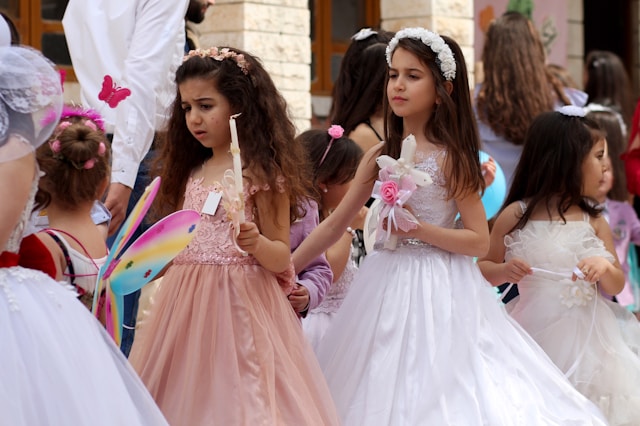
In the ancient heart of Damascus, fireworks illuminated the night sky above Straight Street, a location rich with Christian history. It was here, over 2,000 years ago, that St. Paul was baptized following his dramatic conversion. For centuries, families have gathered in this iconic area to celebrate Christmas, but this year feels different.
Milad Knehir, a former policeman, captured the prevailing sentiment of many in the community. Standing at the entrance of a shop nestled among churches in the Old City, he admitted, “When you live in fear for so many years and then it’s gone, everything feels new. It’s strange now.” Knehir, like many of his fellow Christians, expressed unease about the new regime, saying, “I’m a little nervous. We don’t have a president or a military to protect the people.”
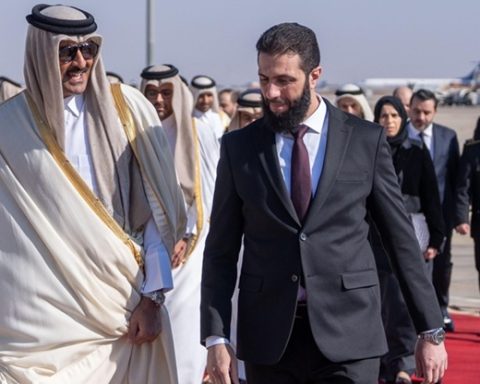
Ahmed al-Sharaa, leader of HTS, which overthrew Assad earlier this month, has attempted to reassure Christians and other religious minorities that they will not face persecution under his rule. Although HTS holds a hardline view on religious matters, often seeing Christians as infidels, Sharaa has made an effort to soften his image. He has cropped his beard, swapped jihadist attire for a business suit, and assured Western officials that his group will not seek revenge on Assad’s Alawite regime nor repress religious minorities.
Despite these reassurances, many Christians remain skeptical. Recent reports of violent incidents in Syria have fueled fears. Video footage emerged on social media this week showing a Christmas tree being set on fire in the predominantly Greek Orthodox city of Suqaylabiyah, near Latakia. Just days before, gunmen opened fire on a Greek Orthodox church in Hama, attempting to steal a cross. These acts of violence have heightened fears, leading some Christians to take to the streets in protest.
On Monday, demonstrators marched through the ancient Bab Tuma district of Damascus, carrying crosses and chanting, “Raise your cross up.” The demonstration later evolved into a show of unity, with Qurans raised alongside crosses and the chant, “Islam and Christians,” echoing through the streets.
In the heart of the Old City, where Christmas decorations line the shops, Imad, a local merchant, voiced his cautious stance. “They can talk a lot, but we need to see actions,” he said quietly, adding, “More people are staying at home unless it’s necessary to go out. We are waiting to see.”
Many churches in Damascus, including those in the Old City, have adjusted their services in response to the prevailing anxiety. Traditional midnight Masses were brought forward to earlier times, at 5 or 6 pm, to accommodate the fears of their congregations. Despite this, some Christians are more optimistic. The Rev. Boutros Zaour, head of the National Evangelical Presbyterian Church in Bab Tuma, expressed a hopeful outlook. “I’m not afraid, I’m optimistic,” Zaour said, noting that he was part of a group from all Christian denominations in Damascus engaging in dialogue with HTS. “This Christmas will be more relaxing in a way, as there is now a freedom, an easiness.”
Outside the church, festive cheer was palpable at Café al Qishla, a local hub filled with laughter, music, and festive chatter. Though Muslims and Christians in Damascus often joke that “no one celebrates Christmas more than Muslims,” for some, this year’s celebrations felt genuinely different. Sunni Muslim students Fatima Azhara Hourieh and Naya Dehni both agreed that Christmas carried a fresh spirit this year, with Dehni noting that “Christmas feels different because nothing could be worse than the regime.”
In central Damascus, Umayyad Square was alive with activity. A bustling Christmas market set up stalls filled with food, decorations, and festive lights. Families posed for selfies in front of the illuminated displays, while the movie Home Alone was screened for passersby. The air was filled with the hum of life, a stark contrast to the oppressive atmosphere of previous years.
Yet, amid the holiday spirit, there were signs of the new political reality. On Straight Street, after the fireworks had faded, a young man rode past on a horse, waving the flag of the Syrian opposition. He was followed by a pick-up truck full of HTS fighters in camouflage, their faces obscured, dancing to jihadist music while carrying AK-47s. This surreal scene is a reminder of the complex, shifting landscape that Syrians, especially Christians, must navigate in this new chapter of the country’s tumultuous history.