


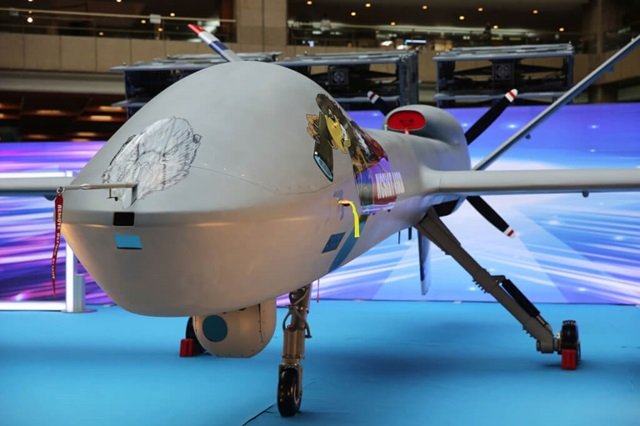
Taiwan should transform itself into a “hornet’s nest” of drones to deter conflict and strengthen security, the top U.S. diplomat on the island said on Thursday, underscoring Washington’s support for Taipei’s expanding military modernization strategy amid rising tensions with China.
Raymond Greene, director of the American Institute in Taiwan and the de facto U.S. ambassador, made the remarks at a drone forum in the central city of Taichung. He said unmanned systems represent a “game-changing opportunity” to enhance Taiwan’s defensive capabilities and reinforce stability in the broader region.
Greene said the United States and Taiwan could work together to anchor what he described as “democratic” drone production, contributing to a wider deterrence posture among like-minded partners. He also pointed to the war in Ukraine as evidence that drones can significantly strengthen defenders even against larger military forces. “Nothing will deter conflict more effectively than turning Taiwan into a hornet’s nest of air, surface, and subsurface drones,” he said.
The comments come as Taiwan accelerates efforts to expand its asymmetric warfare capabilities, with drones playing a central role in its defense planning. The government has proposed a T$210 billion (US$6.59 billion) package to fund surveillance systems, coastal strike capabilities, and small unmanned surface drones through 2031, reflecting a long-term push to modernize its military posture.
Defense planning in Taiwan has also become a point of political division. In May, the opposition-dominated parliament approved only two-thirds of the US$40 billion in additional defense spending requested by President Lai Ching-te, with funds primarily directed toward U.S. arms purchases. The decision underscored tensions between the executive branch and lawmakers over the scale and structure of military investment.
The opposition Kuomintang has since advanced its own legislative proposal focused on drone development. Its plan sets a spending cap of T$240 billion over six years, with annual spending limited to T$40 billion. Unlike the government’s approach, which relies on a special budget mechanism, the opposition proposal would channel funding through the main national budget.
Officials have framed the drone push as a response to what Taipei describes as a rapidly changing security environment shaped by increased pressure from China, which claims sovereignty over Taiwan. The island’s government has rejected those claims, maintaining that its future must be decided by its people.
Speaking at a meeting of his Democratic Progressive Party on Wednesday, Lai said strengthening asymmetric combat capabilities is a pressing national defense priority. He described the effort as a race against time, citing shifts in geopolitical conditions and the evolution of modern warfare.
The United States remains Taiwan’s most significant international supporter and arms supplier despite the absence of formal diplomatic relations. Washington has repeatedly backed Taiwan’s defense modernization efforts, including expanded investment in asymmetric systems such as drones, which officials argue could complicate any potential military action against the island.









