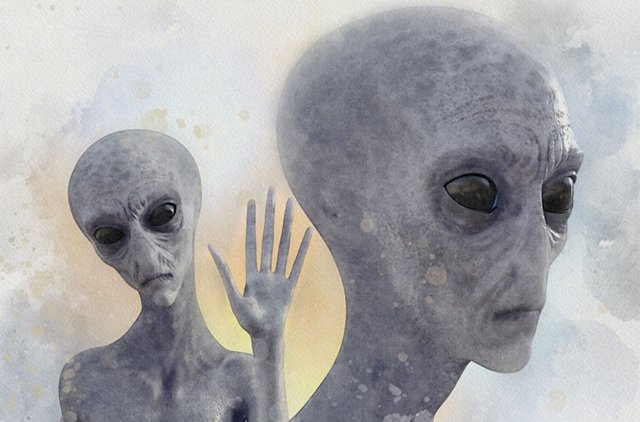
Ever since childhood, I’ve wanted to be abducted by Aliens ~ Neil DeGrasse Tyson
I recently read the book “Take Me to Your Leader: Perspectives on Your First Alien Encounter” (Simon Schuster: 2026) by distinguished astrophysicist Neil DeGrasse Tyson and found it hilarious, intelligent and educative. Above all, it was imaginative and creative. My mind went back to a legal article I had published years ago titled: Liability for Collusion with Extraterrestrial Intelligence in McGill University’s Annals of Air and Space Law while pursuing doctoral studies at the university’s Institute of Air and Space Law.
Given below are the musings of my own eccentricity which have been profoundly influenced by the celebrated astrophysicist’s own inimitable sense of humour.
When an extraterrestrial civilization finally directs its attention towards Earth, it may do so with the cautious interest of an aviation authority examining an unfamiliar aircraft approaching without a flight plan. From a distance, our planet appears reassuringly coherent: blue oceans, shifting clouds and a thin atmospheric envelope that performs, without applause, the indispensable task of keeping us alive. The continents seem to rest comfortably upon the surface, the atmosphere appears to be functioning, and the planet gives every impression of being governed by a competent administration. The visitors may therefore conclude that Earth is inhabited by a mature and rational species. Their conclusion will last until their instruments become sufficiently powerful to distinguish a cloud from a traffic jam.
At that point, the aliens will observe millions of humans entering metal containers, propelling themselves through congested roads to arrive at offices where they sit before illuminated screens and communicate with people who may be physically present in the same building. They will see us construct airports to facilitate global mobility, then spend hours moving between terminals while complaining about delay, security and the price of coffee. They will see vehicles with engines capable of travelling at extraordinary speeds moving at the pace of a thoughtful tortoise because several thousand human beings have decided to travel at the same time. The aliens may conclude that humanity has achieved technological sophistication without having negotiated a satisfactory agreement with common sense.
Take Me to Your Leader
Their first difficulty will be identifying who is in charge. The expression “Take me to your leader” appears simple enough, but it presupposes that the planet is governed by one leader who can be reached without an appointment. On Earth, the matter is considerably more complicated. There are presidents, prime ministers, monarchs, chancellors, chief executives, spiritual authorities, military commanders, regulators, judges, influential celebrities and at least one person in every household who knows where the spare batteries are kept. In certain jurisdictions, the person who appears to be in charge may be unable to cross a road without the approval of a committee.
The aliens may land in a prominent location and ask for the leader of humanity. We may present them with a national leader, only to discover that another leader considers the first leader illegitimate, while a third leader considers both leaders insufficiently leader-like. A fourth person, who has never been elected to anything but possesses a large following on the internet, will announce that he speaks for the planet. The aliens will then face the first serious question of interplanetary diplomacy: should authority be measured by constitutional office, military capability, public support, wealth, wisdom or the number of people who have clicked on one’s video?
The Border Issue
Further complications will arise when the visitors discover that humans have organized themselves into states. From the perspective of the wider universe, national borders are invisible. They do not appear in the oceans, mountains or atmosphere. They are lines drawn by human agreement, disagreement, conquest and historical accident. Yet human beings will defend these invisible lines with considerable emotion, sometimes with weapons. We can look at the same river and call one bank by one name and the other bank by another name, as though geography itself had become a licensing arrangement.
The aliens may ask why Earth’s inhabitants do not simply treat the planet as a single home. We may reply that this idea has been discussed for centuries. They will ask why it has not been implemented. We will explain that humanity agrees in principle that cooperation is beneficial, but only after determining who will pay, who will receive recognition and whether the other humans can be trusted. The visitors will then realize that our species has developed global communication without developing a global capacity for patience.
Interpreting Signals
Indeed, the first contact may fail not because of a lack of intelligence but because of an excess of interpretation. Suppose the aliens transmit a sequence of mathematical symbols. We may identify the sequence as a message, a warning, an invitation or an extraterrestrial attempt to advertise a telecommunications service. Scientists will analyze it, governments will classify it, newspapers will dramatize it, lawyers will interpret it, and social media will explain it within minutes, using a confidence that exceeds the available evidence by several light years.
Someone will announce that the signal contains a declaration of friendship. Someone else will insist that it is a threat. A third person will argue that the message proves an ancient prophecy. A fourth will claim that the aliens have already contacted him personally through his kitchen appliance. The aliens, having spent centuries developing the capacity to send a signal across interstellar space, will discover that the principal obstacle to communication is not distance but the human appetite for immediate certainty.
The learned astrophysicist posits an important proposition. Mathematics might provide a useful beginning because it is one of the few languages that does not require a passport. The properties of prime numbers, the structure of the hydrogen atom and the relationship between the circumference and diameter of a circle are not altered by diplomatic disagreement. A triangle does not become a rectangle because a minister has issued a statement. Gravity does not change its mind after reading an editorial.
Yet even mathematics has its limitations. If the aliens transmit the number seven, we may assume that they are demonstrating numerical intelligence. They may be informing us that seven members of their crew have been eaten by a biological organism indigenous to their spacecraft. We may publish a philosophical essay on the cultural significance of seven while the aliens wait for assistance in a condition of increasing irritation. Mathematics can establish that a message is structured; it cannot, by itself, reveal whether the sender is proposing a treaty or reporting a disaster.
Communication requires more than symbols. It requires a shared context, and humanity frequently struggles to establish context even among its own members. A human being may say, “I am fine,” while communicating the opposite through tone, posture and the speed with which the words are delivered. A smile may indicate happiness, embarrassment, fear, politeness or an attempt to sell an insurance policy. A wave may mean hello, goodbye, slow down, come here, I have seen someone famous or there is an insect on my face. An alien observer may decide that human gestures are less a language than a series of unresolved administrative complaints.
Our Peculiarities
The visitors will also need to understand our relationship with silence. Humans often regard silence as uncomfortable and fill it with words, music, engines, television programmes and opinions. We have developed devices that can place us in instant contact with almost anyone on Earth, and then complain that people do not respond quickly enough. We send a message and become offended if the recipient does not answer within thirty seconds. We then send another message asking whether the first message was received, followed by a third message expressing concern that the recipient is ignoring us. The aliens may conclude that our communication technology has increased not our serenity but the speed at which we become anxious.
If the aliens possess a collective mind, our individual identities may seem peculiar. We insist that each person is an autonomous individual, yet we spend much of our lives attempting to persuade others to dress, think, vote, eat and speak in similar ways. We place uniforms on schoolchildren, office workers, soldiers, airline crews and sports teams, thereby demonstrating that individuality is often most visible when it has been approved by an institution.
We also divide ourselves according to language, religion, political affiliation, profession, income, ancestry, taste in music and preference for placing fruit on cooked dough. These divisions are sometimes important, sometimes useful and occasionally harmless. They are also capable of producing a level of hostility that would be surprising even to a species whose members had travelled across the galaxy merely to argue about pizza.
Food may be one of the first subjects on which humans attempt to impress the visitors. We will proudly present our cuisine, which has been shaped by migration, trade, climate, necessity, conquest and the human desire to transform nearly every substance into something that can be fried. We will show the aliens rice, bread, vegetables, spices, fruit, fish, meat and an astonishing range of beverages. We will explain that humans cook food to make it safe and enjoyable, then serve certain meals in conditions so hot that the eater must negotiate a temporary ceasefire with the tongue.
The aliens may be puzzled by restaurants. Humans willingly enter buildings, select from a menu, wait for someone else to prepare food, pay more than the ingredients are worth and then leave a second payment as a symbolic gesture of gratitude. In some societies, this additional payment is expected but not formally required, producing an arrangement in which the customer must calculate whether appreciation has been adequately expressed while attempting not to appear either excessively generous or offensively economical.
They will also observe that we photograph meals before eating them. This habit may convince the visitors that food possesses ceremonial importance or that humans are required to submit visual evidence of lunch to a planetary authority. When told that the photographs are shared with friends and strangers, the aliens may ask whether humans do the same with other daily activities. We will have to explain that many people also photograph their feet, pets, children, vehicles, buildings, sunsets and expressions of mild dissatisfaction.
The species will appear even more mysterious when the aliens examine our economics. Humans have developed systems for producing, exchanging and valuing goods and services. We have created markets, banks, currencies and financial instruments of impressive complexity. We can assign a price to a house, a painting, a company or a digital object that cannot be touched. We can also assign no monetary value to clean air until it becomes scarce, at which point we attempt to purchase it in a container.
The visitors may ask why a planet capable of producing enough food and resources for its inhabitants permits some to possess extraordinary abundance while others lack necessities. We may answer that the matter is complicated. It will be explained through theories of incentives, markets, ownership, efficiency, history and human behaviour. All of these explanations may contain truth. None will fully explain why a society can produce machines that explore other worlds while some of its members cannot afford medicine.
The aliens may become interested in law. Law is humanity’s attempt to convert moral expectations into enforceable rules, although the process sometimes produces documents of such length that even the lawyers who draft them appear to need legal assistance in understanding them. We establish that certain actions are prohibited, then create exceptions, qualifications, procedures, appeals and interpretations. We construct an elaborate structure to answer questions that a sensible grandmother might settle in three sentences.
If the aliens ask whether our laws are just, we will say that justice is a continuing project. They may ask when the project will be completed. We will explain that no one knows, but several people have been appointed to discuss it. This will reassure them that Earth possesses a familiar diplomatic method for postponing difficult questions without openly admitting that they have no solution.
Religion
Religion will present another challenge. Humanity has often looked towards the heavens and asked whether existence possesses meaning, purpose or moral direction. We have created traditions, rituals, institutions and explanations to address these questions. The diversity of our answers is considerable. It ranges from profound spiritual insight to arguments over clothing, diet, calendars and the correct position of furniture.
The aliens may find it remarkable that humans are prepared to disagree passionately about invisible realities while cooperating peacefully regarding visible ones. We may accept the same road, use the same currency and purchase food from the same shop while maintaining sharply different views about the nature of the universe. The visitors may ask whether the disputes can be settled through observation. We will explain that observation is helpful, except when it produces results that conflict with something someone has already decided to believe.
Politics
Our politics will appear similarly theatrical. Humans elect leaders to represent the public interest and then spend considerable time demonstrating that the elected leaders do not represent it. Campaigns are conducted through speeches, images, promises, accusations and strategic visits to locations where food can be consumed in front of cameras. Candidates attempt to appear ordinary by wearing clothes that have been selected by professionals to create the impression that no professional assistance was involved.
They promise to improve the economy, strengthen security, reform institutions and protect the future. The future, however, is an inconvenient territory because it has not yet occurred and therefore cannot be held responsible for failing to meet expectations. Every leader claims to know where the country is going. Few provide a map. Many leave office insisting that circumstances prevented them from reaching the destination.
The aliens may be astonished that humans can debate policy for years while failing to repair a leaking tap. We can construct international agreements on aviation, maritime navigation and telecommunications, but we may remain unable to agree on who should take out the rubbish. The principles of cooperation exist at the planetary level and collapse in the kitchen.
Technology
Technology will be the principal source of aliens’ confusion. Humanity has used its intelligence to create machines that can calculate, fly, diagnose disease, communicate across continents and observe galaxies. We have also used the same intelligence to create devices that inform us when a door is open, remind us to drink water and permit us to control a light bulb from another room, despite the fact that the room is only twelve steps away.
We spend money on machines intended to save time, then spend the time learning how to operate the machines. We own devices designed to simplify domestic life, but when one stops functioning we become dependent on a technician whose professional authority derives from pressing a sequence of buttons we do not understand. We have not eliminated mystery; we have transferred it into electronic equipment.
The aliens will be particularly interested in our telephones. These small objects contain cameras, maps, libraries, banks, entertainment systems, calendars and instruments of social pressure. Humans carry them everywhere, including places where carrying a telephone is unnecessary but anxiety is apparently mandatory. A person may enter a room, discover that the telephone is missing and immediately experience the emotional collapse usually associated with the loss of a close relative.
We will explain that the telephone allows humans to remain connected. The aliens may ask whether this connection has made us wiser. We will respond cautiously. The telephone has allowed us to speak with distant relatives, obtain emergency assistance and access useful information. It has also allowed us to read the opinions of strangers at three in the morning and become angry with people who are not present and may not even exist in the form suggested by their profile photograph.
The Environment
Humanity’s treatment of the natural environment will trouble the visitors. We have evolved within a planetary system that provides air, water, food and shelter, yet we frequently behave as though the Earth were a warehouse whose contents can be removed without replenishment. We cut forests, alter rivers, heat the atmosphere and place plastic in the sea, then express surprise that the planet is beginning to send complaints through storms, droughts, floods and rising temperatures.
An alien civilization may find this especially difficult to understand. If they have crossed interstellar distances, they may have mastered energy, engineering and long-term planning. They may ask why humans, who are capable of predicting environmental danger, continue to act as though prediction is merely another form of entertainment.
We will reply that the matter requires balancing development, employment, consumption, investment and political realities. This is true, but incomplete. The deeper difficulty is that humans are remarkably skilled at valuing immediate benefits and remarkably poor at emotionally responding to distant consequences. A benefit received today is psychologically vivid. A danger expected in twenty years is treated as a rumour, even when supported by thousands of measurements.
The visitors may therefore judge that humanity is not unintelligent but temporally confused. We are a species capable of imagining the distant future, provided that the future does not ask us to change our habits before lunch.
Arts, Music
Perhaps the aliens will study our art and music to understand what cannot be expressed through statistics. Music may reveal that humans are capable of coordinated emotion. Thousands of people can gather in one place and respond to the same rhythm, melody or performer. This is an extraordinary display of collective behaviour, although it is weakened somewhat by the human custom of recording the event on a telephone instead of watching it directly.
Art may demonstrate our desire to represent what we see and what we fear. We paint landscapes, portraits, dreams, disasters, meals and objects that seem to have been assembled by a committee of sleep-deprived insects. We create realistic images and then create abstract ones to show that realism is not the only form of intelligence. The aliens may decide that art is the human method of saying, “I cannot explain this, but I have placed it on a wall.”
Communication
Humor may be our most useful form of communication. It is also the most dangerous. Humor depends on surprise, context and shared assumptions. A joke that produces laughter in one culture may produce silence in another and a diplomatic incident in a third. Humans themselves frequently misunderstand humor, particularly when it is written in an email without facial expression or tone.
Yet humor can reveal an important truth: humanity is capable of recognizing its own absurdity. We laugh because we understand that our conduct often falls short of our claims. We build monuments to progress while tripping over the pavement. We describe ourselves as rational while arguing with strangers about events that occurred before we were born. We can be noble, foolish and both at the same time.
If we wish to communicate with aliens, we should begin by accepting that communication may not occur in speech. Their sensory systems may be entirely different from ours. They may perceive magnetic fields, gravitational variations, chemical gradients or dimensions of reality that are inaccessible to human senses. What we call “the visible universe” may be no more than a narrow window, and a badly cleaned one at that.
We should present information through several channels: mathematical patterns, visual representations, sound, chemical signals and controlled physical demonstrations. We should establish repetition, sequence and response. We should avoid sudden movements, aggressive displays and the human habit of speaking louder when someone does not understand. Volume is not a substitute for meaning, although many public meetings on Earth continue to test this proposition.
We should also avoid assuming that the aliens understand our symbols. A drawing of a human being may appear to us as a clear representation of our species. To the visitors, it may resemble a damaged insect, a primitive religious emblem or evidence that Earth’s inhabitants are divided into creatures with unusually long arms. A map of Earth may be equally confusing if they do not understand scale, orientation or the concept of north.
Even the simple act of pointing may fail. Humans point with fingers, eyes, lips and gestures. An alien may point with a change in colour, an alteration of temperature or the temporary disappearance of its left side. Diplomats will need to remain calm when the visitor appears to dissolve during negotiations.
The safest communication may be reciprocal experimentation. We send a pattern; they respond with a pattern. We alter the pattern; they alter theirs. Over time, we establish that certain signals indicate attention, agreement, warning, curiosity or the need for a short break. It would be unwise to begin with complex philosophical questions before confirming that both parties agree on the location of the door.
We should tell them who we are, but we should not present ourselves as more organised than we are. A message claiming that humanity is peaceful would be contradicted by our history. A message claiming that humanity is wise would be undermined by our daily news. A message claiming that humanity speaks with one voice would be rejected by every human being who has ever attended a family gathering.
An honest message might say: we are a young and diverse species. We have learned to manipulate matter and energy, but we have not yet learned to manage our tempers. We have created medicine, music, mathematics, law and literature. We have also created pollution, war, bureaucracy and meetings that could have been emails. We are capable of compassion and cruelty, often within the same afternoon. We would like to learn from you, provided that you do not regard us as a biological resource.
Such candor may not impress the aliens, but it would at least prevent an embarrassing misunderstanding.
There is also the possibility that the aliens will not wish to communicate. Humanity tends to assume that any intelligence capable of reaching Earth must share our curiosity about us. This is a flattering assumption. A sophisticated civilisation may look at our planet in the way a mature adult looks at a child’s drawing: with affection, perhaps, but without a desire to enter into a treaty concerning the arrangement of the crayons.
My Take
The aliens may have observed our history and concluded that we are not ready. They may have seen that we repeatedly develop technologies before developing the wisdom to govern them. They may have noticed that we are capable of sending instruments beyond the planets while failing to provide reliable public transportation within our cities. They may therefore decide to postpone contact until humanity has learned not to treat every new discovery as an opportunity for both profit and misuse.
If they leave without speaking, we should not assume that the visit was a failure. Their presence alone would alter humanity. We would be forced to examine the assumptions upon which our institutions have been built. Religious traditions would reconsider their place in a populated universe. Governments would review security arrangements. Scientists would revise textbooks. Television channels would employ experts who had previously been describing weather patterns.
Most importantly, human beings would encounter a living reminder that we are not the center of existence. This lesson may be difficult, but it is intellectually healthy. The universe is too large to support human vanity indefinitely. We occupy a small planet around an ordinary star, in one galaxy among an immense number of galaxies. Yet from this small world, we have begun to ask questions about the whole of creation. That is both our weakness and our distinction.
The aliens may ultimately assess us as a promising but unstable civilization. We are inventive but impatient, cooperative but tribal, curious but distracted. We can calculate the age of the universe, land machines on other worlds and identify the chemical composition of distant stars. We can also lose our spectacles while wearing them, enter a room and forget why, and become furious because another person has placed a cup in the wrong location.
The appropriate response to extraterrestrial contact would therefore be neither panic nor exaggerated confidence. We should not immediately declare the visitors to be gods, demons, invaders, customers or political supporters. We should not sell souvenirs before confirming that they possess money. We should not invite them to participate in a television debate before establishing whether they understand the concept of television, debate or the limited relationship between shouting and truth.
We should greet them with curiosity, restraint and a modest awareness of our own shortcomings. We should ask what they know, how they perceive reality and what dangers they have encountered. We should listen before explaining. This would represent a significant achievement for humanity, a species that often begins a conversation by preparing its reply.
If the visitors ask what we have learned during our brief residence on Earth, we can answer that we have discovered the universe is vast, life is fragile, knowledge is provisional, and cooperation is indispensable. We have learned that the atmosphere is not an unlimited public utility, that borders are human arrangements, that language can unite and divide, and that technology without wisdom merely gives our mistakes a longer range.
We can also tell them that humans remain uncertain about the purpose of existence, but are reasonably certain that no one knows who finished the last piece of cake. This may not be a complete philosophy, but it is an accurate account of our present condition.
The first conversation between Earth and another civilization may not solve the problems of the universe. It may not even solve the problems of Earth. But it could teach us something essential: intelligence is not merely the ability to send messages across space. It is the ability to recognize another mind, tolerate uncertainty and resist the temptation to turn every unfamiliar visitor into either an enemy or a commercial opportunity.
The aliens may arrive expecting to meet the leaders of a mature planetary civilization. Instead, they will meet a species still learning how to share a planet with itself. They will encounter humans who disagree about almost everything, yet continue to produce music, rescue strangers, study the stars and make jokes in the presence of difficulties.
That may be our most persuasive evidence of intelligence. Not that we are perfect, but that we remain curious despite our imperfections. Not that we have mastered the universe, but that we are willing to admit how little of it we understand. Not that we always communicate successfully, but that we continue trying, even after the message has been sent to the wrong group.
And if, after all this, the aliens still ask to be taken to our leader, we should perhaps take them to the nearest grandmother. She will know who is responsible, what everyone should eat, why the visitors look tired and how the entire matter can be settled before dinner.