“Here I have shaken down a money tree. Now come and collect what you can…”
S.W.R.D. Bandaranaike uttered these words at a public rally held to secure the victory of Henry Abeywickrama, who contested the Bedddegama seat under the Sri Lanka Freedom Party–Mahajana Eksath Peramuna banner. Bandaranaike’s “money tree” remark was directed at Henry Amarasuriya, who stood for the United National Party. At a meeting organised to ensure Amarasuriya’s victory, Prime Minister and UNP leader Sir John Kotelawala amused the crowd with a jest:
“When you go to the polling booth, cast your vote before the elephant so that Henry Abeywickrama will win…”
Hearing this, Henry Amarasuriya’s face darkened, while the crowd burst into laughter. Realising that the two Henries had been confused, Amarasuriya leaned towards Sir John after the speech and asked him to correct the slip.
“I never withdraw a word I have spoken. If you wish, you may explain it yourself…”
Sir John chuckled. In the end, Henry Abeywickrama won the election, while Henry Amarasuriya was defeated.
The Amarasuriyas of Unawatuna were distinguished businessmen. The Amaragiri Walawwa of Unawatuna was among the most renowned ancestral mansions in Sri Lanka. Henry Amarasuriya and Thomas Amarasuriya were brothers, Henry being the elder. Their entry into politics came through the Lanka National Congress alongside the Senanayakes, who placed great trust in them. Henry Amarasuriya served as President of the National Congress from 1936 to 1938. He was first elected to the State Council in 1931, representing ‘Udugama’. From 1936 to 1947, he represented Galle, serving on the State Council’s Education Committee with C.W.W. Kannangara and helping to establish free education in Ceylon.
He was drawn into the National Congress while serving as President of the Lanka Mahajana Sabha.
“Henry, join the Mahajana Sabha to the new party I am forming—the UNP…”
D.S. Senanayake once proposed.
Henry readily agreed. On 6 September 1946, when the UNP was founded at Albert Crescent, D.S. nominated Henry Amarasuriya as General Secretary, and the assembly unanimously endorsed it.
In 1947, he contested Galle but lost to Wijayananda Dahanayake. In 1948, however, he won the Bedddegama by-election and entered Parliament, later serving as Deputy Speaker and then Minister of Trade and Commerce. Though defeated in the general elections of 1952 and 1956, he was appointed to the Senate.
His brother Thomas Amarasuriya, too, was a prominent UNP member, appointed to the Senate in 1953 by the UNP government. In 1959, he left the UNP to join Bandaranaike’s SLFP. In 1963, with the consensus of both the UNP and SLFP, he became President of the Senate.
The Amarasuriyas were pioneers of the Sinhala Buddhist movement in Sri Lanka and of Buddhist education in the South. Henry Amarasuriya founded Vidyaloka College in Galle, Vijayaba College, Unawatuna Vidyalaya in Hikkaduwa, and Amarasuriya Vidyalaya. He donated the library building to Visakha Vidyalaya in Colombo and two buildings to Ananda Balika Vidyalaya. He also gifted the Amaragiri Walawwa to be used as a teachers’ training college.
The Amarasuriyas owned 6,000 acres of tea, coconut, and rubber estates. In 1972, under Sirimavo Bandaranaike’s United Front government, thousands of acres were taken over by the state under land reform.
Children of the Amarasuriya families, deprived of their estates, came to Colombo to pursue education and careers. Present Prime Minister Harini Amarasuriya descends from this lineage, as does Rajiv Amarasuriya, President of the Bar Association of Sri Lanka.
The Amarasuriyas, who once shook the nation in the 1940s, 1950s and 1960s, are again rising to prominence. Harini Amarasuriya, from a wealthy, UNP-rooted family, became Prime Minister through the JVP. Despite the family’s deep ties to the UNP, they had never attained such fortune before.
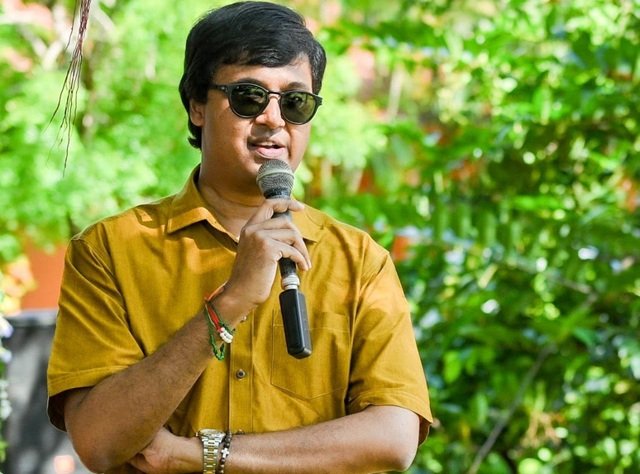
Now, through the 22nd Constitutional Amendment, the opposition—including the SJB and UNP—has elevated Rajiv Amarasuriya into a popular figure as President of the Bar Association. While Rajiv rallied public opinion against the amendment, Harini remained silent.
“Why is Harini silent on the 22nd…?”
This is the question everyone asks. At the outset of her premiership, opposition politicians expected Harini to clash with the JVP. Bimal Ratnayake once suggested that such a conflict existed. Yet Harini’s premiership did not falter, nor were her wings clipped. Indeed, strengthened by the opposition’s voice in her favour, she grew more secure within the government, defending it more vigorously once she assured her position was safe. In that moment, her star quality dimmed.
Now the star is Rajiv Amarasuriya. The politics of the Senanayakes and Bandaranaikes has ended. The politics of the Amarasuriyas has begun.