


While Israel and Iran have been at loggerheads for several years now, by and large, the Middle East countries such as Qatar, Kuwait, the UAE, and Saudi Arabia have kept themselves aloof and were not affected by the Israel-Iran conflicts and war in any significant way until the eruption of the recent West Asia war. As Israel is fighting with Hezbollah and Hamas, Lebanon has been severely and adversely impacted by this conflict for several years. However, Middle East countries have largely remained peaceful, as they ensured that they would not be impacted by this conflict in any significant manner.
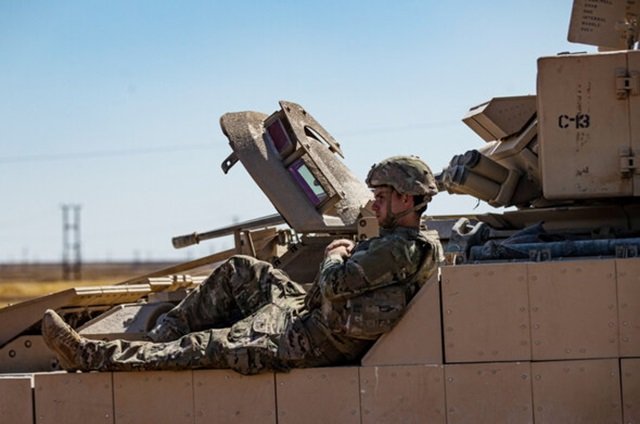
However, in the recent West Asia war, with the USA entering what had until then been the Israel-Iran war, and with the USA taking the side of Israel and attacking Iran, West Asian countries have been thrown into the conflict zone much against their will. With the USA using its bases in Middle East countries such as Qatar and the UAE to attack Iran, the war caused serious issues for Middle East countries, as the USA was using its bases located in Middle East countries to attack Iran, and Iran attempted to attack the US bases in Middle East countries. In the West Asia war, the damage that occurred to several infrastructure facilities in Middle East countries has been so severe that it would take several months to recover. Several refineries and petrochemical complexes in countries like the UAE and Qatar have been damaged, causing loss of production and huge financial losses.
Further, with Iran going to the extent of closing the shipping routes in the Strait of Hormuz and the USA, in turn, imposing a blockade, world trade became considerably paralysed, and Middle East countries have suffered considerably due to import-export transportation issues.
Now, the question is whether the Middle East countries have themselves been the cause of the problems that they face, as the Middle East countries became a war zone. The fact is that Iran would not have attacked Middle East countries in its conflict with Israel in the event that US military bases had not been located in Middle East countries.
This has happened because Middle East countries have permitted the USA to have military bases in their countries. Obviously, when the USA has military bases, it would certainly use them in Middle East countries to attack any other region that the USA wants. Certainly, the USA would not seek the permission of Middle East countries to use its bases in their countries, nor are Middle East countries in a position to prevent the USA from using the bases in their countries.
Obviously, the Middle East countries must have thought that the USA having its bases in their region would provide them with defensive cover in the event of conflict or war. This assumption has proved to be a myth, and the West Asia war has conclusively exposed this myth.
The West Asia war and the consequent sufferings of Middle East countries have made many discerning observers think that allowing US bases in Middle East countries has become a self-inflicted pain for the Middle East countries. Any country that seeks defensive cover from another country is bound to be at the mercy of the other country providing the defensive cover, which seems to be inevitable.
The West Asia war should prompt the Middle East countries to re-examine their foreign policies and approach, and they should work out some strategies to prevent overseas countries from having a military presence on their soil, where the country having the military bases would inevitably use them in its own whimsical way, irrespective of the consequences to the region. This means that Middle East countries need to have their own military capability to defend themselves. It would be appropriate if Middle East countries put their heads together and create a common defensive force which would act only with the self-interest of the Middle East countries in view.
The Middle East and West Asia encompass around 400 million people and have some of the world’s most important trade and energy corridors. United Middle East countries would be a win-win situation for the Middle East countries as well as for world trade and the global economy.
The Middle East countries need to realise that cooperation among themselves by arriving at a minimum common programme, keeping the interests of all the countries in view, is vital and immediately necessary, just as the European Union has done. This should be the way forward for the Middle East countries.
The need to have a well-coordinated and unified approach among the Middle East countries, based on appropriate policy and programme, is the right lesson that they should learn after this West Asian war.
Whether this suggestion would be a far-fetched and Utopian view is difficult to predict at this stage. Time alone will tell.
As a preliminary agreement has been signed between the USA and Iran, there would be unending debate around the world as to who gained in this war and who blinked first to arrive at a peace settlement. Anyway, the unending debate, which can be of academic interest, has no relevance for Middle East countries, as they have been forced to suffer and have been definite losers due to the West Asia war and certainly not gainers.











