Unlike other revolutions of the 20th century, especially in the Muslim world, which aimed at freeing countries from Western colonialism, gaining independence, and creating societies based on ideologies such as socialism, nationalism, and other man-made systems, the Islamic Revolution in Iran was an exception.
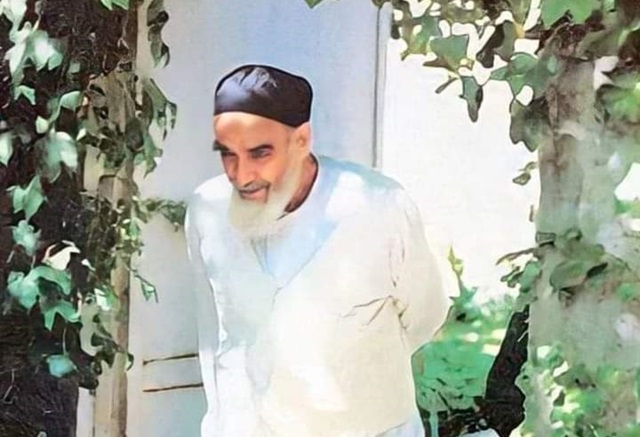
It is worth recalling that this great revolution in 1979 was led by a God-fearing man: Ayatollah Khomeini, who arrived at the dawn of the 15th Hijra Century, fulfilling the Prophetic Hadith: “There will come in every century a Reformer who shall revive my faith in my Ummah.”
Probably no revolution in contemporary history has raised such passion, drawn so many eyebrows, or had such a profound impact on the world as the Islamic Revolution in Iran and its great leader, Imam Khomeini (May Allah have mercy on him). This revolution was the first to challenge the West and its decadent and immoral structures, overthrowing one of the most entrenched and protected corrupt regimes of modern times: the Pahlavi regime of the Shah.
Before the advent of this revolution in 1979, the entire Ummah was in a deep slumber, akin to a coma, in a state of stagnation and backwardness. Nearly all Muslim states were fragile and vulnerable to occupation by colonialists, and were ready, or in a state of “Acceptance of Colonialism,” as aptly described by the late Algerian thinker Malik Bennabi.
The core idea of the revolution was not, as some might presume, simply about toppling the despotic Shah and replacing him with a new secular “elite.” Had this been the case, the West, especially the United States, would have welcomed the change and quickly aligned itself with the new regime for the sake of its interests. Instead, the revolution sought to implement high Islamic values and to establish a profile of the ideal Islamic person (Homo-Islamicus).
Ironically, what the West and America failed to foresee was that the new regime would replace a pro-Western system with a full-scale Islamic order, creating the first genuine Islamic state in the modern era. This transformation was a great shock to hostile countries, which responded with condemnation. The new revolutionary state made it clear that it opposed the West’s immoral and exploitative role in the world, the Zionist state’s aggression against the Palestinian people, and the neighboring “sheikhdoms” for their total submission to the West.
Forty-six years after this revolution, it is clear that, despite some challenges, it has not been a failure. The numerous social changes and successes of the Islamic Republic of Iran (IRI) demonstrate its veracity. However, the IRI is facing strategic challenges, the most pressing of which stems from the current US administration, led by the ill-fated former president, who foolishly sought to abandon and review the 2015 nuclear deal with the US and Europe. This move aims to deny Iran and other Islamic countries progress in technological fields, perpetuating their dependence on the West and the US, and keeping them in a state of backwardness.
It would be unfair, however, to overlook domestic challenges, though these are less significant than the international ones. It may be true that some of Iran’s youth, who constitute two-thirds of the population, feel disconnected from the Islamic Revolution, especially since they are too young to remember its events. Some may reluctantly accept certain Godly-prescribed tenets, such as the strict dress code for women and the prohibition on the mingling of sexes. However, as good Muslims, they generally support and defend the Islamic regime, as long as its legitimacy is grounded in its ideological Islamic principles.
History was made in just ten days, from the moment Imam Khomeini arrived in Tehran (1st February 1979) until the victory of the Islamic Revolution on 11th February 1979. The new model, by God’s grace, has had more “ups” than “downs,” and overthrowing one of the most powerful states in the Muslim world is not something that happens every year.
Despite the hostile environment from the West, especially America, it is clear that every position taken by the IRI is the result of insightful diplomacy and careful tactics. That said, this does not mean the IRI is immune to wise criticism on certain regional stances.
After 46 years, the Islamic Republic of Iran remains the only country in the Muslim Ummah that possesses true “political autonomy” and has made remarkable advancements in various scientific fields, particularly in nuclear technology, despite the ongoing opposition from Western powers.