What the Heck Happened?
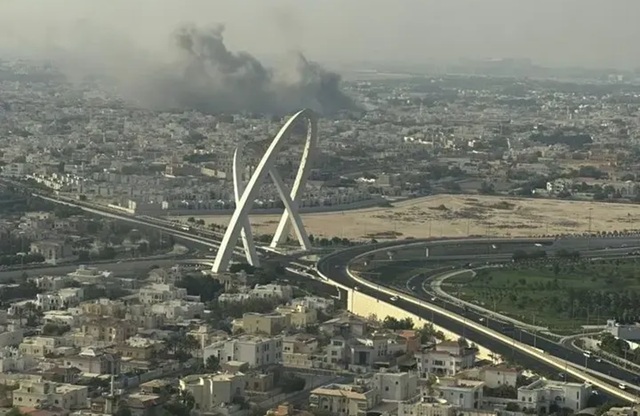
On 9 September 2025, the world witnessed an unprecedented affront to the sovereignty of a State when Israel launched a series of airstrikes on the political leadership of Hamas in Doha, Qatar. The explosions that reverberated across the Leqtaifiya district of the Qatari capital were not merely directed at military targets but were a calculated intrusion into the territorial sanctity of a State actively engaged in brokering peace. Eyewitnesses reported columns of black smoke, while Hamas acknowledged the loss of bodyguards and family members of its senior leaders, though the principal figures themselves survived. That this attack occurred during ongoing ceasefire negotiations, underpinned by the diplomatic efforts of Qatar and supported by the United States, renders the act not only a military escalation but also a categorical repudiation of the fundamental norms enshrined in Article 2(4) of the United Nations Charter. The Secretary-General of the United Nations, in response, characterized the strikes as a flagrant violation of Qatari sovereignty, a description that resonates with the corpus of international law which, since the San Francisco Conference of 1945, has held the territorial integrity of States as sacrosanct. In this sense, the strike on Doha has etched itself as a defining moment in the continuing erosion of collective security, underscoring the perilous ease with which the imperatives of geopolitics are allowed to override the obligations of law.
The reported Israeli strike on Doha, directed at senior figures of Hamas, raises serious questions of international legality and the sanctity of sovereignty. At the core of this issue lies the fundamental prohibition articulated in Article 2(4) of the Charter of the United Nations, which prohibits the threat or use of force against the territorial integrity or political independence of any State. The Secretary-General of the United Nations, in condemning the action as a flagrant violation of international law, echoed the plain meaning of the Charter. The reactions of States—some calling the strike unacceptable, others expressing unease while refusing to condone—suggest a widespread perception that the presumption of illegality is the starting point, with the burden of justification falling squarely on Israel. This presumption derives not from political preference but from the Charter’s geometry, which allows for two and only two exceptions: authorization by the Security Council under Chapter VII, or an invocation of self-defense under Article 51.
The first exception is manifestly absent. No resolution of the Security Council authorized the use of force against Qatar. The only possible defense that Israel could invoke is self-defense. Article 51, which preserves the “inherent right of individual or collective self-defense if an armed attack occurs,” has been scrutinized by the International Court of Justice in a series of cases ranging from Nicaragua to Oil Platforms, the Wall Advisory Opinion, and Armed Activities on the Territory of the Congo. The Court has been consistent in holding that any invocation of Article 51 requires, first, the occurrence of an armed attack of sufficient gravity; second, that the response be necessary and proportionate; and third, that where non-state actors are involved, either attribution of their conduct to a State be shown under strict tests of control, or, in more recent State practice, that the “unwilling or unable” doctrine be credibly established. The Court has never openly endorsed this latter doctrine, and its standing in customary international law is at best contested. Therefore, the legal space into which Israel’s action falls is narrow.
In this case, Israel could argue that Hamas has continuously launched attacks of considerable gravity, triggering a continuing entitlement to self-defense. The strike in Doha, it might contend, was directed against those orchestrating such attacks and therefore necessary to pre-empt further harm. However, this justification stumbles against the enduring requirements of necessity and proportionality, rooted in the famous Caroline formulation that necessity must be instant, overwhelming, leaving no choice of means and no moment for deliberation. The Caroline standards, originating in the celebrated nineteenth-century diplomatic exchange between the United States and Britain, continue to stand as a cornerstone of international law in the domain of self-defense.
The incident itself arose in 1837, when British forces crossed into American territory to destroy the steamer Caroline, which was said to be supplying Canadian rebels. The ensuing diplomatic protest by the United States led to a formulation by Secretary of State Daniel Webster that has endured as customary law. Webster insisted that the necessity of self-defense must be “instant, overwhelming, leaving no choice of means, and no moment for deliberation,” and that the responsive action must involve “nothing unreasonable or excessive,” being confined strictly within the exigencies of necessity. These principles of necessity and proportionality, first captured in the Caroline correspondence, have been consistently recognized by courts such as the International Court of Justice in the Nicaragua case, acknowledged by the International Law Commission, and endorsed by numerous scholars.
In contemporary discourse, when a State asserts anticipatory or pre-emptive self-defense—such as Israel’s strike on Doha—the measure of its legality is invariably tested against the exacting yardstick of the Caroline standards. Unless the presence of Hamas leaders in Doha constituted a concrete and imminent threat, coupled with an unwillingness or inability on the part of Qatar to neutralize the threat, Israel’s claim cannot withstand the Caroline test. Self-defense is forward-looking, designed to repel or prevent an imminent attack, not to serve as punishment for past conduct or a discretionary degradation of adversary leadership.
THE INTERNATIONAL LAW COMMISSION
The International Law Commission’s Draft Articles on Responsibility of States for Internationally Wrongful Acts further underline the problem. They affirm that necessity cannot justify violations of peremptory norms and that countermeasures cannot include the use of force. The Draft Articles also make clear that State responsibility for the conduct of non-state actors requires a high standard of attribution, such as effective control or overall control, depending on the test applied. The mere fact that Hamas figures resided or met on Qatari soil does not render Qatar responsible for their actions. Nor does the political choice to host or engage them for negotiation purposes transform Qatar into a party directing or controlling Hamas operations. To collapse the distinction between harboring and directing would be to undo the careful discipline of the ILC and the jurisprudence of the ICJ.
The air-law dimension also reinforces the illegality of the strike. Article 1 of the Chicago Convention on International Civil Aviation enshrines the complete and exclusive sovereignty of every State over the airspace above its territory. While the Convention does not regulate uses of force as such, the principle it embodies reflects and reinforces Article 2(4) of the Charter. The projection of armed force into Doha’s airspace, absent consent, is therefore not merely a political affront but a juridical trespass against a fundamental principle recognized in treaty and custom alike.
The Secretary-General’s voice carries constitutional resonance within the United Nations system. By describing the act as a flagrant violation, he was not merely engaging in rhetoric but signaling a structural danger: if States can, at will, strike at non-state actors in the territory of third States without demonstrating the rigorous requirements of Article 51, the line between lawful self-defense and unlawful reprisal will evaporate. The European States that called the action unacceptable, the careful but critical statements from allies such as the United States and the United Kingdom, and Qatar’s denunciations together form a chorus that resists the normalization of such unilateral cross-border actions. International law relies on practice as well as opinio juris, and in this practice one sees little evidence of a general acceptance of such acts as lawful.
THE BUSH DOCTRINE
This episode also calls into memory the “Bush Doctrine,” articulated in the wake of September 11, 2001. That doctrine sought to justify anticipatory self-defense against emerging threats, and to hold States that harbor terrorists as responsible as the terrorists themselves. In its boldest form, it stretched the notion of imminence beyond recognition and attempted to dissolve the distinction between State and non-state actors. The Israeli strike in Doha, insofar as it appears to rest on the claim that the mere presence of Hamas leaders in Qatar created an imminent threat, echoes this doctrine. Yet the Bush Doctrine was never embraced as law by the international community; rather, it was criticized as a dangerous enlargement of Article 51. To invoke it today is to rest one’s case on a jurisprudential edifice that has been rejected by the ICJ, the ILC, and most academic opinion. The “harboring” strand of the doctrine fares no better: hosting political representatives of Hamas for negotiation purposes is not equivalent to directing or controlling their conduct. Unless one abandons the careful architecture of attribution, it cannot ground a lawful strike.
It must also be noted that Article 51 requires that any use of force in self-defense be immediately reported to the Security Council. The procedural obligation is not a triviality. It is the means by which the collective security system retains oversight over the unilateral use of force. Failure to notify, or the offering of ex post rationalizations, weakens the legality of the claim. Transparency is the price of legitimacy in this domain. Without it, the invocation of self-defense is shorn of its procedural spine.
To consider the strongest argument available to Israel is still to acknowledge its weakness. The claim of a continuing armed attack by Hamas does not in itself justify any measures. The necessity of striking leaders in Doha is not self-evident. Alternatives such as diplomatic engagement with Qatar, requests for arrest and extradition, or recourse to the Security Council were not shown to be unavailable. Proportionality requires that the scale and effects of the response be commensurate with the threat. Precision in the strike may mitigate humanitarian concerns but does not substitute for necessity. Sovereignty is not a courtesy but the cornerstone of international order, and precision cannot erase its violation.
If the act is unlawful, the consequences follow from the law of State responsibility. Israel would bear an obligation of cessation and non-repetition, as well as an obligation to make full reparation for any injury caused to Qatar. Qatar, in turn, would have available to it diplomatic protest, demands for assurances, and recourse to the Security Council. It could even, subject to jurisdictional hurdles, pursue adjudication before the International Court of Justice. The matter might also raise questions under the Rome Statute’s provisions on aggression, though jurisdictional limits and definitional controversies would likely foreclose that avenue. The legal consequences may thus be more political than judicial, but they remain real.
The broader concern lies in precedent. If States that host or mediate negotiations risk being struck because they harbor adversary figures, then the Charter’s preference for the pacific settlement of disputes is undermined. The protection of mediation spaces, though not codified, is part of the functional ecosystem of peace. To erode it is to erode the prospects for conflict resolution. That, too, is why the Secretary-General’s condemnation matters: he is defending not only the text of Article 2(4), but the purposes of the Charter as set out in Article 1—to suppress acts of aggression and to promote the peaceful settlement of disputes.
MY TAKE
My take on this episode, viewed through the uncompromising prism of international law, is that the strike on Doha demonstrates once more the peril of subordinating the sanctity of sovereignty to the expediency of security. No State, however grievous its security concerns, is entitled to cast aside the clear injunction of Article 2(4) of the Charter unless it can rigorously establish the elements of necessity, proportionality, and imminence prescribed by Article 51. The law does not bend to convenience; it yields only to the most exacting proof that no other means are available to repel an imminent armed attack. In this instance, such proof has not been placed before the international community.
The Secretary-General’s condemnation is not merely symbolic rhetoric but a reminder of the collective compact that States entered into in 1945: that the prohibition of the use of force, together with the recognition of sovereignty, forms the constitutional foundation of international order. To erode these principles on the grounds of political necessity is to court the collapse of the very architecture designed to keep war at bay. The invocation of doctrines such as anticipatory self-defense or the claim of “harboring” terrorists cannot alter the fact that the International Court of Justice and the International Law Commission have remained steadfast in their insistence that sovereignty is the first principle of international law and that exceptions to the use of force must be narrowly construed.
Israel’s strike, when assessed in the light of the Bush Doctrine, risks resurrecting a dangerously permissive reading of self-defense that the international community has consistently rejected. The consequence of such an approach is not the strengthening of international law but its erosion. The Charter’s geometry must remain intact if it is to serve as more than parchment. Sovereignty, like peace, is indivisible. Once compromised for one, it stands imperiled for all.
The conclusion that emerges is that the Israeli strike on Doha cannot be reconciled with the stringent requirements of the Charter. It lacks Security Council authorization; it does not meet the Caroline standard of necessity and proportionality; it fails the attribution and responsibility tests laid down by the ICJ and the ILC; it violates the sovereignty guaranteed in both the Charter and the Chicago Convention; and it risks undermining mediation as a practice essential to peace. The Bush Doctrine may have provided rhetorical support for anticipatory self-defense and for collapsing the distinction between terrorists and their hosts, but it has no status in law. International law continues to insist on imminence, necessity, proportionality, and respect for sovereignty. The geometry of the Charter remains intact, and the Doha strike illustrates the dangers of seeking to redraw it by unilateral action. Sovereignty is not negotiable, and the prohibition on the use of force is not a matter of convenience. They remain the hard edges of an international order already strained, but not yet broken.