A ceasefire that is sustained by a meaningful peace process… is the only way to break the cycle of violence, of hatred, of misery,” ~ UN refugee chief Filippo Grandi.
The Ceasefire
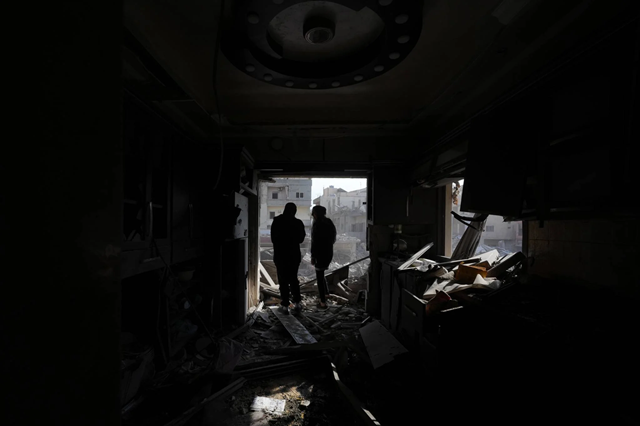
The recent ceasefire agreement between Israel and Hezbollah, brokered with significant diplomatic intervention, notably from the United States and France, marks a temporary cessation of hostilities that have escalated following Hezbollah’s involvement in the Israeli Palestinian conflict. The context of this ceasefire stems from Hezbollah’s direct military involvement on behalf of Hamas after the latter’s attack on Israel in October 2023, leading to violent exchanges along the Lebanese-Israeli border. The confrontation resulted in considerable casualties and displacement, contributing to the further destabilization of an already fragile region.
From a legal standpoint, the ceasefire can be viewed as a complex negotiation balancing competing national interests—Israel’s security concerns and Lebanon’s sovereignty. Israel has been particularly insistent on retaining the right to take military action should Hezbollah resume hostilities, citing its security doctrine and the need to protect its northern borders. This stipulation reflects Israel’s strategic imperatives, which prioritize preventing the transfer of military capabilities to Hezbollah and the potential threat posed by the group’s alignment with Iranian interests
Conversely, Hezbollah has expressed significant reservations regarding terms that would potentially undermine Lebanese sovereignty. While the group has generally agreed to a ceasefire, it remains wary of any measures that would limit its autonomy in the southern region of Lebanon. These concerns are grounded in Hezbollah’s long-standing position as a non-state actor with substantial influence in Lebanese politics and security
.The fundamental question surrounding this ceasefire is its sustainability. The 2006 ceasefire, which followed the Lebanon War, remains an instructive precedent. Despite the official cessation of hostilities, Hezbollah’s continued military presence in southern Lebanon, contrary to United Nations Security Council Resolution 1701, highlighted the challenges of enforcing such agreements. The current ceasefire is similarly fragile, and its adherence remains uncertain given the entrenched positions on both sides.
What if the Ceasefire is Breached?
In the event that the ceasefire between Israel and Hezbollah is broken and the security of Israel is directly threatened, the Israeli government is expected to respond with a multifaceted strategy that combines military force, regional diplomacy, and internal security measures. Israel’s approach will be shaped by its longstanding security doctrine, which emphasizes rapid and decisive action to neutralize perceived threats, particularly those emanating from Hezbollah and its Iranian backers.
Military Response
Hezbollah’s military infrastructure is in southern Lebanon. Given the persistent threat of missile attacks from Hezbollah, Israel would also deploy its advanced missile defense systems, including Iron Dome and David’s Sling, to protect civilian areas from rocket fire. The Israeli Defense Forces (IDF) would prioritize striking Hezbollah’s weapon depots, rocket launch sites, and command centers, targeting high-value assets that could disrupt Israel’s defense capabilities. Israel’s strategic emphasis would be on rapid retaliation to prevent further attacks and to reinforce its deterrence against future aggression.
Diplomatic and Regional Considerations
Diplomatically, Israel would seek to garner international support for its actions, especially from key allies such as the United States and European States. The Israeli government would aim to frame the conflict as part of a broader regional security issue, emphasizing Hezbollah’s role as a proxy force of Iran. In this context, Israel would likely call for a tightening of sanctions against Hezbollah, seeking to isolate the group and its Iranian sponsors diplomatically. Additionally, Israel may seek to expand its network of regional alliances, building upon the normalization agreements reached through the Abraham Accords. This might include intelligence sharing or security cooperation with Arab states that have a vested interest in curbing Iranian influence and Hezbollah’s destabilizing activities in the region.
C) Internal Security Measures
Domestically, Israel would likely enhance its security infrastructure, particularly in areas susceptible to Hezbollah’s asymmetric warfare tactics. Increased vigilance would be expected along the Lebanese border and within Israel’s northern regions, which have historically been vulnerable to Hezbollah’s operations. Israeli authorities might also activate emergency protocols, including the mobilization of reserve units, to ensure the readiness of its armed forces in the event of an intensified conflict. The Israeli government would be under considerable domestic pressure to act swiftly and decisively, not only to protect its citizens but also to reassure the international community of its commitment to maintaining regional stability.
In summary, Israel’s response to a potential breach of the ceasefire would center on its ability to quickly mobilize military forces, pursue diplomatic avenues to isolate Hezbollah, and enhance its internal security to mitigate civilian casualties. While the immediate focus would be on military retaliation, Israel’s actions would also be informed by broader geopolitical calculations, particularly its long-standing concerns regarding Iranian influence in the region. The complexity of the situation suggests that any military escalation could have far-reaching consequences for both regional and global security, underscoring the high stakes involved in such a conflict.
Israeli Ethics of Fighting
In his book “Ethics of Our Fighters” Shlomo M. Brody embarks on a rigorous exploration of Jewish military ethics, focusing on the principles that guide the conduct of warfare in accordance with Jewish law and the ethical challenges faced by the IDF. The work synthesizes halachic rulings, philosophical arguments, and historical case studies, offering a rich narrative that illuminates the tension between the necessity of self-defense and the moral imperative to limit harm.
Brody draws heavily on Rabbi Joseph Soloveitchik’s teachings in Kol Dodi Dofek, where Soloveitchik stresses the sanctity of Jewish life and the obligation to ensure accountability for its loss. This principle is foundational in Jewish thought, framing self-defense as both a moral duty and a reflection of the Jewish people’s covenantal responsibilities. Sovereignty, as Brody emphasizes, is not merely about power but entails profound ethical obligations—toward one’s own people and even toward adversaries.
The IDF’s operational decisions often embody these values, as Brody illustrates with examples of restraint and measures taken to protect civilian lives during military operations. Warning leaflets, “roof-knocking,” and the use of precision strikes demonstrate an intentional effort to minimize collateral damage, even at significant risk to Israeli soldiers. Brody juxtaposes these practices with the tactics of groups like Hamas, which exploit civilian populations as shields, flagrantly violating both moral principles and international norms. Here, Brody critiques international frameworks such as Additional Protocol I of the Geneva Conventions, arguing that they inadequately address the complexities of modern asymmetrical warfare, inadvertently incentivizing unethical tactics by non-state actors.
Halachic authorities, including the Chazon Ish and the Tosafists, are invoked to address specific dilemmas, such as the permissibility of pre-emptive actions or the ethical limits of collective punishment. These discussions are layered with the intricacies of Jewish law, which often presents competing values. For instance, while the Torah commands the obliteration of Amalek, Jewish tradition has tempered such directives with interpretations that prioritize justice and humanity.
Brody also explores broader philosophical implications, citing thinkers like George Santayana to underscore the importance of historical learning. He acknowledges that decisions made in war are rarely clear-cut and are often judged with the benefit of hindsight. The ethical calculus of war, particularly for the IDF, involves navigating a labyrinth of legal, moral, and strategic considerations, which Brody argues distinguishes it from other military forces. This commitment to moral conduct, even amid existential threats, transforms warfare into an act that could sanctify God’s name—a Kiddush Hashem.
The book further examines the accusations of disproportionate force frequently leveled at Israel, illustrating how these claims often disregard the ethical deliberations behind IDF actions. Brody argues that such criticisms are rooted in misunderstandings or deliberate misrepresentations of the moral complexities at play. He posits that the IDF’s adherence to high ethical standards, even at great cost, is a testament to the profound influence of Jewish values on military strategy.
Through a meticulous analysis of halacha, historical precedents, and contemporary practices, Brody’s work not only defends the IDF’s ethical framework but also invites readers to grapple with the universal challenges of military morality. By bridging ancient teachings with modern dilemmas, “Ethics of Our Soldiers” presents a compelling vision of warfare as a domain where morality and necessity converge. It is a profound exploration of how ethics can inform, and even elevate, the harsh realities of combat.
My Take
President Biden’s characterization of the ceasefire as a “window of opportunity” in the Middle East, while pragmatic, must be viewed with caution. Historically, ceasefires in this region have served as temporary measures rather than definitive steps toward lasting resolution. The complexities inherent in the Israeli Palestinian conflict—coupled with unresolved political, territorial, and security concerns—render any claim of a definitive peace outcome premature. The true test will lie in whether this ceasefire leads to substantive and sustained diplomatic negotiations, as opposed to simply offering a temporary lull in hostilities. Historical precedents underscore the fragility of such openings.
Previous attempts in the region, like those during the Oslo Accords or Camp David, have demonstrated that while temporary pauses can create openings, they do not guarantee a comprehensive peace. The challenge remains whether both sides can sustain dialogue beyond the initial phase, particularly when entrenched political and territorial disputes remain unresolved. Thus, while this ceasefire may serve as a tactical opportunity, its potential to transform into lasting peace will depend on sustained diplomatic engagement and addressing underlying grievances. Given the complex nature of the Israeli Palestinian conflict, historical precedents suggest caution in declaring that a single ceasefire will lead directly to a lasting resolution.