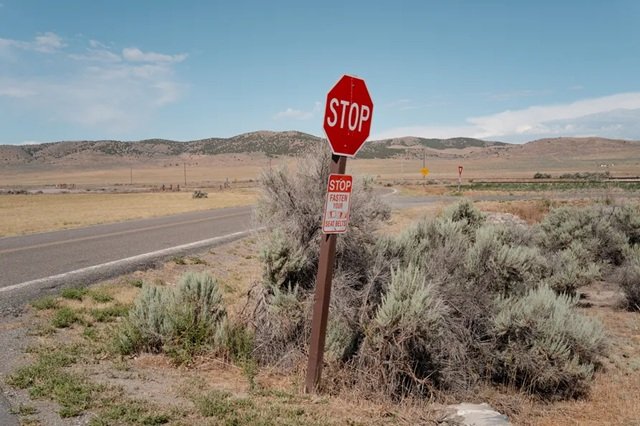
At the northern end of Utah’s Great Salt Lake, the Hansel Valley seems an unlikely place for one of America’s largest data centres. Mobile reception is weak, the landscape is dry and winds sweep tumbleweeds across an open plain of yellow grass and grey-green sagebrush. The nearest community, Snowville, is about 20 kilometres away and has just 163 residents, according to the last census.
That isolation is precisely what attracted the developers. Land is cheap, and planners assumed that few people would object to an enormous technology complex in such a remote location. But Brenna Williams, a retired economist and member of the Box Elder Accountability Referendum, or BEAR, is determined to prove them wrong. For her, the land is “sacred” and should not be destroyed.
The dispute, reported by the German newspaper Die Zeit in an article titled “Das Monster in der Wüste”, has become part of a wider American argument over the physical costs of the artificial intelligence boom. Across the United States, communities are increasingly confronting the demands of the infrastructure needed to power AI: enormous quantities of electricity, water and land, alongside heat and noise.
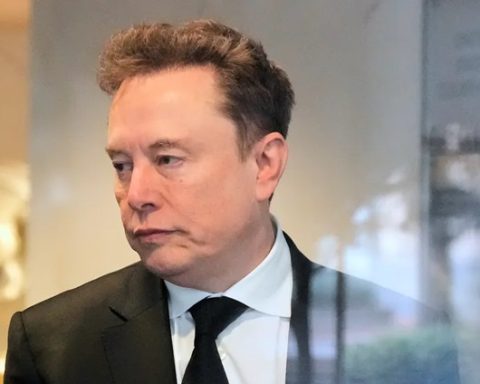
The Utah project, known as Stratos, was initially conceived on a staggering scale. Investor Kevin O’Leary’s first proposal covered 16,000 hectares, more than 2.5 times the area of Manhattan. The planned investment was $100 billion, while the completed data centre could require up to nine gigawatts of electricity. That would be more than twice the electricity currently consumed by the entire state of Utah, which uses less than half that amount.
Because the existing power grid could not support such a demand, Stratos was designed to generate its own energy using natural gas, battery storage and solar panels. Although the eventual size of the project is now uncertain, planning continues.
O’Leary has argued that the development would strengthen US national security and help the country compete with China. Its computing capacity would be used for artificial intelligence, while the project is also being promoted as part of military infrastructure and energy security. The state development authority MIDA supports the project because of its military connections, with the proposed facility expected to benefit the Utah National Guard and Hill Air Force Base.
That argument initially appeared particularly persuasive in Box Elder County, a conservative and sparsely populated area whose economy is strongly connected to the military. Hill Air Force Base is a major employer and an important source of local pride. In a Mormon-influenced community where Donald Trump received almost 80 per cent of the vote, few expected opposition to an AI facility with military applications.
That changed at a public meeting in Brigham City in late April.
MIDA had been expected to present the project and seek approval from the County Commission. But residents who attended were told that discussion was not planned and that they would have no say. The commission eventually moved its vote to the County Fair Building, the largest available hall, where thousands of angry residents could gather. The three commissioners, however, withdrew to a private room and voted for the project by video link.
Legally, the project had been approved. Politically, the decision had consequences. Footage from the crowded meeting spread rapidly across Facebook, Instagram and X, showing angry ranchers and retirees. People who had never previously attended a commission meeting learned what had happened, and the protest movement expanded.
The most contentious issue was water.
The Great Salt Lake has lost substantial amounts of water over recent decades. Its level is now around 2.5 metres below the historical normal. The retreating lake has exposed ground from which winds can carry dust containing heavy metals towards Salt Lake City. The lake is also an important stop for millions of migratory birds and contributes to the mountain snow cycle that replenishes rivers in spring.
Val Anderson, co-owner of Mineral Resources International, a family business that has extracted minerals from the Great Salt Lake since the 1960s, sees the consequences at close range. Standing where his father was photographed in the lake in the mid-1980s, Anderson points towards the dry ground. Monument Rock, once an island, now stands surrounded by white salt crust.
Anderson’s company has voluntarily committed to reducing its water use by one-third. “We already don’t have enough water,” he says. “How will it be with such a data centre?”
The developers say the concern is overstated. Paul Palandjian, chief executive of O’Leary Digital, told a local broadcaster that the facility would largely use closed-loop cooling and require only about 2.2 billion litres of water a year, roughly the amount used by 5,000 households. The developers have even considered a pipeline to return unused water to the lake.
But the technical design has not been finalised, and there is no definitive consumption figure. Independent estimates are considerably higher, ranging from approximately 7.6 billion to 62.8 billion litres annually, depending on the technology eventually adopted.
The dispute also extends to the economic promises surrounding Stratos. Developers have projected annual revenues of between $30 million and $108 million for Box Elder County and around 2,000 jobs. Opponents question those figures.
Alan Williams, Brenna’s husband and an engineer, points to a similar project in Delta, about three hours south. Thousands of jobs were promised there, he says, but construction was carried out by outside specialists who left afterwards. The facility now employs 40 technicians and 50 security personnel. “That’s the pattern,” he says. “You’re promised economic transformation and you get a building.”
Environmental concerns have intensified the opposition. Robert Davies, a physics professor at Utah State University, calculated that the proposed data centre and natural-gas power plant could release as much heat into the Hansel Valley each day as the explosion of about 23 atomic bombs.
The Utah conflict reflects a broader national backlash. In 2023, US data centres consumed 176 terawatt-hours of electricity, equivalent to 4.4 per cent of total consumption. By 2028, their share could reach 12 per cent. A large facility can require as much as 20 million litres of water a day, comparable to the consumption of a medium-sized city.
As established data-centre locations in Virginia and Oregon become saturated, developers are moving into more remote areas of Texas, Arizona and Utah. Opposition is spreading with them. According to Miquel Vila of Data Center Watch, a research project of AI security company 10a Labs, local resistance blocked or delayed 48 projects worth $156 billion in 2025. On 18 July 2026 alone, he recorded 142 protests across 42 states.
Vila describes the movement as a protest against something largely invisible: the physical infrastructure behind AI. Data centres, he argues, make tangible a technology that is otherwise encountered through screens and software.
Public acceptance appears to be falling. Six months ago, almost half of those surveyed were willing to accept a data centre in their community. Now, according to the figures cited by Die Zeit, only 20 per cent are. Several states have introduced moratoriums, withdrawn tax incentives or imposed stricter requirements.
The opposition has also crossed party lines. Stuart Adams, a long-serving president of the Utah Senate and supporter of Stratos, lost his Republican primary in late June. Governor Spencer Cox has since described residents’ concerns as “legitimate”. O’Leary has agreed to halve the planned footprint, although the resulting development would still cover an area comparable to or larger than Manhattan.
In Washington, the issue has attracted the attention of Senator Bernie Sanders and Representative Alexandria Ocasio-Cortez, who introduced legislation in March proposing a national moratorium on data-centre construction. Sanders said the country could not allow a handful of billionaires to make decisions that reshape its economy, democracy and the future of humanity.
Back in Hansel Valley, Brenna Williams insists she is not opposed to technology. She accepts that jobs and revenues matter to the county. But she says her calculation as an economist is ultimately about costs and benefits.
She remembers bringing her children to the valley for camping, hunting, picnics, bonfires and stargazing. “This is my story. And my children’s,” she says. “I don’t want to watch everything ruined.”
For Williams, the equation is simple: whatever economic transformation Stratos promises, the price is too high.