In 1971, when Pakistan requested Ceylon to use Katunayake Airport for PIA planes flying from West Pakistan to East Pakistan to refuel, as India had refused overflights while an insurgency was going on in East Pakistan (now Bangladesh), Prime Minister Mrs. Sirimavo Bandaranaike gave permission immediately despite her close relationship with Indian Prime Minister Indira Gandhi.
Sri Lanka, on 20 March, was told that the USA (name/designation of character unknown), on 26 Feb 26, had requested permission for two ‘fighter jets’ from its Africa Command in Djibouti, and for whatever reason said to be armed with eight anti-ship missiles, to land at Mattala International Airport between 4–8 March. The request was said to be refused by Sri Lanka on a date, to a person, by a person, not divulged. This was bewildering, and not only for having taken 22 days to make this information public and 20 days after war had started. Was this classified as top secret? Remember Easter Sunday? Who cared who bombed?
A government spokesman, with reference to the Iran Navy (IRIS)’s request to berth in Sri Lankan harbours, said it takes about two weeks to process such requests. Even if this is swallowed by some, will the Iranian Ambassador believe it? (The German battle cruiser Graf Spee in WW1 was allowed to enter Montevideo harbour in Uruguay without delay. It was scuttled 72 hours later by its captain, Langsdorff, after its crew were taken off. They were all interned in Argentina. The captain committed suicide seven days later.)
It certainly took just over two weeks after the requested USAF landing date for the Sri Lankan government to inform the public of this unprecedented, if not baffling and guarded, development. Feb 26 was two days before the USA and Israel launched a pre-emptive attack on Iran. Was the USA kept waiting for a response for the spokesman’s ‘two weeks’? Or was it just two minutes for the US of A from ‘neutral’ Sri Lanka?
Lilliput-sized Djibouti is 4,050 kms from Mattala. It sits strategically on the Bab El Mandeb that separates the Gulf of Aden from the Red Sea, with rail links to Ethiopia, and has a deep-water port. The USAF is stationed at Camp Lemonnier (named after a heroic French general) on a 20-year US $63 million annual lease. It has intelligence, surveillance, and reconnaissance capability. It has an aircraft mix of C130 transport, refuelling tankers, helicopters, and drones (some erratic), and just six F16 (fighter) aircraft.
We are made to believe that a third of the USAF fighter aircraft in Djibouti was expected to fly to ‘neutral’ Sri Lanka’s Mattala Airport for an undisclosed purpose, a week after a catastrophic war erupted.
Fighter aircraft have an endurance of 1–3 hours. It could take about 5 hours or more to get to Mattala with refuelling from tankers. No reason was given for this baffling request. Was the Sri Lanka Air Force consulted as a ‘courtesy’? To date, no acknowledgment of this turn of events, explosive if true, has been made by the USA, including its Embassy in Colombo.
No foreign military aircraft had flown into Mattala before. Did anyone ask for what reason the request was made? Did the USA, caring tuppence for the Nuremberg Trials, Geneva Conventions, and international law and legitimacy, not demur, cajole, or threaten with wipeouts when denied? Great Britain had its face rubbed hard for denying assorted American requests, and NATO has been whipped. What saved Sri Lanka? Neutrality?
The Iranian Ambassador (Alireza Delkhosh) in Colombo has said the three unarmed Iranian ships that took part in the Indian International Fleet Review that ended on 26 Feb 26 at Visakhapatnam were invited to visit Sri Lanka on their way back home. Was it by the Commander of the Sri Lanka Navy? One of them, the IRIS (Islamic Republic of Iran Ship) Lena, requested India and got permission to dock in Cochin immediately. There was no two-week shilly-shallying. Also, what secret did India know that Sri Lanka did not?
The Sri Lankan government, responding to the Iran Ambassador’s statement, says invitations given by the Sri Lanka Navy (even if it was the Commander of the Sri Lanka Navy) are not to be considered government invitations.
Sinking of the IRIS Dena. The unarmed frigate IRIS Dena requested Sri Lanka to dock at a southern port on 26 Feb. While the Sri Lankan government was wallowing in its cleverly acquired, self-imposed two-week procedures, the Dena, referred to initially by the government in Parliament as ‘Iris’, was torpedoed and sunk by a yet unidentified US submarine towards dawn on 28 March.
Rescue craft from SLNS Galle, on being informed, reached the site within an hour, saved 32 crew, and recovered 84 bodies of the 130 Iranian sailors killed. The rescued sailors, mainly young cadets, are being well looked after by SLAF Koggala, while the dead were repatriated. The third ship, IRIS Busher (logistic support ship), having developed mechanical problems, requested help. It was allowed to approach Colombo harbour, after which it was decided to berth it in Trincomalee until the war ended.
US Defence Secretary Hegseth announced the Iranian sailors ‘died quietly’ and later compared it to the sinking in the Falklands War by the RN nuclear submarine of the Argentinian ship Belgrano, even as it was sailing out of the ‘exclusion zone’. Over 300 were killed. It was not an example to be followed. It was a tragic error. Was IRIS Busher also not summarily torpedoed because of any vestige of remorse felt by the US submarine’s crew for destroying a defenceless Dena?
‘IRIS Busher’s crew was transferred to SLNS Welisara, where they have been overtaken by traditional Sri Lankan hospitality. Will India, that has played an unenviable and possibly accountable role in the tragic fate of the IRIS ships, offer to intern the Iranian sailors? Did its ties to the USA and Israel stall her? India’s Modi visited Israel on 26 Mar, two days before the war began. Just for the record, the IRIS Dena had visited Colombo in 2025. Maybe the waiting time then for that approval was not recorded by that spokesman. A sad story to retell.
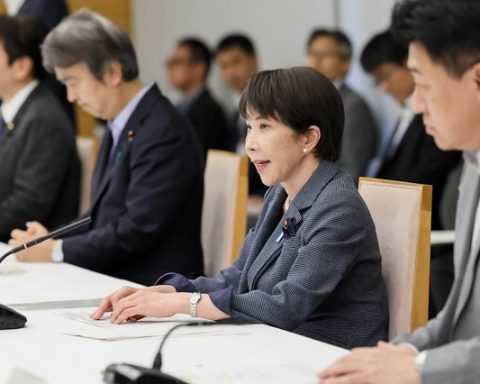
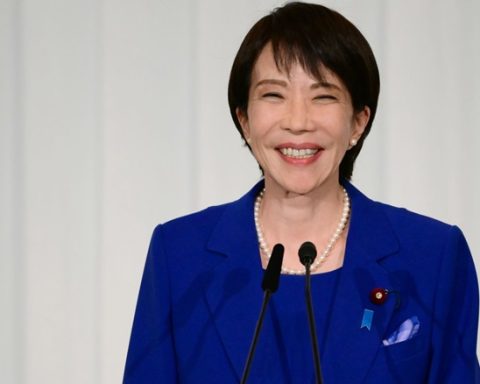
Trump’s Pearl Harbour moment. The visiting Japanese Prime Minister looked stunned when Trump reminded her of the surprise Japanese attack on Pearl Harbour. It wasn’t a sick joke. He likened it, by a quirk of boorishness, to the USA’s joint attack with Israel on Iran (while ‘peace negotiations’ were going on in Oman). Did Trump know that the Japanese attack on Pearl Harbour was a consequence of the Portsmouth (New Hampshire) Treaty, mediated by US President Roosevelt, denying reparations to Japan after Japan defeated Russia in its war of 1904/05? This was after the USA signed a friendship treaty with Japan and allowed it to govern a betrayed Korea.
The Russian army in Manchuria and its Baltic Fleet (Battle of Tsushima) were defeated. It was, until then, the biggest land war fought in modern times. This was also the first time a European/Western power was defeated by Asians. It immediately gave hope of liberation to Asia’s colonies in the East, which would come in the late 1940s.
The Japanese commander at the successful Port Arthur battle, General Nogi Maresuke, after the war had ended in victory in 1905, asked the Emperor’s permission to commit suicide to atone for the deaths of thousands of his men. It was refused. When the Emperor died in 1912, the General committed suicide. A lesson for military leaders who fancy body counts of their own men as achievements.
Neutrality. Sri Lanka, with what may become an apocalyptic war raging, has declared that it is neutral. A very crafty move. But Sri Lanka has, in fact, offered her hand to India, the USA, Russia, and China, and even the Quad. Does this qualify for a first class in hypocrisy? Few, even in Sri Lanka, if not elsewhere, were fooled by this statement. Neutrality does not make any difference today, especially after a near-climactic war has started. Powerful nations vaporise international law and prove might is right. Lesser countries cringe, claiming neutrality.
Division of the Earth. The USA, at the turn of the 20th century under President Theodore Roosevelt, who had done military service unlike Trump, declared that the European nations should control the Atlantic while the USA would do so in the Pacific. He sent his Secretary of State, the over-300-pound Taft, with his pretty daughter Alice and her fiancé on what was called the ‘Imperial Cruise’ to bully the Pacific nations, starting from Hawaii to Japan, Korea, the Philippines (later bought for US$20m from Spain!), and Taiwan, with the sole intention of containing China. This perverse US thinking, and the fear behind it, persists 200 years on.
China is today the USA’s closest rival, economically and militarily. Was Trump led astray by Israel to be diverted to war with Iran, leaving the South China Seas uncontested while Taiwan was planning evacuation? Trump postponed his scheduled meeting in March with Chinese President Xi Jinping to May 26. Jinping, like his predecessors, humours the American leaders who have to come to him, never the other way round. China has tested the USA’s illegal blockade of the Straits of Hormuz.
Neutrality. It is time Sri Lanka recognized her true friends instead of making a fool of herself by whimpering ‘neutral’ while signing undisclosed defence pacts. Were these expected to be used as a buffer against external pressure? Superpower conflicts will force ‘neutrals’ to decide between foreign policy and operational necessity, where access, base, overflight demands, and petroleum tanks too matter, and not inward-looking internal security traditions that dominate thinking. India, with 1.4 billion people, has learnt that ‘strategic autonomy is not quiescent autonomy’ (Mrs. Nirupama Rao). What has Sri Lanka, with its 21 million people and its hilarious ‘neutrality’, degenerated to? It appears not to care about genocide in Gaza and Lebanon and the threat to wipe out one of the most ancient civilizations in the world. Is it respected anymore?
Wagging a foot furiously and repeating ‘UNCLOS’ is not neutrality or foreign policy, even if it makes stodgy Indians roll over. It’s going to be hard for Sri Lanka, as even communicating in English is a struggle. Sri Lanka should remember its history, ancient and recent, whatever promises and inducements are offered by suitors.