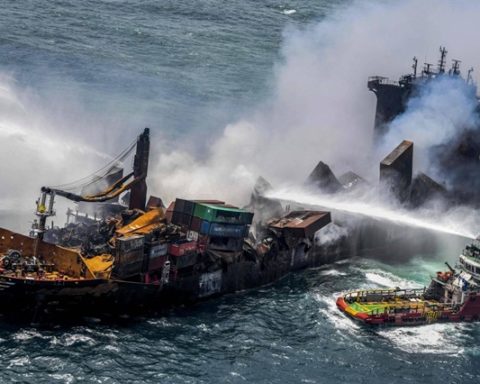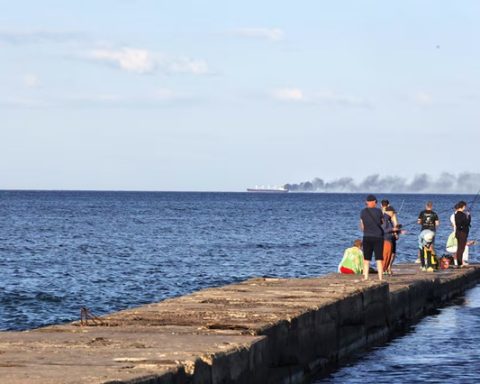
The UN-organized Ocean Protection Conference will be held from 9 – 13 June 2025, co-hosted by France and Costa Rica.
In the annals of international environmental diplomacy, the grand theatre of global conferences has often presented a compelling paradox—glittering declarations juxtaposed with stunted action. The forthcoming 2025 United Nations Conference to Support the Implementation of Sustainable Development Goal 14, to be held in the idyllic maritime setting of Nice, France, constitutes yet another episode in this unfolding drama. At stake is the moral and legal imperative to preserve what remains of our planet’s last great frontier, the oceans. The conference’s stated aim of accelerating action and mobilizing all actors to conserve and sustainably use the ocean is as lofty as it is urgent. Yet, one cannot help but view the initiative with a tempered lens, given that, as of 2024, a mere 8% of the ocean is under any form of protection, while the target remains an ambitious 30% by 2030.
The question that must arise at the very outset is one of legitimacy. Not merely the procedural legitimacy arising from the universal imprimatur of the United Nations, which must be lauded for its tenacity of purpose, but rather, the teleological legitimacy rooted in outcomes. In a world where declarations are often drowned in the undertow of geopolitical interest and corporate resistance, the potency of the “Nice Ocean Action Plan”—a document promised to be brief, concise, and action-oriented—hinges on whether it catalyzes enforceable obligations or merely rehashes the bromides of sustainability already embedded in international legal texts such as the United Nations Convention on the Law of the Sea (UNCLOS), the Convention on Biological Diversity (CBD), and its recent implementing agreement, the BBNJ Treaty (Biodiversity Beyond National Jurisdiction).
Indeed, the irony is palpable: the conference is being held in Nice, a city whose azure coastlines and touristic affluence stand in contrast to the dystopic plundering of the deep ocean, out of sight and often beyond legal reach. The jurisdictional conundrum of the high seas, where no State holds sovereignty and hence no singular entity bears accountability, sits at the heart of the legitimacy problem. This liminality has rendered the oceans a regulatory no-man’s land tragic commons, where deep-sea mining, unregulated trawling, and bioprospecting have escalated without requisite legal safeguards. In light of this, can the 2025 conference be expected to reverse centuries of extractive entitlement in five short days?
Sustainable Development
To examine this, one must consider the epistemological basis upon which SDG 14 rests. “Conserve and sustainably use the oceans, seas and marine resources for sustainable development” is a construct replete with internal tensions. The term “sustainable development” remains imprecise, shaped as much by economic growth paradigms as by ecological imperatives. The legacy of Rio, Stockholm, and Johannesburg is one of compromise—a constant balancing of anthropocentric utility with environmental stewardship. This raises a further query: can sustainability coexist with industrial-scale exploitation of the seabed for rare earth minerals vital to green technologies, the very technologies purported to save the climate? Is the Nice conference willing to confront the contradiction at the heart of this dialectic?
The conference agenda, as stated, includes ten plenary sessions and ten Ocean Action Panels. While this ambitious programming suggests inclusivity, it also hints at dilution. Too many voices in a cacophonous forum often results in the attenuation of responsibility. Consensus, the very mechanism through which the Nice Ocean Action Plan will be adopted, is inherently anti-radical. It privileges the lowest common denominator and often allows recalcitrant states or powerful commercial lobbies to sanitize language that might otherwise be transformative. Herein lies another contentious issue: whether multilateral consensus on paper can engender substantive transformation in practice, especially when economic and strategic interests of influential States are at stake.
Key Issues
One must also reflect on the procedural inclusiveness of the conference. Governments, intergovernmental organizations, financial institutions, academia, the private sector, civil society, Indigenous peoples, and philanthropic bodies are all invited. Yet, inclusion is not synonymous with influence. The structural hierarchies of international diplomacy ensure that the most marginalized, particularly Indigenous communities and small island developing States (SIDS)—are often relegated to the peripheries of decision-making. These are the very actors with ancestral knowledge of marine ecosystems and the most at stake in the degradation of oceans. If their epistemologies and lived experiences are not centered, the conference risks becoming performative rather than transformative.
Moreover, the conference promises to build on “existing instruments” and ongoing processes. However, these very instruments, including UNCLOS and the BBNJ Treaty, suffer from weaknesses in enforceability. Deep sea mining, for example, remains governed by a patchwork of provisional regulations administered by the International Seabed Authority (ISA), an entity criticized for its opacity and proximity to corporate actors. Without revisiting the structure and accountability of institutions like the ISA, any new commitments made in Nice may lack the necessary institutional machinery for enforcement.
Then there is the issue of voluntary commitments. The conference will adopt not only an intergovernmentally agreed declaration but also a list of voluntary commitments. The latter, while laudable as expressions of good faith, often amount to little more than wish lists in the absence of binding obligations. History is littered with the detritus of unfulfilled pledges made at global summits. If the protection of oceans is to move from aspiration to action, what is required is a reconfiguration of international law towards bindingness—a hardening of soft law through judicial interpretation, customary international practice, or treaty reform.
The elephant in the room remains enforcement. The international community continues to struggle with the implementation of global agreements. Climate change, biodiversity loss, and plastic pollution all stand as examples where declarations have far outpaced delivery. In this context, how does the Nice conference propose to police the high seas? Will it establish mechanisms for monitoring, reporting, and verification (MRV)? Will there be a system of sanctions for non-compliance? Or will the conference merely rely on moral persuasion and peer pressure—a strategy whose efficacy is suspect in a world beset by nationalist retrenchment and geopolitical fragmentation?
Furthermore, the role of the private sector—particularly in extractive industries such as fisheries and seabed mining—remains both a potential asset and a liability. While public-private partnerships are often heralded as necessary for mobilizing resources, they also risk privatizing the commons and subordinating ecological concerns to shareholder interests. The corporate capture of ocean governance, particularly through lobbying and strategic partnerships, could render the Nice Action Plan another instrument of greenwashing. It is imperative, therefore, that the conference embed conflict-of-interest provisions and ensure transparency in all forms of stakeholder engagement.
A deeper philosophical concern is whether the ocean is being treated as a living entity or a resource reservoir. The conference’s language emphasizes “use” as much as it does “conservation”. This utilitarian framing is emblematic of the anthropocentric model that has led us to the brink of ecological collapse. Emerging discourses on ocean rights, personhood of nature, and Indigenous marine ethics suggest an alternative jurisprudence—one that sees the ocean not merely as territory or economy, but as a relational being. If the Nice conference fails to engage with these alternative ontologies, it may reproduce the very paradigms it seeks to reform.
The goal of protecting 30% of the oceans by 2030 is itself an exercise in numerical abstraction. While it provides a measurable target, it does not account for the qualitative dimensions of protection. Marine Protected Areas (MPAs) vary widely in their regulatory stringency. Some allow fishing, mining, or tourism. Others are “paper parks” with no enforcement whatsoever. Without a robust classification system and global oversight, the proliferation of MPAs may create an illusion of progress. Moreover, protection of the oceans must go beyond spatial designations to include the regulation of transboundary pollutants such as plastic waste, carbon emissions leading to acidification, and noise pollution affecting marine fauna.
Geopolitics and law
An additional concern pertains to the geopolitics of ocean governance. The oceans are not merely ecological spaces but also theatres of strategic contestation. Naval militarization, submarine cable routes, and maritime trade routes intersect with ecological zones. Any attempt to impose environmental restrictions in international waters may be perceived as infringing upon freedom of navigation or military prerogatives. The United States, China, and other maritime powers may be reluctant to cede regulatory authority over these areas. In this context, the conference’s capacity to foster global cooperation hinges on whether it can navigate these political fault lines.
Equally, the legal architecture of ocean governance must evolve to address the challenges of emerging technologies. Autonomous vessels, underwater drones, and deep-sea robots are transforming the way we interact with marine environments. These technologies can aid in monitoring and conservation, but also pose new threats of surveillance, extraction, and militarization. The 2025 conference must address not only the ecological and legal dimensions but also the techno-ethical implications of these developments.
In evaluating the conference’s potential effectiveness, one must turn to the past. The 2017 and 2022 UN Ocean Conferences yielded numerous pledges but saw limited transformation. If the 2025 conference is to avoid a similar fate, it must be more than a platform for dialogue. It must be a crucible for normative evolution, institutional reform, and legal innovation. The litmus test will not be the number of commitments made, but the degree to which they are institutionalized, financed, monitored, and enforced.
Ultimately, the legitimacy of the 2025 UN Ocean Conference will be determined not by its grandeur or inclusivity, but by its capacity to disrupt entrenched paradigms. It must move beyond technocratic solutions and embrace a vision of ocean justice that is ecological, intergenerational, and decolonial. The ocean, vast and voiceless, demands a jurisprudence that speaks not only in the language of treaties and protocols but in the ethical cadence of kinship, responsibility, and reverence.
The oceans are not a backdrop to human history—they are the primordial womb from which life emerged. The 2025 conference must reflect this sacred truth. If it fails, we may once again find ourselves drafting epitaphs for ecosystems lost and futures foreclosed. But if it succeeds—if it dares to be radical, inclusive, and binding—then the waters of Nice may yet ripple with hope.
My Take
It is hoped that the above analysis resoundingly lays bare both the promise and peril of the 2025 United Nations Ocean Conference. Multilateral fora often conflate rhetorical exuberance with tangible achievement. The extent to which procedural optimism often eclipses substantive outcomes is endemic to large gatherings. The ocean, unlike land territory, resists neat cartography and jurisdictional imposition, rendering it not only a legal conundrum but also an existential challenge to the anthropocentric imagination.
Legitimacy—if not founded on enforceable action—is merely the theatre of legal formality without the soul of moral or empirical content. This is, to me, a point of profound importance. Too often, we have sat in conference halls from Geneva to Montreal, penning lofty declarations while the ecological clock ticks on with indifference. The “Nice Ocean Action Plan” is not as an end in itself, but as a potential instrument of regulatory inertia if not backed by a framework for binding accountability.
The principal contention raised—that 8% ocean protection cannot be leveraged into 30% through another well-scripted declaration—is stark but truthful. A numerical target, while seductive in its clarity, often conceals the qualitative deficiency of what constitutes “protection.” “No Ocean Left Unprotected,” if ever to emerge as a maxim, must learn from past experiences of other international fora.
The cornerstone of the conference should lie in its epistemological and ethical interrogation. The notion that the ocean should be seen not only as territory or economy but as a living, relational being mirrors Indigenous cosmologies that the Western legal tradition has long neglected. In this context, I find resonance with the emergent jurisprudence on the “Rights of Nature” that has found judicial recognition in jurisdictions such as Ecuador and New Zealand. The conference in Nice would do well to interrogate whether ocean governance can be divorced from the metaphysical values that treat the seas as kin rather than commodity.
Furthermore, the call to examine the integrity of stakeholder inclusion is not only timely but necessary. International conferences have an uncanny ability to transform local voices into symbolic tokens while decisions are engineered elsewhere. Indigenous peoples and small island developing States are frequently lauded for their stewardship and knowledge, but seldom are they granted real influence over the legal and financial architecture of marine protection. My own experience in international negotiation has shown me that participation without empowerment is democracy in form but not in function.
Another point worth emphasizing—and where I would venture a recommendation—is on the role of international financial institutions and philanthropic organizations. The conference has the unique opportunity to create a dedicated “Ocean Fund” modeled loosely on the Green Climate Fund under the Paris Agreement. Such a fund could be channeled toward building local enforcement capacity, funding marine scientific research, and developing regional monitoring systems. Without predictable, accessible finance, the conference risks building castles in the sand.
Another important consideration is consensus decision-making. While consensus appears laudable, particularly in global diplomacy, it often masks asymmetries in power. In many cases, consensus is achieved only by watering down the ambition of commitments. My preference, borne of long hours in international committee rooms, is to allow for progressive coalitions—so-called “coalitions of the willing”—to drive forward implementation, even if universal consensus is not immediately forthcoming. In this regard, States and organizations with proven leadership in marine conservation, such as Chile, Palau, and Norway, could spearhead legally binding frameworks or regional pacts that exemplify best practices.
Another aspect for focus is deep-sea mining, a topic that deserves robust and unambiguous attention at the Nice conference. It is not enough to await the finalization of the International Seabed Authority’s Mining Code. The conference should pronounce a moratorium on deep-sea mining until comprehensive, peer-reviewed scientific assessments demonstrate that such activities can be carried out without irreversible harm to fragile benthic ecosystems. I urge the community not to treat the seabed as a technological frontier ripe for conquest, but rather as the last remaining sanctum of the unknown that deserves the benefit of humility.
Compliance mechanisms that rely solely on voluntary participation tend to plateau over time. What is required here is a maritime equivalent of “Safety Oversight Audits”—an international review mechanism under the auspices of a neutral UN body, preferably UNEP or the newly invigorated BBNJ Secretariat. Such a system should conduct compliance audits, publish State performance indices, and facilitate peer-review dialogues. Transparency, not trust, must be the currency of ocean governance.
To safeguard the vast and vulnerable expanse of international waters—those areas beyond national jurisdiction that are essential to the planet’s ecological balance—a comprehensive and enforceable legal framework must replace the current patchwork of fragmented regulations. This effort begins with the urgent need for a binding international treaty specifically tailored to the high seas. Such a treaty must go beyond general principles to include firm obligations based on the precautionary approach and ecosystem-based management, backed by enforceable compliance mechanisms and clear dispute resolution procedures. The creation of a dedicated enforcement authority, perhaps under the United Nations Environment Programme or the emerging BBNJ Secretariat, would help ensure accountability. This body would be responsible for carrying out environmental audits, monitoring maritime activity using satellite and artificial intelligence technologies, and enforcing penalties for non-compliance.
One of the most immediate concerns requiring attention is deep-sea mining, which should be halted through a global moratorium until it can be scientifically demonstrated that such practices will not cause irreversible damage to fragile marine ecosystems. The presumption must favour conservation, not exploitation. Alongside global measures, there is a need for regional agreements that follow the example of successful treaties like the Antarctic Treaty System. These would allow for coordinated, locally appropriate conservation strategies and shared enforcement responsibilities.
Marine Protected Areas (MPAs) must also be expanded, not just in quantity but in quality. Protection must be meaningful, aligned with international conservation standards such as those of the IUCN, and supported by effective monitoring and enforcement. To fund and support these efforts, a Global Ocean Fund should be established. Financed by international levies on shipping, fishing licenses, and philanthropic donations, the fund would provide critical financial support for scientific research, technological surveillance, and the capacity-building of States with limited resources.
To ensure transparency and long-term accountability, a global registry of commitments should be maintained. This registry would record the pledges of States, corporations, and other stakeholders and include mechanisms for independent verification of performance. In parallel, the knowledge and lived experiences of Indigenous peoples and coastal communities must be recognised and integrated into governance frameworks. Their traditional practices offer invaluable ecological insights and reflect a deep-rooted respect for marine ecosystems that modern regulatory approaches often lack.
Harmful industrial fishing methods, especially those causing extensive bycatch and seabed destruction, must be banned in international waters, particularly in ecologically sensitive zones. These bans should be monitored through cutting-edge technology such as real-time satellite tracking and digital verification systems for seafood supply chains. Investment in advanced monitoring, reporting, and verification systems—using artificial intelligence, satellite imaging, and blockchain—is essential for effective enforcement and data integrity.
Protecting international waters demands bold, coordinated action guided by legal precision, ecological wisdom, and ethical clarity. We must shift from aspirational rhetoric to actionable commitments, treating the high seas not as an economic frontier but as a shared trust to be preserved for current and future generations.
The private sector’s involvement must also be better structured. Voluntary corporate pledges, while helpful in generating momentum, must be subject to third-party verification and must include mechanisms for restitution in cases of environmental harm. A possible model is the ICAO Public Key Directory, where all actors voluntarily submit cryptographic credentials to a central authority for verification. The ocean needs a similar “registry of commitments” linked to enforcement protocols.
In the final analysis, the Nice conference must not be treated as an isolated event but as part of a continuum. What happens on 14 June, the day after the closing session, will matter far more than what is said on the podium. My recommendation is for the conference to adopt a five-year implementation roadmap, with periodic review cycles, much like the Global Stocktake under the Paris Agreement. This roadmap should specify not only targets but also instruments, timelines, and performance benchmarks.
The UN’s credibility is at stake. The oceans are not abstract blue expanses—they are central to the climate, to biodiversity, to food security, and to human identity itself. If the Nice conference merely replicates past processes, it will be seen not as a beacon of leadership but as a requiem to lost opportunity. But if it dares to be bold—if it listens to the unheard and speaks for the unrepresented—it may yet go down in history as the tipping point that turned the tide.
That, in the final analysis, is my take.