Despite making significant strides in political leadership, the paradox persists: having women in power does not always translate into broader gender equality. The experiences of women like Indira Gandhi, Benazir Bhutto, and Angela Merkel illustrate how achieving the highest political office does not necessarily correlate with overcoming entrenched gender inequalities in their respective societies. Although these women shattered historical barriers to become heads of state, the societal structures in which they led—India, Pakistan, and Germany—remain deeply patriarchal, with gender parity lagging behind in crucial areas like education, economic participation, and political empowerment. The question, therefore, arises: Why does a female leader’s ascent not always lead to systemic change in gender equality?
Benazir Bhutto’s words in 1987, as she prepared for her arranged marriage, stand as a powerful testament to her personal commitment to autonomy and leadership: “Benazir Bhutto doesn’t cease to exist the moment she gets married. I am not giving myself away. I belong to myself and I always shall.” These words foreshadowed her groundbreaking tenure as Pakistan’s first female prime minister, breaking societal norms in a deeply conservative society. Yet, as the World Economic Forum’s (WEF) Global Gender Gap Report 2024 shows, Pakistan remains ranked 145th out of 146 countries for gender equality. Bhutto’s ascent, while historic, did not resolve the entrenched gender disparities that persist in Pakistan.
This paradox of women in power without achieving significant gender equity is not unique to Bhutto. The WEF report highlights a troubling pattern: political empowerment of women, such as in the cases of Bhutto, Angela Merkel, and Indira Gandhi, has not directly translated into broader progress in gender equality. Despite Merkel’s 16-year chancellorship, which steered Germany through crises, the country ranks 91st in terms of women’s educational attainment and 82nd in economic participation. In India, while Gandhi’s leadership saw her rise to power in the face of immense challenges, India remains ranked 142nd overall for gender equality, suffering from stark inequalities in health, education, and economic inclusion.
These women overcame enormous obstacles to lead their nations, but their stories raise an important question: Why doesn’t the power of women at the top translate into tangible improvements in gender equality?
Patriarchal traditions in India, Pakistan, and Germany remain powerful forces that impede real change. As Torild Skard, Norwegian psychologist and politician, notes in Women in Power (2014), “Culture and political institutions inhibited the entry of women in many ways. Religion, with discrimination of women and segregation in private as well as public spheres, made politics into an area for men.” This cultural framework severely limits women’s political participation, even when they reach the highest echelons of power.
In Pakistan, during the NWFP elections in 2000-01, religious fundamentalists issued fatwas declaring women’s involvement in politics as a “great sin,” threatening jihad against female candidates. In India, deep-seated gender biases manifest in practices like female foeticide and the dowry system, signaling from birth that daughters are viewed as liabilities rather than potential leaders. A Pew Research Center report notes that between 2000-2019, an estimated 9 million girls in India “went missing” due to selective abortions, underscoring the systemic devaluation of women even in a society led by a woman like Indira Gandhi.
In Germany, the cultural barriers may be more subtle but are no less persistent. The traditional “Kinder, Küche, Kirche” ethos, which translates to “children, kitchen, church,” still shapes societal expectations of women, relegating them to domestic roles. Helga Lukoschat, a board member at EAF Berlin, notes that women in Germany are still burdened with disproportionate household and care work, a situation that limits their ability to pursue political careers. This gender imbalance often relegates women to soft political portfolios, such as education or social affairs, while men dominate areas like defense or economics.
For Bhutto, Merkel, and Gandhi, the societal constraints they faced were intensely personal. Bhutto was relentlessly surveilled by the military regime of General Zia, which sought to discredit her with rumors of impropriety. Merkel, too, faced criticism of her personal life, notably her divorce and remarriage, which were condemned by figures like Cardinal Joachim Meisner. Gandhi, on the other hand, faced dismissive jabs from male politicians who labeled her as a “dumb doll.” Even at the pinnacle of their careers, these women faced misogynistic scrutiny that showcased society’s ambivalence toward women in power. Their leadership, rather than being seen as indicative of systemic change, was often viewed as exceptional.
One important factor that facilitated the rise of these women is dynastic politics, especially in South Asia. Political dynasties often provide women with a powerful entry point into leadership, where family ties can help bypass entrenched gender barriers. A 2018 study in Political Research Quarterly revealed that 35% of female politicians worldwide come from prominent political families, compared to just 14% of men. In Asia, nearly 80% of female leaders have familial connections to political dynasties.
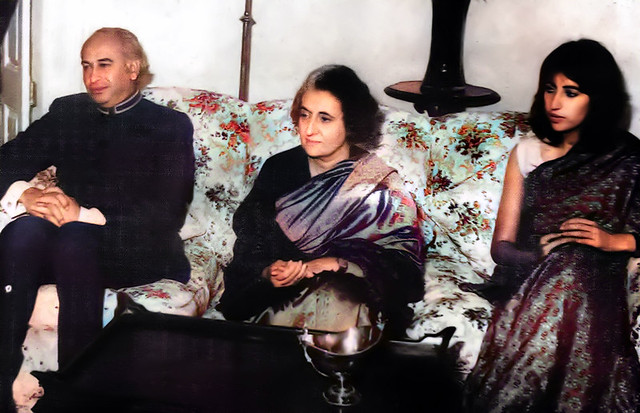
Benazir Bhutto, daughter of Pakistan’s former president Zulfikar Ali Bhutto, and Indira Gandhi, daughter of India’s first prime minister Jawaharlal Nehru, are prime examples of women who used their dynastic legacies to gain political power. These family connections provided them with the recognition, loyal voter bases, and political machinery necessary to transcend the cultural roadblocks in their countries. Angela Merkel, however, rose through Germany’s meritocratic, male-dominated political system, without the aid of a political dynasty. Her ascension serves as a testament to her personal resilience and political acumen, unassisted by familial connections.
Dynasties, however, are a double-edged sword. While they provide women with significant leverage, they can also alienate them from the broader female electorate. As Rafia Zakaria, a Pakistani-American attorney, points out, dynastic women are often viewed as caretakers of a legacy, rather than as agents of gender change. Bhutto’s cosmopolitan upbringing, for example, distanced her from rural Pakistani women, while Gandhi’s focus on national unity often overshadowed gender equity in her policies. These leaders were frequently seen not as champions of women’s rights but as extensions of their family’s political legacies.
Once these women attained power, they had to contend with deeply ingrained perceptions of what a leader should be. In her seminal work, Women as Political Leaders (1993), historian Michael A. Genovese suggests that these women were initially seen as “frail” or “token” leaders. Gandhi was regarded as a political tool of the Syndicate, Bhutto was dismissed as a “little punk girl,” and Merkel was viewed as an outsider in the male-dominated CDU.
To succeed, these women often had to adopt masculine traits and shed “feminine” qualities. Farida Jalalzai, a professor at Virginia Tech, argues that powerful women are often forced to “prove that you’re not a woman” in order to be taken seriously in politics. Bhutto’s fiery speeches, Gandhi’s wartime leadership, and Merkel’s methodical competence all mirrored the aggressive traits traditionally associated with male leadership. This expectation for women in power to conform to masculine norms creates a “double bind”—assertive women are labeled arrogant or unfeminine, while softer women are dismissed as weak. Bhutto, for instance, faced mockery for balancing leadership with motherhood, and Merkel’s childlessness invited scrutiny of her personal life.
While Merkel, Bhutto, and Gandhi each had significant influence, they rarely framed their policies around gender equality or feminism. Merkel famously called herself a feminist “in her own way,” but she refrained from explicitly pushing feminist policies. Bhutto established a Women’s Development Bank and all-women police stations, but her efforts were often curtailed by political instability and Shariah-based laws. Gandhi, meanwhile, did not appoint any women to her cabinet, focusing instead on national crises like war and economic upheaval.
However, it’s important to recognize that these leaders were operating within deeply patriarchal political systems. As social activist Aruna Roy explains, it is deeply unfair to expect one woman in power to overhaul an entire system. The structure of political parties and societal norms often limit their ability to prioritize gender-specific agendas. Despite this, female leadership remains symbolic, demonstrating to women that leadership is possible and inspiring them to pursue higher office.
The legacies of Merkel, Bhutto, and Gandhi show that while female leadership can inspire and break societal barriers, it does not automatically translate into gender equality. Structural and cultural change is necessary at every level of society to achieve true parity. As Helga Lukoschat aptly concludes, “Only one woman at the top doesn’t solve the problem… The whole structure of the world is still male-dominated.” Until there is systemic and cultural transformation, female leaders will remain exceptions, not catalysts for broader societal change. True equality requires a collective, multi-level approach—one that extends beyond individual women in power to the transformation of societal norms and political systems at large.