by Nil
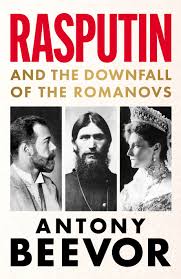
“Rumour and conspiracy theories can produce even more powerful effects than reality.” With this disquietingly contemporary observation, Rasputin: And the Downfall of the Romanovs by Antony Beevor declares its central preoccupation: not simply the life of Rasputin, but the unstable and often destructive power of narrative itself. The book positions its subject at the intersection of myth and history, suggesting from the outset that Rasputin’s significance lies less in what he did than in what was believed about him. This is an ambitious premise, one that promises a revisionist account of causality in the collapse of imperial Russia, yet it also raises an immediate methodological tension—how to analyse myth without reproducing it.
Beevor’s framing of Rasputin as an enigma is both compelling and strategically limiting. “How on earth could a barely literate peasant from Siberia have had such a devastating effect on the course of history?” he asks, a question that shapes the narrative as an inquiry into improbability. Rasputin is repeatedly defined through contradiction: “He combined spiritual innocence and rampant lust; intense religious faith and cynical opportunism; boasting and paranoia.” Such formulations are rhetorically powerful, but they also risk substituting paradox for explanation. To insist that “all the paradoxes of his character… defy conventional logic” is to elevate complexity into a kind of mystification, potentially absolving the historian from probing the social and psychological conditions that produced such behaviour.
Central to Beevor’s argument is the claim that Rasputin’s influence was mediated through rumour. “The myths and the lies which swirled around him were the fake news of their day,” he writes, adding that these narratives had tangible political consequences. The imperial officer corps, demoralised by “totally untrue stories of Rasputin’s debauchery,” failed to defend the Tsar when crisis came. Here, Beevor offers a provocative reorientation of historical causality, suggesting that perception, rather than policy or structure, can become the decisive force in moments of political collapse. The assertion that “perception was far more powerful than reality” is striking, yet it also destabilises the evidentiary basis of the narrative itself. If perception governs outcomes, what remains of the historian’s commitment to factual reconstruction?
This tension is particularly evident in the treatment of prophecy and legend within the Romanov family. The story that the Tsar would be killed by “a moujik” circulates through sources of dubious reliability, including a “so-called ‘Diary of Rasputin’” that has been “denounced as a fraud.” Yet Beevor insists that such accounts retain “a strong element of veracity,” not because they are demonstrably true, but because they were believed and acted upon. This distinction allows the narrative to incorporate contested material while maintaining a degree of critical distance, but it also blurs the boundary between evidence and interpretation. The result is a historiographical ambiguity that mirrors the very “no-man’s-land between truth and myth” that the book seeks to explore.
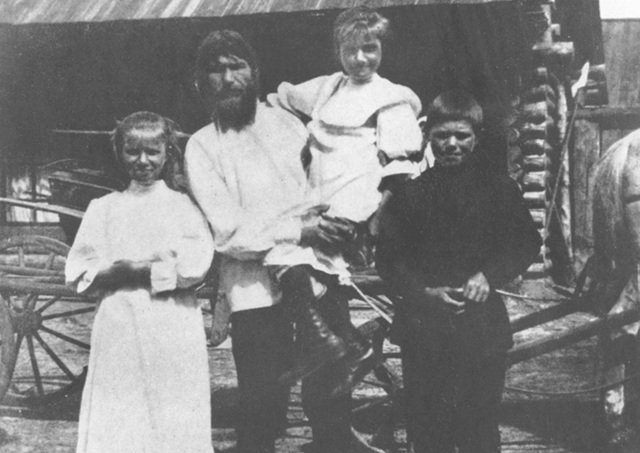
Beevor’s portrayal of Rasputin’s early life in Siberia is vivid, almost cinematic, yet not entirely free from romanticisation. The region is described as a land of “untamed woodland and wild animals,” inhabited by people who were “more independent, even anarchic in outlook.” This depiction serves to heighten the improbability of Rasputin’s rise, casting him as a figure emerging from a marginal world into the centre of imperial power. Yet it also risks reinforcing a binary between a primitive periphery and a decadent centre, a narrative trope that simplifies the complex social and financial dynamics of late imperial Russia.
The exploration of Rasputin’s religious life is more nuanced, though still marked by a degree of sensationalism. Beevor acknowledges that Rasputin’s visions, whether or not “brought on by starvation,” were sincerely held, and situates him within the broader culture of wandering pilgrims and mystical seekers. At the same time, the narrative emphasises his eccentricities: his inability to remain still in church, his “enigmatic and ungrammatical phrases,” his compulsive gestures. These details, while grounded in contemporary accounts, contribute to a portrait that oscillates between empathy and othering, presenting Rasputin as both a product of his environment and an anomaly within it.
The treatment of Rasputin’s relationships with women is among the book’s most contentious aspects. Beevor does not avoid the darker allegations, noting that Rasputin “sometimes resorted to rape” and that his teachings often involved the idea that sin could lead to redemption. At the same time, he recounts the devotion of female followers who “would kiss his dirty hands and receive food from them and obediently listen to his insults.” The coexistence of coercion and reverence is acknowledged but not fully interrogated, leaving unresolved questions about power, consent, and the social conditions that enabled such dynamics. Rasputin emerges as a figure onto whom anxieties about sexuality, class, and spirituality were projected, yet the analysis stops short of fully unpacking these projections.
Politically, Beevor advances the striking claim that Rasputin “contributed more than any other individual to the collapse of the greatest autocracy in the world.” This assertion is both bold and problematic. On one hand, it underscores the destabilising effect of scandal and perception, particularly in a regime already weakened by war and administrative failure. On the other, it risks overstating the role of a single individual at the expense of structural factors. Beevor himself concedes that “the mortal wounds were cumulative, and had already been inflicted,” yet the narrative repeatedly returns to Rasputin as a central causal agent, reinforcing the very “great man” framework it appears to question.
The portrayal of Tsar Nicholas II reinforces this dynamic. Described as possessing “ingrained moral cowardice” and an aversion to “anything disagreeable,” the Tsar appears less as an autonomous ruler than as a passive figure shaped by external influences, including Rasputin and the Empress. The suggestion that ministers were “simply there to do his bidding” echoes contemporary rumours, raising the question of whether Beevor is analysing these narratives or inadvertently reproducing them. This ambiguity is symptomatic of the book’s broader methodological tension.
The account of Rasputin’s assassination is one of the most compelling sections, yet it too reflects the interplay between myth and analysis. His killers were “fervent monarchists, not revolutionaries,” a detail that complicates any straightforward interpretation of the act as politically motivated. Public reaction was sharply divided: some celebrated, while others lamented the death of “the only moujik who ever got close to the throne.” The image of the bullet that “struck the very heart of the ruling dynasty” is powerful, but Beevor himself acknowledges that it is “far too simplistic.” This admission encapsulates the book’s central tension—between the allure of symbolic narrative and the demands of historical complexity.
Rasputin: And the Downfall of the Romanovs offers a provocative but uneven intervention. It challenges conventional accounts by foregrounding the power of perception, rumour, and myth, suggesting that these forces can shape political outcomes as decisively as material conditions. Yet in doing so, it risks becoming entangled in the very narratives it seeks to dissect. Rasputin remains elusive, not only because of the fragmentary nature of the sources, but because the book itself inhabits the same uncertain terrain it describes. If, as Beevor suggests, “Russia cannot be understood with the mind alone. Neither can Rasputin,” the question that remains is whether this elusiveness is an object of critical inquiry or a limit that the narrative ultimately accepts rather than overcomes.