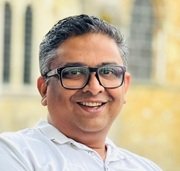

On the 20th of August, a woman named Manori Sallay wrote to the President of Sri Lanka for the second time to ask him not to let her husband die in his custody. Between her first letter in May and her second, the man she married, Major General (Retd.) Suresh Sallay, had gone on a hunger strike over the food they served him on a sheet of newspaper on the floor of his cell. He had collapsed into the cardiology unit of the National Hospital. He had a defibrillator surgically implanted in a failing heart. He has not been charged with a crime. In seven years, no one has charged him with a crime. He is simply being held. And while he is held, he is dying.
This is not the story of a guilty man evading justice. It is the story of a President who cannot produce a case, will not release the accused, and has discovered that a man’s own heart can be made to do the work a courtroom refuses to.
The man they are holding
Strip away the allegations for a moment and look at the record, because the record is not in serious dispute.
Suresh Sallay is a Malay Muslim officer who joined the Sri Lanka Army in the 1980s. He rose to become the only man in the country’s history to have led both the Directorate of Military Intelligence and the State Intelligence Service. During the final phase of the war against the Liberation Tigers of Tamil Eelam, intelligence operations under his command were credited with helping locate and eliminate senior LTTE figures. Among them S.P. Thamilselvan, head of the Tigers’ political wing, killed in a precision airstrike in 2007. He is associated with the operation that brought Selvarasa Pathmanathan, the man known as KP who led the LTTE after Prabhakaran’s death, back onto Sri Lankan soil. In 2019 he became the first military officer ever appointed to head the SIS.
You will find people who dispute the shape of that career. An anonymous intelligence veteran, quoted in Lanka e-News, calls him mostly a desk officer whose rise owed more to proximity than to operational brilliance. Let it stand. Notice only what the dismissal cannot touch. Thamilselvan is still dead. KP still came home. Whatever you make of the man’s temperament or his patrons, no anonymous quote rearranges a body count. A desk officer does not need a defibrillator because the state broke his heart. That took real custody, applied to a real person, by people who knew exactly what they were doing.
Here is a soldier the state sent to fight the most feared terrorist organisation of its generation. His wife, like every soldier’s wife, surrendered her husband to that war so the rest of us could sleep. She is now pleading for his life. Not from the Tigers. From the government he served.
The case that isn’t a case
Reduce the allegation to its foundation and it is astonishingly thin.
The charge against Sallay traces largely to a 2023 documentary by a London television channel, in which Azad Maulana, a former aide to the eastern paramilitary leader known as Pillayan, alleged that Sallay met the Easter Sunday ringleader Zahran Hashim before the attacks and let them proceed to shape a presidential election. Sallay says it is false. And here is the part that should stop any honest reader cold. Maulana has produced no documentary corroboration. None. The keystone of a case against a senior intelligence officer, seven years after the fact, is the uncorroborated word of a single man speaking to a foreign broadcaster.
On that foundation, the Attorney General’s Additional Solicitor General rose in a Colombo court and called Sallay the principal operational force behind the massacre. A magnificent phrase. And to this day, unaccompanied by an indictment. Sallay is not among the two dozen suspects, including Zahran’s own second in command, currently facing tens of thousands of charges at trial. If he were truly the principal operational force, one might expect to find him in the dock with the rest. He is not in the dock. He is in a hospital bed, uncharged, under an order that requires no evidence to renew. Only a signature.
Ask the questions the state does not want asked. What criminal act, specifically, is he alleged to have committed? What evidence has emerged since the Presidential Commission, the parliamentary inquiries and the earlier criminal investigations that justifies holding him now? If the case is evidence driven, why fear a courtroom? Why the Prevention of Terrorism Act, the very instrument the government is presently promising to repeal as too draconian, instead of a charge sheet? A charge sheet can be tested. A detention order only has to be renewed.
The theatre of the cassock
There is one figure whose blessing has given this detention its moral cover, and he must be addressed plainly, because deference has done enough damage already.
Cardinal Malcolm Ranjith, the Archbishop of Colombo, has welcomed Sallay’s detention as a breakthrough. His counsel now represents the victims at the hearings. The Cardinal’s grief is real and his standing as shepherd of a community that buried its dead is beyond question. But grief is not evidence, and a mitre is not a magistrate. When the Cardinal pronounces on Sallay’s guilt, the weight his words carry comes almost entirely from the cassock he wears. Not from any file he has seen, any witness he has tested, any proof he has produced that the courts have not. Strip away the vestments and what remains is a bereaved man’s conviction. Understandable, sacred even, and worth precisely nothing as a basis for holding another human being without charge.
We have arrived at a strange place when a churchman’s certainty is permitted to stand in for a prosecutor’s evidence, and when the state finds it convenient to let it. If the case against Sallay is sound, it does not need a Cardinal’s endorsement. That it leans on one so heavily tells you how little else is holding it up. The families of Easter Sunday are owed the truth. The real mastermind, tried and named. They are not served by a symbolic prisoner held to soothe a wound that only justice can close.
What this is really about
Now to the heart of it. The reason a man is being ground down in a hospital bed.
President Anura Kumara Dissanayake was elected in 2024 partly on a pledge to close the Easter Sunday file. He made Sallay’s arrest the first of a senior defence figure under his administration and staked his credibility on it. And there, precisely, is the trap he has built for himself. He cannot now let go, because letting go means conceding that the case he trumpeted was thin from the start. That he raised the country’s hopes on the uncorroborated word of one man to a foreign camera. This is no longer about Sallay. It is about a President who will not accept that some battles are lost, and would rather a man’s heart give out in custody than admit, in public, that he was wrong.
We have seen this arrogance before, and recently. Watch what the same President is doing to the judiciary. His government has tabled the 22nd Amendment to extend the retirement age of sitting Supreme Court judges. And the Bar Association of Sri Lanka, in the largest gathering in its history, voted almost unanimously against it. The Judicial Service Association opposed it by secret ballot. The Chief Prelates of all four Nikayas opposed it. The Supreme Court itself has already held, unanimously, that altering the tenure of sitting judges strikes at judicial independence and cannot be done without a referendum. Without asking the people. And what is the government’s answer? That no referendum is needed. That its two thirds majority in Parliament is consent enough.
See the pattern, because it is the same instinct in two theatres. In the courtroom, a charge must be proven and can be lost, so this President reaches instead for a detention order that need only be signed. In the constitution, a referendum must be won and can be lost, so he reaches instead for a supermajority that need only be counted. Both times, the shortcut is chosen precisely because it removes the one thing an arrogant man fears most. A verdict he does not control. Sallay is held without trial for the same reason the judges are to be altered without a referendum. Because this President has decided that his own certainty is a sufficient substitute for the consent of anyone who might tell him no.
That is the thread running through this administration. Not evil. Something more ordinary and more dangerous. The conviction that being sure is the same as being right, and that the machinery of the state exists to spare the man at its head the indignity of ever being told otherwise.
The men who hold the keys
And now the part history will not let pass in silence.
The government deciding whether to extend the detention of the man who fought the LTTE is the National People’s Power administration. Its engine is the Janatha Vimukthi Peramuna. The JVP twice took up arms against the Sri Lankan state. Once in 1971. Again in the terror of 1987 to 1989. Its armed wing in that second insurrection was the Deshapremi Janatha Viyaparaya, the DJV, an outfit that assassinated and intimidated its way across the country in the name of revolution, operational from 1986 until 1991. This is not a slur. It is the movement’s own history. A history for which the party’s present leader has, as its head, formally apologised.
That leader is the President himself.
And here the irony stops being institutional. It becomes personal. Anura Kumara Dissanayake did not inherit this history from a safe distance. He lived it. At nineteen he joined the JVP during the insurrection of 1987 to 1989. He moved through those years under a war name. Aravinda. He was a member of the JVP and its armed DJV while it carried out its violent campaign around the country.
What the young man called Aravinda actually did in those years, the President has never told us. His official biography takes the bloodiest chapter of his political youth and reduces it to five words. Participated in widespread protests against the Accord. That is the whole confession. The journalists and historians who have gone back into that period place him in the student underground of the North Central rebellion, war name and all, and then they hit the same wall the President has built around himself. The record proves the membership. It proves the alias. And on the deeds it goes quiet.
So let it rest on what is proven, because what is proven is more than enough.
A man who once needed a false name to survive the state’s anti terror dragnet now sits at the head of that same state. He holds the Prevention of Terrorism Act in his hand. He points it at a retired general who spent his career dismantling the terrorism of others. The teenager who hid behind Aravinda while a proscribed armed movement did its work now decides whether a cardiac patient he cannot charge will spend another ninety days in a cell. The movement that once pleaded with the state for amnesty now rations out charge sheets to everyone else.
You do not have to admire Suresh Sallay to feel the ground move under that.
You only have to remember what these words have meant in this country, and to whom, and how recently. Terrorist. Detention. Enemy of the state. The man now wielding them once answered to a different name on the other side of every single one of them.
The signature
Everything reduces to a signature and a date. The second ninety day period ends on the 27th of August. Someone will decide whether there is a third.
The President is not being asked to declare Sallay innocent. He is being asked to do something smaller and far more revealing. To let the ordinary machinery of justice, a magistrate, a remand order, judicial supervision, an actual charge if one exists, replace the administrative shortcut that has held this man for half a year without one. Manori Sallay has said, in writing, that her family will cooperate fully with any lawful investigation. The only power they ask the state to surrender is the power to hold her husband indefinitely without ever proving a thing.
If the government has a case, let it charge him, and let it be tested in the open. If it does not, then every further day of this detention is not justice but something baser. A President who cannot bear to lose, protected by a Cardinal who cannot be wrong, enforced by a movement that once was everything it now claims to prosecute, grinding a human being down because a signature is easier than an admission.
A man is dying in the custody of the country he was sent to protect. His wife is writing letters. The rest of us are watching to see what the keepers of the keys decide. And what that decision tells us about the difference, if any survives, between fighting terror and inheriting its methods.