


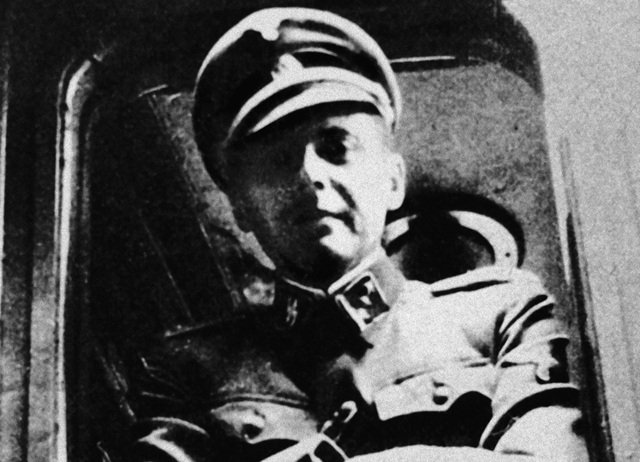
More than seven decades after the fall of Nazi Germany, questions surrounding Josef Mengele’s escape from justice continue to resurface through fragments of forgotten records and unresolved investigations. One of the latest leads lies in Switzerland, where a secret intelligence file concerning the possible presence of the notorious Auschwitz doctor near Zurich in 1961 is being opened with restrictions after years of official secrecy.
The case, reported by El País, centers on a classified dossier held by the Swiss National Archives that was originally scheduled to remain sealed until 2071. Following an appeal, the Swiss Federal Intelligence Service has changed its position and will allow limited access to the documents, potentially offering new details about how Swiss authorities responded to information suggesting that Mengele may have entered the country.
Known as the “Angel of Death,” Mengele was an SS officer and physician at the Auschwitz-Birkenau concentration camp in occupied Poland. He selected prisoners sent directly to gas chambers after arriving on extermination trains and carried out brutal experiments on prisoners, including many Jewish and Roma children, particularly twins, as well as people with dwarfism. Thousands died under the medical procedures and torture conducted under his authority, while only a small number of victims survived.
After Germany’s defeat in World War II, Mengele escaped prosecution. He initially hid in Germany before fleeing to Argentina in 1949 using false documents under the name Helmut Gregor. For years, he lived there with relative security. In 1956, he even returned to Europe for a skiing holiday in the Swiss town of Engelberg with his son, Rolf, according to photographs later published by the German magazine Bunte after his death.
The possibility that Mengele had also traveled through Switzerland again emerged decades later. In the late 1990s, Swiss politicians questioned the government about journalistic investigations suggesting that the Nazi doctor may have been in the country during the spring of 1961.
The focus of the investigation was the town of Kloten, near Zurich Airport. Mengele’s second wife, Martha Mengele, the widow of his brother, rented an apartment there and was placed under police surveillance for several days. Authorities observed her leaving one morning with an unidentified man, but Mengele’s presence was never confirmed.
Historians have considered the possibility unlikely. By that time, an international effort to capture escaped Nazi criminals had intensified, and an arrest warrant for Mengele had existed since 1959. The pressure increased further after Israeli intelligence agency Mossad captured Adolf Eichmann in Argentina in 1960. Eichmann, who had been living under the false identity of Ricardo Clement, was later tried in Jerusalem and sentenced to death.
However, the police records from the Kloten episode reveal what historian Regula Bochsler describes as a slow and bureaucratic response by Swiss authorities when faced with information about the possible location of one of the most wanted Nazi fugitives.
Bochsler, who is completing a book on the escape networks known as “ratlines,” said she does not expect the newly opened intelligence file to provide a dramatic revelation about Mengele himself. Instead, she hopes it will offer more information about the actions of Swiss officials and how authorities handled the investigation.
Her interest in the case began while researching another Nazi figure, Vaclav Hajek, an explosives expert. During that research, she discovered a notification from Austrian intelligence services about the possible presence of Mengele in Austria, Germany or Switzerland in 1961. When she requested access to Mengele’s dossier in the Swiss National Archives, her request was denied.
Swiss intelligence authorities cited the protection of sources and possible harm to third parties as reasons for keeping the file classified for decades. Bochsler later accessed police records in the Zurich State Archives, which documented exchanges with German prosecutors, the delivery of a photograph of Mengele to Swiss authorities and surveillance of Martha Mengele that she described as incomplete and poorly executed.
According to the historian, German prosecutors investigating Mengele sent a journalist to Kloten after a real estate employee, reportedly of Jewish origin, informed the German consulate in Zurich that Mengele’s wife was staying there. The journalist later told police that he had seen a man on the apartment balcony and suspected it could be Mengele.
Surveillance began on March 6, 1961, three days after the report was made. According to the records, Swiss officials initially discussed whether an arrest could be carried out but later decided the matter required approval from senior authorities. Before that authorization was completed, Martha Mengele left the apartment by car with a man whose identity was never established.
Bochsler believes the move by Martha Mengele and her son to Switzerland may have been connected to a possible plan for Mengele to meet them in a safer location than Germany. The apartment’s location near Zurich Airport has also raised questions, although no evidence has confirmed that Mengele himself stayed there.
The opening of the file has also renewed discussion about Switzerland’s broader role after World War II. Historian Gerhard Wettstein, who challenged the secrecy surrounding the dossier through a legal appeal supported by crowdfunding, argued that researchers should have access to historical records to prevent speculation.
The debate comes years after the Swiss government established the Bergier Commission, which examined Switzerland’s wartime policies between 1996 and 2002, including its treatment of Jewish refugees, financial dealings connected to Holocaust victims’ assets and economic relationships with Nazi Germany.
Bochsler’s research examines the networks that helped former Nazis escape Europe after the war. According to her findings, Switzerland played a complex role as both a transit route for refugees and a location where some escape operations were organized. She describes networks involving Swiss collaborators, Argentine officials and intermediaries who helped former Nazi personnel obtain documents, transportation and passage to South America.
Argentina under President Juan Domingo Perón sought European specialists to support industrial and military development, and some former Nazis and members of organizations such as the SS and SA reached the country through these networks. Bochsler estimates that several hundred Germans traveled to Argentina through Switzerland, including some war criminals and around three dozen former members of Nazi organizations, although many cases may never have been documented.
In Mengele’s case, the role of these networks remains uncertain. The newly accessible Swiss dossier may not resolve whether the Nazi doctor was ever in Kloten, but it is expected to provide further insight into how authorities handled one of the most persistent investigations into a fugitive responsible for some of the worst crimes of the Holocaust.
The file’s partial opening marks another step in the continuing effort to examine the unresolved chapters of Nazi escape routes and Switzerland’s place in the aftermath of the Second World War.









