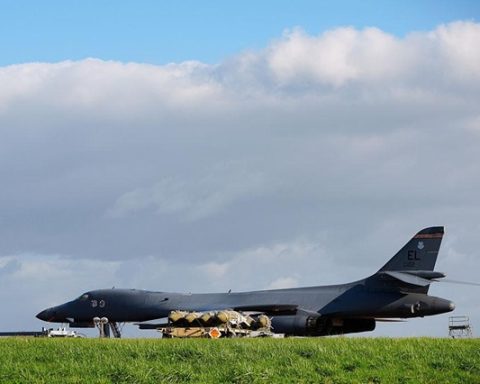
An American intelligence chief would normally have every means at his disposal to travel to Moscow without being noticed. That is, after all, part of the job. John Ratcliffe, the CIA chief, chose the opposite approach last Tuesday. He flew to Moscow aboard a C-17 Globemaster, one of the largest transport aircraft in the US military, in a journey that could be followed on flight trackers and whose arrival was recorded on mobile phones by surprised Russians. Before reaching Moscow, Ratcliffe also made a publicly known stop in Riga, the capital of Latvia.
The journey, as reported by the German newspaper Die Zeit, was therefore not simply a trip by a senior intelligence official. Its visibility was itself part of the message. The circumstances surrounding the visit pointed towards a deliberate geopolitical demonstration at a moment when questions about the credibility of Western deterrence have again become increasingly important.
The message was made still clearer the day after Ratcliffe returned. The media were briefed that the purpose of his Moscow visit had been to deliver a warning to Russia not to attack a NATO country. The Wall Street Journal reported that formulation directly, turning what might otherwise have remained a discreet intelligence contact into a public signal directed not only at Moscow but also at governments and observers across Europe.
Security sources also indicated that the events at Leipzig/Halle airport were discussed during Ratcliffe’s conversations in Moscow. That development coincided with a report by ABC News that US intelligence agencies had concluded that the construction of the drones involved at Leipzig/Halle airport, together with the explosives found on them, was typical of Russia’s military intelligence service, the GRU. According to ABC News, the assessment had been reached in cooperation with German intelligence services.
The significance of Ratcliffe’s unusually visible journey lies partly in what Washington appears to be trying to communicate. The United States may not be as indifferent to European security as some statements by Donald Trump might suggest. The visit can be understood as an attempt to repair NATO deterrence, particularly after doubts have been raised about the alliance’s unity and willingness to respond to further escalation. The objective would be to prevent Russia from concluding that it could continue escalating without incurring significant costs.
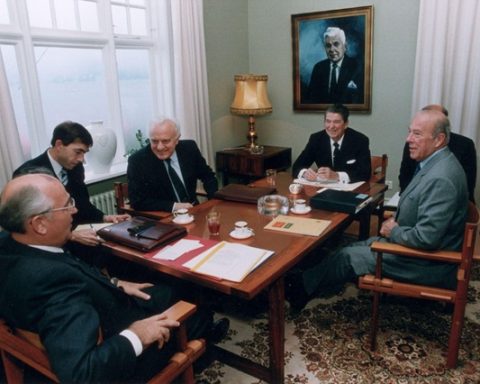
For European allies, such a message could be reassuring. But the very need to send it also points to the concern behind it. The last publicly known journey by a CIA chief to Moscow took place in November 2021, when William Burns delivered a warning of his own. Russia was told not to consider invading Ukraine and was confronted with American knowledge of the troops being assembled for an attack. Burns travelled to Moscow shortly after the humiliating withdrawal of Western forces from Afghanistan, and his message was that the events in Kabul should not be interpreted as evidence that the United States and its allies were weak. A few months later, Vladimir Putin ordered the invasion.
Ratcliffe now finds himself in a comparable position, although the circumstances are different. The United States, together with Israel, failed to defeat Iran. They were unable to protect their own bases in the Gulf or their allies there against Iranian drones, while a substantial portion of the Patriot and THAAD missile arsenal was expended in defending against ballistic attacks. The consequences have extended to Ukraine, which now lacks some of the same air-defence weapons needed to counter Russian attacks.
Ratcliffe’s Moscow journey can therefore be viewed as a corrective operation alongside the earlier mission undertaken by Burns. The message this time is that American setbacks in the Middle East should not be interpreted by Russia as an opportunity to act without restraint in Ukraine or the Baltic states, or in what has been described as a hybrid war against Western partners in Germany. The visible presence of the CIA chief carries an unusually direct implication. Washington wants Moscow to understand that its actions are being watched.
That message has coincided with an equally unusual pattern of NATO activity along the alliance’s eastern flank. Since 18 August, numerous aircraft belonging to different NATO member states have been observed over northern Poland and the Baltic region, particularly close to the Russian exclave of Kaliningrad. It is not an officially announced exercise, and NATO has therefore not confirmed the number of aircraft involved. Estimates range from 25 to 50, including fighter jets, tanker aircraft, several AWACS aircraft and planes equipped for electronic warfare.
Here, too, visibility appears to be part of the purpose. The activity demonstrates that NATO can bring together and deploy its combined capabilities in precisely the areas where Russia might consider testing the alliance’s readiness to respond. The absence of an official announcement makes the activity unusual, but the lack of secrecy surrounding the aircraft themselves gives the deployment a different character. It is deterrence through visibility.
The concern behind these signals is rooted in a revised assessment by US intelligence agencies of the risks posed by Vladimir Putin. Only weeks ago, American intelligence officials made public a revision to their threat analysis, again through anonymous officials speaking to the media. The previous assessment had been that Putin would avoid attacking NATO members while Russian forces remained tied down in Ukraine. Germany’s federal government had similarly assessed that Russia would not be capable of challenging NATO before 2029.
The newer American assessment introduces a different calculation. Putin could be prepared to take greater risks sooner precisely because a Russian victory in Ukraine is becoming increasingly unlikely. If Moscow were to conclude that NATO is weak and divided, that perception could encourage earlier escalation, particularly when the alliance’s rearmament plans are focused on achieving credible deterrence by 2029. The question at the centre of the new assessment is stark. If Russia believes NATO will be stronger by then, why would it wait?
The greatest danger may be miscalculation. A limited violation of NATO territory, particularly in the Baltic region, could place the alliance under severe political strain. It is uncertain whether all members would agree that a smaller incursion constituted an armed attack requiring a collective response under Article 5 of the NATO treaty. Hybrid attacks present a similar difficulty. Germany has described the Leipzig incident as an attack, with Friedrich Merz using that term on Tuesday, but the government has so far stopped short of making an unequivocal attribution.
That caution reflects the nature of hybrid warfare. Establishing a complete chain of evidence can be difficult, and even when intelligence is sufficient, governments may be unable to disclose it publicly without compromising their own security. The result is an environment in which attribution, deterrence and political response become increasingly difficult to separate.
The central issue is therefore the credibility of deterrence. The weeks before the Russian invasion of Ukraine in February 2022 demonstrated the consequences of a catastrophic miscalculation. Putin apparently believed that Ukraine could be taken without major resistance and had not expected substantial Western support for Kyiv.
Western intelligence agencies now fear another calculation of Russian risk-taking. There are, however, important differences from 2021. When Burns travelled to Moscow, American intelligence possessed knowledge of concrete Russian invasion plans and publicly released information that proved remarkably accurate. No such specific warning has been presented today. The current concern arises instead from observations of increasingly risky Russian actions, including airspace violations from Estonia to Romania and hybrid attacks such as the suspected operation in Leipzig.
The fear is that these actions, combined with perceptions of a divided or ineffective NATO, could encourage Moscow to test the alliance. The visible NATO activity on the eastern flank and the demonstrative visit of the CIA chief to Moscow are attempts to counter precisely that perception. Whether those signals are sufficient to restore the credibility of Western deterrence remains uncertain. But the stakes extend well beyond a single intelligence mission or an unexplained military exercise. Germany, Europe and the wider international system have a direct interest in whether Moscow believes NATO is prepared and capable of responding to a challenge.