Editor’s Note: This column was originally published in the Colombo-based Sunday Island.
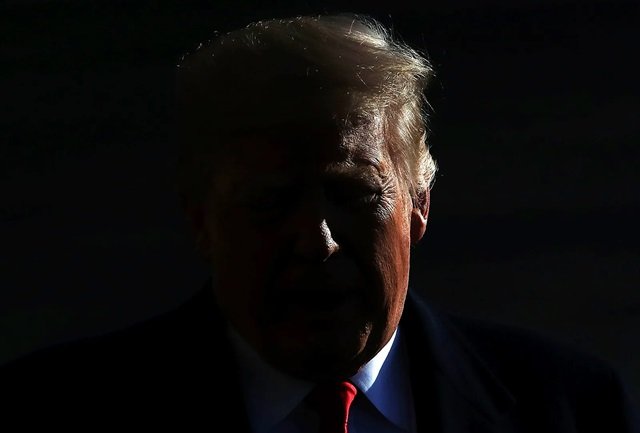
As I have pointed out since the first term of the Trump administration, Donald Trump was never merely a leader in the conventional sense; he is a phenomenon. This phenomenon embodies a worldview in which truth is subordinate to loyalty, perception outweighs fact, and the manipulation of circumstances for personal gain is both instinctive and strategic. The Trump phenomenon thrives precisely because it sees opportunity where others see only risk or moral constraint. In a world already struggling with structural failures—from international organizations to grassroots communities—Trump presents an alternative: a chaotic, unrestrained force that reshapes rules according to his own whims.
Whether one admires him or despises him, the phenomenon reflects a darker truth about human ambition: the capacity to privilege self-interest and personal dominance above all else. Now, after a four-year hiatus and into the second year of his return, the world is encountering something markedly different—a subsequent stage of the same force. This, I would argue, is the Trump Plague: something far more enduring than a political cycle and far more difficult to contain, contaminating democracies, autocracies, and theocracies across the globe.
Today, one can step into a taxi in almost any part of the world, including Colombo, and, without prompting, hear global problems attributed to Trump. Only recently, a tuk-tuk driver remarked to me, “All these issues are because of that idiot.” Such reactions are not merely casual frustrations; they are symptoms of something deeper. The plague is political, but it is also psychological. It is everywhere, penetrating not only institutions but also the cognitive and emotional frameworks through which people interpret reality. It is a haunting condition that allows societies to externalize blame while avoiding introspection, a convenient narrative that shifts responsibility away from systemic and personal failures. In this sense, the Trump Plague is not just about one man; it is about a transformation in how truth is processed, how responsibility is evaded, and how the world increasingly explains its own disorder.
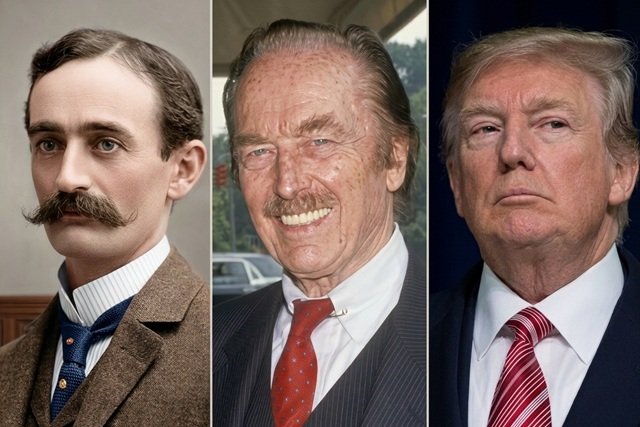
Trump demonstrates a consistent pattern: a refusal to acknowledge responsibility coupled with a relentless pursuit of admiration and control. From his earliest years, as David Cay Johnston (2016) chronicles in The Making of Donald Trump, he was shaped by a family legacy in which deceit and opportunism were considered legitimate business strategies. Fred Trump, his father, engaged in illicit business practices to build his fortune, from skimming profits on FHA-subsidised housing to partnerships with known organized crime figures. Donald Trump inherited more than wealth; he inherited a philosophy in which cunning, aggression, and the strategic use of fear were central. This inheritance explains why Trump never sees failure as his own.
Mary L. Trump (2020), in Too Much and Never Enough, notes that Fred’s constant enabling created a delusion of invincibility: “The more money my grandfather threw at Donald, the more confidence Donald had, which led him to pursue bigger and riskier projects, which led to greater failures, forcing Fred to step in with more help”. This cycle of reinforcement ensured that Trump never learned accountability; it was never necessary for him to confront the consequences of his actions, for he would always be rescued by wealth, influence, or the loyalty of those around him.
Loyalty, rather than truth or competence, is the central currency of Trump’s world. Roy Cohn, his first and most formative mentor, taught him that relationships should be transactional and adversaries crushed without hesitation. Cohn’s mentorship instilled a moral framework in which power is the measure of worth and loyalty is more valuable than ethical integrity. Michael Kranish and Marc Fisher in Trump Revealed recount that Cohn, reflecting on his influence, wrote of his ties to organized crime figures in New York, asserting that “in those days, nobody became US Attorney in New York without the O.K. from the mob” (Kranish & Fisher, 2016). Trump internalized this lesson: it was less important to act within the law than to surround himself with people who would protect and amplify his interests. This mindset explains why, as Johnston notes, Trump “has worked just as hard to make sure few people know about his lifelong entanglements with a major cocaine trafficker, with mobsters and many mob associates, with con artists and swindlers” (Johnston). To Trump, secrecy and deception are not failings; they are strategic tools to manipulate perception and control outcomes.
Trump’s business practices demonstrate a remarkable consistency of behaviour, revealing a pattern of aggression, exploitation, and disregard for legal or ethical constraints. From the demolition of Bonwit Teller in 1980, where Polish immigrant workers laboured 12- 18-hour days without proper safety equipment, to his dealings with Mafia-controlled unions during the construction of Trump Tower, Trump consistently placed personal gain above human cost or legal accountability (Kranish & Fisher). He not only minimized the value of others’ labour, he leveraged fear to enforce compliance, instructing foremen to destroy valuable sculptures despite the availability of alternate solutions (Kranish & Fisher).
Even when legal frameworks threatened his interests, Trump’s response was to manipulate outcomes rather than comply: his casino license applications omitted critical investigations, while his meetings with John Cody, a convicted mob associate controlling New York’s concrete supply, went unexamined by regulators (Johnston, 2016). Trump’s operational model demonstrates a psychology in which the ends justify the means and the narrative, rather than the fact, is the ultimate arbiter of success.
Perhaps the most revealing aspect of Trump’s psychology is his treatment of relationships, whether personal, familial, or political. Loyalty is rewarded, but disloyalty is punished with disproportionate vengeance. Johnston describes how Trump terminated medical benefits for a sick child after a lawsuit challenged his father’s will, remarking that “I can’t help that. It’s cold when someone sues my father” (Johnston). Mary L. Trump observes that this behaviour is an extension of Fred Trump’s conditioning: “Knowing ahead of time that you’re going to be bailed out if you fail renders the narrative leading up to that moment meaningless… That guaranteed that Donald would never change, even if he were capable of changing, because he simply didn’t need to” (Mary L. Trump). For Trump, loyalty is transactional, moral responsibility is negotiable, and ethical consistency is irrelevant. These traits translate directly into his approach to politics: the law is a tool to be bent, facts are malleable, and opponents are obstacles to be crushed.
Trump’s narcissism and need for validation are inseparable from his decision-making. He rarely makes choices based on objective analysis; instead, he weighs decisions by how they will enhance his image, consolidate his influence, or humiliate adversaries. Johnston illustrates this in his account of Trump’s obsession with revenge: “Second, Trump recommended revenge as business policy. ‘Get even,’ he said. ‘If somebody screws you, you screw ‘em back ten times over. At least you can feel good about it. Boy, do I feel good’” (Johnston). This principle governs his interactions at every level, from boardrooms to the Oval Office. In the political sphere, it manifests in impulsive actions, disregard for institutional norms, and prioritisation of personal vendettas over national interest. The USFL antitrust case, in which Trump pursued a reckless legal gamble resulting in a symbolic $3 award while destroying a potentially successful league, exemplifies this pattern (Kranish & Fisher). Decisions are judged not by consequence or strategic merit but by their capacity to reinforce his self-image or punish those who challenge him.
Trump’s approach to governance and policy follows the same psychological template. He consistently interprets events through a lens of personal threat and opportunity, rarely acknowledging systemic realities. In his dealings with Iran, as I have observed, Trump’s statements of self-reliance—”I trust no one”—reflect a mindset in which alliances, institutions, and norms are expendable. He thrives on disruption, treating crises as arenas for personal aggrandizement. Yet the danger lies not only in his decisions but in the vacuum they create: the institutions designed to mediate risk, enforce accountability, and maintain stability are systematically undermined by the Trump ethos. This is the Trump Plague: the transposition of personal narcissism into public consequence, where errors of judgment are magnified by power, and the incentives for ethical governance are inverted.
What makes Trump uniquely intractable is that he is impervious to conventional corrective measures. The combination of early familial enabling, a lifelong pattern of being bailed out, and an acute talent for spinning events into personal advantage ensures that conventional political checks—laws, norms, even media scrutiny—cannot recalibrate his behaviour. Mary L. Trump argues that Donald Trump’s self-perception is inseparable from his environment of enablers: “Fred had become so invested in the fantasy of Donald’s success that he and Donald were inextricably linked. Facing reality would have required acknowledging his own responsibility, which he would never do” (Mary L. Trump). Even failures that would cripple ordinary leaders—financial collapse, public scandal, legal penalties—are converted into narratives of triumph or vindication, reinforcing his delusional sense of omnipotence.
Trump’s decision-making is not merely flawed; it is structurally incapable of prioritizing collective interest over personal aggrandizement. As Johnston notes, he “told the New Jersey attorney general that unless he expedited approval, he would not build in Atlantic City… Given Trump’s well-known success in convincing the City of New York to perform lucrative favors, that was a subtle but powerful threat” (Johnston). This approach—leveraging institutional processes to enforce compliance with personal goals—has been replicated at every level of governance he touches. Loyalty and fear become the operating principles, while law, ethics, and reasoned debate are subordinated.
The world that emerges after Trump, therefore, is one that must contend with the structural consequences of his choices. His influence extends beyond policy into the norms of political behaviour: expedience over principle, loyalty over law, and spectacle over substance. There is no simple antidote. The Trump Plague is not a problem to be solved in one term or one election; it is a challenge to political systems, social norms, and institutional resilience. Attempts to treat it as a conventional political issue are doomed to partial failure, for the pathology at its center is neither transient nor externally imposed. It is an enduring feature of human ambition, magnified by wealth, media, and power.
The remedy, if it can even be called that, requires vigilance, institutional reinforcement in the face of personal glorification, and a deeper understanding of the psychological architecture that underlies our own behaviour—for there is, in some measure, a Trump within each of us. From East to West, from ancient spiritually awakening philosophies to modern intellectual discourse, this has been a central question: how to be humane in the face of power, temptation, and self-interest. Only by recognizing the interplay of narcissism, opportunism, and cultivated impunity can we begin to safeguard governance from the extremes of the Trump Plague.
There may be no indefinite cure for the Trump Plague, but confronting it remains one of the most urgent and defining challenges the world faces today as the Trump Plague is both individual and systemic, both internal and external, both powerful and powerless; both rich and poor, both visible and invisible, both rational and irrational, both deliberate and instinctive, both truth and distortion, both order and chaos, both strength and fragility, both fear and ambition, both control and collapse, both dominance and decay.