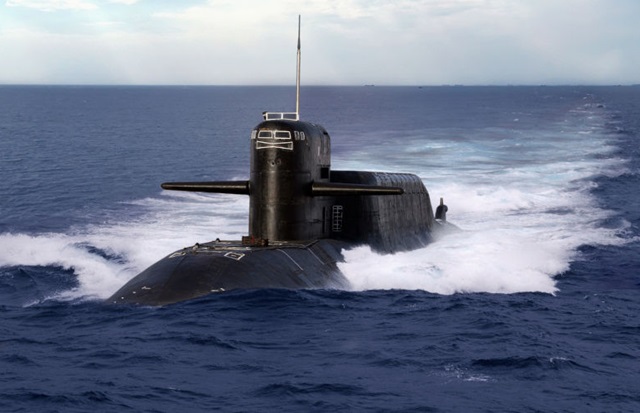
The Trump administration will move ahead with the AUKUS defense pact linking the United States, the United Kingdom, and Australia, maintaining the original timeline that includes the sale of three Virginia-class submarines to Canberra starting in 2032, Nikkei Asia has learned.
The pact, launched under former President Joe Biden in 2021, had been under a Pentagon review led by Undersecretary of Defense for Policy Elbridge Colby. The assessment was aimed at ensuring AUKUS fit with President Donald Trump’s “America First” approach to alliances. According to Nikkei, the review will be completed ahead of Australian Prime Minister Anthony Albanese’s visit to the White House on October 20.
“AUKUS is safe,” an official from one of the pact’s member nations told Nikkei, adding that while industrial delays could affect delivery, no political decision has been made to alter the submarine schedule.
The review primarily focused on whether the transfer of Virginia-class submarines to Australia could strain America’s already limited submarine industrial base and whether Canberra would be prepared to deploy the vessels in the event of a U.S.-China conflict over Taiwan. Colby himself had previously voiced concerns that diverting submarines to allies could weaken U.S. combat readiness.
Under the current plan, Washington will sell Australia three to five Virginia-class submarines beginning in 2032. The U.K. and Australia will later begin construction of AUKUS-class submarines based on a British design, with U.K. production starting in the late 2030s and Australian-built versions entering service in the early 2040s.
Beyond submarines, the second pillar of AUKUS covers joint research and development in areas such as artificial intelligence and maritime autonomous systems. Japan has been invited to participate in this component of the agreement.
Despite Colby’s skepticism, analysts say AUKUS remains a strategic win for Washington. Elizabeth Buchanan, a senior fellow at the Australian Strategic Policy Institute, told Nikkei the continuation of the pact is a low-risk move for the U.S., one that reinforces political alignment with Canberra. Still, she cautioned that Australia may ultimately face delays or additional financial pressure, including possible calls from Washington to increase defense spending to 5% of GDP.
Australia has already pledged $3 billion to support U.S. and U.K. submarine industrial bases. Yet U.S. Navy leaders acknowledge that production must double to more than two submarines per year to meet both domestic and AUKUS commitments.
According to Greg Brown of ASPI USA, the pact aligns closely with Trump’s alliance philosophy. “Contrary to a lot of misguided commentary, AUKUS embodies America First policy,” Brown said. “Australia pays billions upfront, commits to hosting and resupplying U.S. assets, and assumes front-line responsibility for Indo-Pacific deterrence.”
For Trump, Brown added, AUKUS is proof that his transactional approach to alliances can enhance U.S. strategic power while encouraging partners to carry more of the burden.