U.S. President Donald Trump said on Thursday that the United States and Iran could sign a peace agreement as soon as this weekend, a deal he said would reopen the Strait of Hormuz to international shipping. The statement came amid conflicting signals from Iran, which said no final decision had been reached on any agreement.
Trump described the development as a major diplomatic breakthrough that could help end a 3½-month conflict that has reportedly killed thousands and driven global energy prices higher. He told reporters at the White House: “We just made a great settlement of the war with Iran,” adding that the strait would “officially open” once the agreement was signed, potentially within days.
According to Trump, Vice President JD Vance could sign the deal on behalf of the United States. He also suggested that Iran’s Supreme Leader Ayatollah Mojtaba Khamenei had approved the framework, saying: “I understand the answer is yes.” The U.S. president said the agreement followed his decision to halt planned military strikes on Iran, citing progress in diplomatic discussions.
Iranian officials, however, provided a more cautious account. Iranian Foreign Ministry spokesperson Esmaeil Baghaei was quoted in Iranian media as saying that while significant portions of the draft text had been finalized, Tehran would not compromise on its “red lines.” He said: “We have not reached a final conclusion on this matter,” adding that the proposal was still under review by relevant decision-making bodies.
The proposed agreement, if confirmed, would represent the most significant diplomatic development since the start of the war. According to the report, the conflict has involved exchanges of strikes between the two sides, including renewed attacks this week despite a fragile ceasefire that had been announced in April.
Trump stated that the United States’ core condition remains preventing Iran from developing nuclear weapons. He said: “The big thing is there will be no nuclear weapons in Iran. That means not developed and not purchased.” Iran has consistently denied pursuing nuclear weapons capabilities. Iranian demands, as reported, include the lifting of international sanctions, the release of frozen assets worth billions of dollars, and recognition of its control over the Strait of Hormuz.
The conflict has had significant regional and global economic consequences, particularly through disruptions to energy markets. Oil prices fell and U.S. stock markets rose following Trump’s announcement, reflecting investor reaction to the prospect of de-escalation.
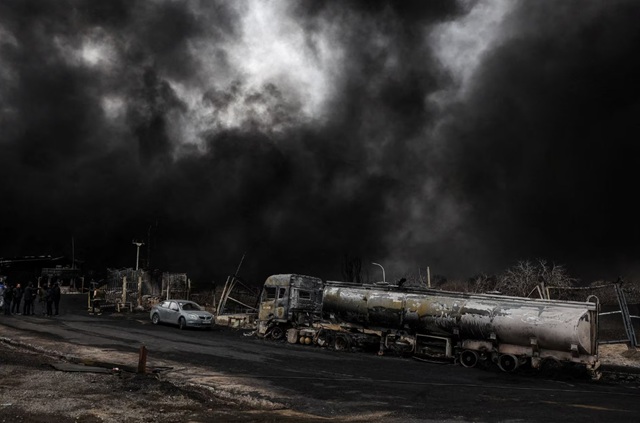
The Strait of Hormuz, a critical maritime passage through which a substantial share of global oil shipments pass, has been largely disrupted since the start of hostilities. Iranian state media reported that forces prevented a tanker from transiting the waterway without coordination, underscoring continuing tensions over control of the strategic route.
Military activity has intensified alongside diplomatic efforts. The report states that after a U.S. Apache helicopter was downed, Trump ordered additional strikes around the Strait of Hormuz over a two-day period. At the same time, Iran launched missile and drone attacks on U.S. bases in the region. Bahrain’s Interior Ministry said an 11-year-old girl was injured and property damaged after debris from intercepted drones fell in residential areas.
Trump also said earlier in the day that the United States would respond “very hard” and had considered targeting Iran’s oil infrastructure, including Kharg Island, a key export hub responsible for the majority of Iran’s oil shipments. Such an action, according to the report, would significantly impact Iran’s economy by disrupting its energy trade.
Political implications in Washington were also noted, with the conflict becoming a domestic issue amid declining approval ratings for Trump and concerns among some Republicans over the war’s impact on fuel prices and electoral prospects ahead of midterm elections. The report states that the administration has also faced pressure from party members advocating strict conditions, including the complete elimination of Iran’s nuclear capabilities.
Trump said on social media that the agreement had been approved by several regional powers, including Israel, Saudi Arabia, Qatar and the United Arab Emirates. However, Israeli Prime Minister Benjamin Netanyahu’s office stated that Israel was not a party to the memorandum of understanding, while expressing appreciation for U.S. efforts aimed at securing a deal that would restrict Iran’s nuclear program and military capabilities.
Iran, meanwhile, has reportedly demanded an end to Israeli military actions in Lebanon, where parallel hostilities involving Hezbollah continue. The negotiations remain ongoing amid continued exchanges of fire, with both sides maintaining divergent accounts of the status of any potential agreement