by Our Diplomatic Affairs Editor
The curious episode of Donald Trump’s fascination with Greenland is more than just an odd historical footnote. It reveals a complex and often unspoken chapter in the history of American foreign policy, shedding light on a longstanding but seldom-discussed American interest in this remote Arctic island. At the heart of the narrative is not only the surprising acquisition attempt by the President Trump in 2019 but also the underlying strategic calculations that have driven the United States’ continuous, albeit subtle, desire to wield influence over Greenland. While Trump’s infamous offer to purchase the territory is often dismissed as an eccentricity, it invites us to explore a much deeper and older connection between the U.S. and Greenland, one forged by geopolitical necessity, military strategy, and resource wealth.
The interest of the United States in Greenland is not a new phenomenon, but rather one that has been developing, often behind the scenes, for more than a century. The island, with its expansive size, geopolitical location, and rich natural resources, has long been an object of U.S. interest, albeit through a variety of lenses. For many years, Greenland has occupied a unique position on the world stage, sitting as a bridge between North America and Europe, and in the modern era, it is viewed as an increasingly vital player in the Arctic region, especially as climate change unlocks new shipping routes and mineral deposits.
The roots of American involvement in Greenland can be traced back to the early 20th century when both world wars demonstrated the island’s strategic military importance. Greenland’s location in the North Atlantic made it a key location for monitoring transatlantic shipping lanes and preventing German naval activity during World War II. In 1941, the U.S. established a military presence on the island through an agreement with Denmark, which then governed Greenland. This marked the beginning of a long-standing American military engagement, which has included airbases and surveillance systems aimed at countering Soviet influence during the Cold War and maintaining vigilance over the Arctic region.
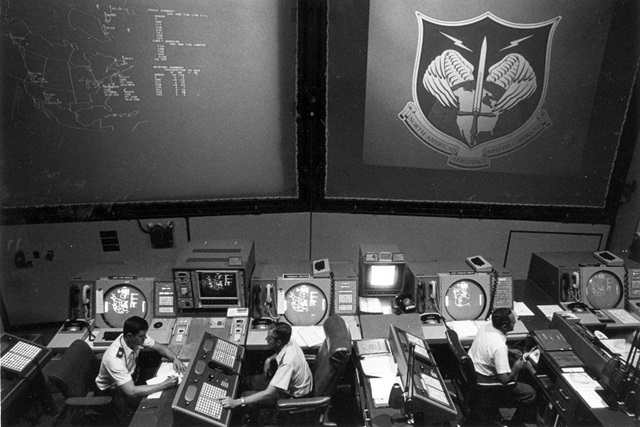
During World War II, the U.S. built several airfields and bases in Greenland, including at locations like Bluie West 8, which became an important refuelling stop for aircraft flying between North America and Europe. The U.S. military’s presence was formalised in 1951 under the Thule Air Base agreement, where the U.S. was granted permission by Denmark to operate military bases in Greenland in exchange for security guarantees. Thule Air Base, located on Greenland’s northern tip, continues to function as a vital asset for U.S. operations in the Arctic and as a key early warning station for intercontinental ballistic missile (ICBM) launches, capable of monitoring activity across the polar region.
Trump’s interest in acquiring Greenland, however, was not a purely isolated incident. Rather, it highlighted a pattern of U.S. attempts to secure greater influence over the island. Throughout the Cold War, American policymakers continued to view Greenland through a strategic lens, seeking to reinforce their military dominance in the Arctic. Despite its population being relatively small and its governance still firmly within Denmark’s control, the United States made periodic offers to purchase Greenland, largely driven by military concerns. In these discussions, Greenland was seen as a geostrategic asset, offering a location that could dominate air and naval routes critical to American security interests.
Greenland, at approximately 2,166,000 square kilometres, is the world’s largest island that is not a continent. Its population is small—around 56,000 people, predominantly Inuit, residing in scattered settlements, with Nuuk as its capital and largest city. The island’s strategic location at the crossroads of the North Atlantic and Arctic Oceans makes it a key point for surveillance and defence. The vast expanse of its ice-covered territory is rapidly shrinking due to climate change, revealing potential resources and opening up previously inaccessible trade routes. This has amplified the significance of the region in modern geopolitics, as countries scramble to assert claims and interests in the Arctic.
Trump’s offer in 2019 to purchase Greenland for $15 billion was framed as a way to secure the U.S. an unparalleled foothold in the Arctic. The proposition was met with disbelief by Denmark and Greenland’s government, who responded with resolute refusals, emphasising that Greenland was not for sale. However, the attention brought to the island during this period highlighted the long-standing interest the U.S. has had in Greenland, one that extends beyond the whim of a single president and into the realm of global competition for Arctic dominance.
Pituffik Space Base in northern Greenland has hosted 200 US military personnel and 450 allied forces and contractors since WWII, supporting Washington’s missile warning system and space surveillance operations.
Greenland’s resources, including vast reserves of rare earth minerals such as uranium, lithium, and gold, further heighten its appeal to global powers. Greenland’s fisheries are also a significant resource, particularly as fish stocks in other regions of the world dwindle. As the Arctic warms, new shipping lanes open up, reducing travel times between Europe, North America, and Asia, making Greenland an even more valuable asset for nations seeking to control these emerging routes. The U.S. interest in these resources is clear, as evidenced by its consistent investment in Arctic security, with American military personnel stationed at several locations across Greenland.
Today, U.S. military presence in Greenland is concentrated at Thule Air Base, where over 600 U.S. personnel operate alongside Danish and Greenlandic staff. This base plays a key role in early missile warning systems and is integral to the U.S. Air Force’s Arctic operations. Thule also acts as a key component of the global missile defence system and has seen continued upgrades over the years. With its ability to monitor polar orbits, Thule is critical to the U.S. national defence, as well as to broader NATO security interests. In addition to military infrastructure, the U.S. has also been involved in scientific research in Greenland, particularly related to climate change and polar studies, due to the island’s crucial role in global climate patterns.
While Trump’s overture to purchase Greenland was largely dismissed, the U.S. has continued to build upon its influence in the region, both through military presence and diplomatic engagement. The United States has long worked with Denmark and Greenland within the frameworks of NATO and the Arctic Council to ensure its strategic interests are safeguarded, and its military and economic reach extended. U.S. operations in Greenland also serve as a way to counter China’s increasing interest in the Arctic, with Chinese firms making inroads into mining and infrastructure projects in Greenland.
The question, therefore, is not why Trump was interested in Greenland, but why this interest has persisted over time. The answer lies in the fundamental strategic calculus that has driven U.S. foreign policy throughout the 20th and 21st centuries. Greenland offers unparalleled military advantages, significant economic resources, and an irreplaceable geopolitical position. These attributes have made it a key consideration in American strategic planning, even when the pursuit has been veiled under the guise of diplomacy, trade agreements, or covert military operations.