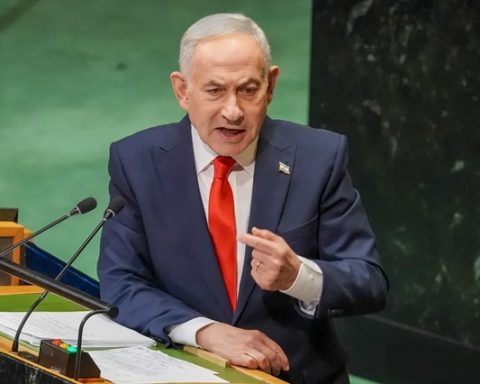
Donald Trump has given his backing to Sir Keir Starmer’s controversial deal to cede sovereignty of the Chagos Islands to Mauritius, only weeks after branding the agreement an “act of great stupidity.” The US president said he now believes the deal was the best outcome the British prime minister could secure, following renewed discussions between the two leaders.
In a statement posted on Truth Social after what he described as “very productive discussions” with Starmer, Trump said he understood that the agreement was, “according to many, the best he could make.” However, he paired his endorsement with a blunt warning, saying that if the lease arrangement for the US base on Diego Garcia were ever to collapse, or if American forces were threatened, he would “retain the right to militarily secure and reinforce the American presence” on the island.
Trump underlined the strategic importance of Diego Garcia, a key US naval and air base in the Indian Ocean, and dismissed potential legal or environmental challenges. He said he would never allow the US presence on such an important base to be undermined by what he called “fake claims or environmental nonsense,” reflecting the administration’s long-standing view that the base was never genuinely at risk.
Starmer has argued that transferring sovereignty of the Chagos Islands to Mauritius, while leasing back Diego Garcia for 99 years at a reported cost of around £10 billion, was necessary to guarantee the long-term future of the base. British officials have cited concerns over international legal pressure, including a non-binding advisory opinion from the International Court of Justice, as well as fears that rival powers such as China could exploit legal uncertainty to expand their influence in the region.
According to officials familiar with US thinking, the Trump administration never viewed Mauritius’s legal campaign as a serious threat to one of the world’s most secure military installations. While some American officials questioned why Britain was willing to pay billions to its former colony, they saw little reason to oppose the deal given that US military operations would remain unchanged. One US official involved in early talks described the issue as a “third-tier priority” that Washington was content to clear off its agenda.
Even within Downing Street, doubts reportedly emerged after Trump’s election victory, with some questioning whether the handover remained necessary in an era of renewed emphasis on hard power. Nevertheless, British diplomats continued to warn that unresolved legal disputes could create long-term strategic vulnerabilities, including potential challenges to satellite communications access governed by UN agencies.
Trump’s latest endorsement follows a period of sharp public criticism. Last month, after discussions between the Speaker of the House Mike Johnson and Conservative leader Kemi Badenoch, the president lashed out at the deal on social media, calling it an “act of great stupidity.” The outburst was widely seen as linked to irritation over Starmer’s criticism of Trump’s rhetoric on annexing Greenland.
After two phone calls with Starmer this week, Trump reversed his stance again, emphasising Diego Garcia’s central role in US national security. A Downing Street spokeswoman said the two leaders had agreed on the importance of the deal and would continue to work closely on its implementation.
Despite the renewed support, questions remain over Trump’s grasp of the agreement’s details. Speaking in Davos last month, he appeared to suggest that Britain was being paid to sell the islands, asking why the UK was doing it and whether it needed the money.
The deal continues to face fierce criticism at home. Dame Priti Patel, the shadow foreign secretary, described it as “an absolutely terrible deal for Britain,” warning that handing over sovereignty and large sums of public money to Mauritius, which she characterised as an ally of China, posed a serious national security risk. She argued that Trump’s own warning about the lease potentially falling apart exposed what she called a critical weakness at the heart of the agreement.
Nevertheless, the White House has made clear that Trump supports Starmer’s position. Karoline Leavitt, the press secretary, said the president understood the prime minister’s constraints and backed the deal, while reiterating that the United States would act decisively to protect its long-term security interests on Diego Garcia if required.