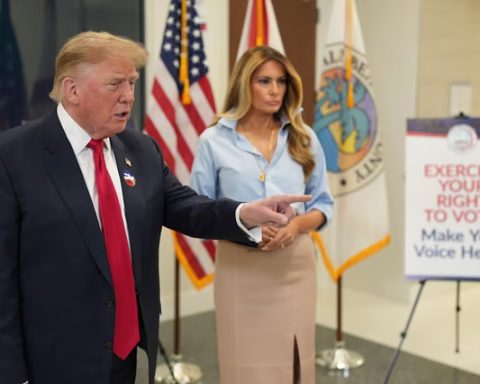
In a dramatic turn that underscored the volatility of the Iran–U.S. standoff, President Donald Trump moved to extend a fragile ceasefire with Tehran only hours before it was due to expire. The decision, announced late Tuesday amid mounting regional tension, hinges on Iran presenting what Washington calls a “unified proposal” and completing its internal negotiations “one way or another.” While the extension temporarily averts an immediate return to open conflict, the United States has simultaneously kept in place a naval blockade over the strategic Strait of Hormuz, signaling that military pressure remains central to its strategy. The move came as mediation efforts led by Pakistan appeared increasingly uncertain, with neither side fully committed to direct negotiations in Islamabad.
The announcement landed in a climate of confusion that had already defined the final hours before the deadline. Competing interpretations of the ceasefire’s expiration time emerged from different governments and media outlets, contributing to a sense of diplomatic disarray. While Washington initially suggested a firm ultimatum issued in the evening hours, Iranian state media pointed to a different timeline, and Pakistani officials introduced yet another variation, deepening uncertainty over when, or even whether, talks would proceed. Against this backdrop, President Trump alternated between optimism and warning in public remarks, suggesting that a “major deal” was still within reach while also insisting that the United States was prepared to return to military action if negotiations collapsed.
Behind the scenes in Washington, the situation reflected the same instability. Vice President JD Vance, initially expected to lead the U.S. delegation to Pakistan, delayed his departure indefinitely as the administration reassessed whether Iranian participation was guaranteed. Meanwhile, senior advisers Jared Kushner and Steve Witkoff altered their travel plans, returning to Washington instead of proceeding toward Europe and then Pakistan. Their shift fueled speculation that high-level emergency consultations were underway at the White House. Officials later confirmed that Vance’s trip had been placed on hold as intelligence assessments suggested Iran had not met key conditions demanded by the U.S. administration, particularly regarding the structure and unity of its negotiating position.
The mediation effort centered in Islamabad has been under strain for days, with Pakistan attempting to host indirect talks between American and Iranian representatives. However, logistical breakdowns and political hesitation on both sides left the initiative in limbo. Iranian officials publicly questioned whether it was safe or productive to send a delegation, while U.S. representatives expressed frustration over what they described as a lack of clarity from Tehran. At one point, a hotel in central Islamabad designated for negotiations was reportedly cleared in anticipation of delegations that never arrived. Pakistani authorities maintained that they were still awaiting formal confirmation from Iran, even as diplomatic channels appeared increasingly frozen.
Beyond the negotiating table, the broader Middle East remained tense as the ceasefire neared collapse. The conflict, already widened by the involvement of regional actors, risked further escalation. The Houthi movement in Yemen, which aligned itself with Iran’s position, warned of renewed military action if hostilities resumed. Its leadership framed the ceasefire as a temporary pause in an ongoing confrontation and suggested that maritime routes in the Red Sea could again become targets if the situation deteriorated. Such warnings revived concerns about global shipping disruptions, echoing earlier periods of instability linked to regional warfare.
Israel, meanwhile, remained formally outside the ongoing talks but deeply involved in the wider strategic environment. Prime Minister Benjamin Netanyahu used a public address to reiterate his opposition to the ceasefire, arguing that Iran continues to pose an existential threat. His remarks included controversial historical comparisons to the Holocaust, which drew international criticism but reinforced his long-standing position that military pressure against Iran is necessary. Israeli officials insist that Iran has pursued destabilizing regional ambitions, while Tehran denies any intention of attacking Israel or developing imminent nuclear weapons capability. The divergence in narratives has further complicated diplomatic efforts already strained by mutual distrust and competing security doctrines.
As the ceasefire extension now takes effect, the situation remains highly unstable. The U.S. decision to prolong the truce without removing military pressure through the Hormuz blockade reflects a dual-track strategy of diplomacy backed by coercion. For Iran, the requirement to present a unified negotiating stance places pressure on its internal political factions, which have historically diverged on engagement with Washington. For the United States, the extension buys time but does not resolve the underlying impasse that brought both countries to the brink of renewed conflict.