The confrontation between the Vatican and the White House has entered unusually direct political territory, as Pope Leo XIV openly declares he has “no fear of the Trump administration” while escalating criticism of the Iran war. According to reporting by the Financial Times, the dispute marks one of the most politically charged moments in modern relations between a pope and a US president, with implications that extend far beyond theology into the heart of American electoral politics.
The 70-year-old pontiff, born Robert Prevost in Chicago, has rapidly transformed from a relatively low-profile cardinal into a global figure of opposition to US foreign policy. His criticism of what he describes as an “unjust war” in Iran has placed him in direct conflict with Donald Trump, who has accused the pope of “getting into politics” and urged him to focus on spiritual leadership rather than public policy disputes. The exchange has unfolded in increasingly personal terms, with both men publicly challenging each other’s authority and legitimacy.
Unlike previous popes who often maintained distance from day-to-day American politics, Leo has actively appealed to US citizens, urging them to contact their congressional representatives and oppose military escalation. Vatican officials quoted by the Financial Times suggest that his approach reflects a deeper moral concern rather than partisan intent, rooted in what they describe as a centuries-old theological tradition on war, peace, and the sanctity of human life. The pope himself has argued that the Church cannot remain silent when civilian suffering is at stake, particularly in conflicts involving mass violence and global instability.
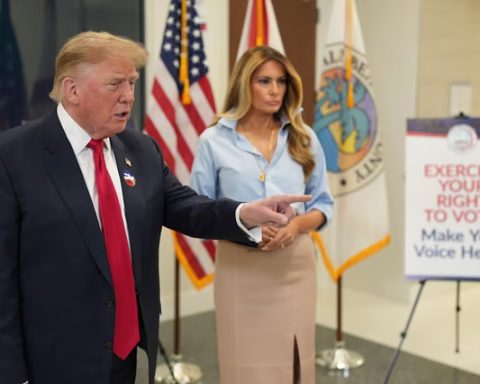
The White House response has been sharply critical. Trump has alternated between dismissing the pope’s remarks as political interference and accusing him of misrepresenting US interests abroad. Vice-president JD Vance has also entered the debate, arguing that the Vatican should avoid commenting on public policy, while maintaining that the administration respects religious authority. The friction has exposed a rare public disagreement between Washington and a religious institution that has historically maintained careful diplomatic balance with US administrations.
Yet analysts cited by the Financial Times argue that Trump’s usual tools of political pressure have limited effect in this case. Unlike elected governments dependent on trade or security guarantees, the Vatican operates as a sovereign religious entity insulated from economic coercion. This dynamic, experts say, leaves the US president unusually exposed to moral criticism without the leverage typically used in international disputes. Some observers suggest this asymmetry is what has made the confrontation particularly visible and politically sensitive.
Within the US, the dispute is resonating strongly among the country’s roughly 53 million Catholics, a demographic that has played a decisive role in recent elections. Polling cited by the Financial Times indicates that Catholic voters are already divided in their views of the Trump administration, particularly over immigration policy, economic pressures, and the Iran conflict. White, non-Hispanic Catholics in key swing states such as Pennsylvania, Michigan, Wisconsin, and Ohio are seen as especially influential, making the pope’s interventions potentially significant in shaping public sentiment ahead of the midterm elections.
The ideological divide at the centre of the dispute goes beyond immediate policy disagreements. Vatican officials describe Leo’s worldview as aligned with a post-Second World War vision of multilateral cooperation and humanitarian restraint, in which global institutions and moral consensus play a central role in preventing conflict. By contrast, Trump’s foreign policy outlook is increasingly interpreted by critics as favouring a more hierarchical global order defined by powerful states exerting regional influence.
This divergence has also become entangled in broader debates within Christianity itself. Some US officials, including defence secretary Pete Hegseth, have been accused by critics of invoking religious language to justify military action, further intensifying tensions between different strands of Christian political thought. Scholars quoted by the Financial Times describe the moment as a “clash of civilisations within Christianity,” where competing interpretations of faith are being used to support opposing visions of global order.
The controversy also reflects long-standing historical sensitivities about papal influence in American politics. From the early years of the republic through the presidency of John F Kennedy, concerns about foreign religious authority shaping US democracy have periodically surfaced. However, those concerns had largely faded in modern times as the Vatican avoided direct political engagement. Leo’s recent interventions, however, are being seen by some scholars as a departure from that tradition, raising questions about how far religious leaders should go in influencing democratic debate.
Despite criticism, the pope retains significant public support within the United States. Surveys indicate that his approval ratings among Catholics are substantially higher than Trump’s, and his messages on war and immigration resonate strongly with segments of the population concerned about humanitarian issues. Catholic leaders aligned with the MAGA movement, however, argue that his comments risk politicising spiritual authority and undermining neutrality.
As both men continue to escalate their rhetoric, the confrontation increasingly represents more than a personal dispute. It has become a broader contest over moral authority, the limits of political power, and the role of religion in shaping public life. Whether it influences electoral outcomes or simply deepens ideological divides, the clash between the pope and the president underscores a rare moment in which spiritual leadership and political power collide on a global stage with no clear resolution in sight.