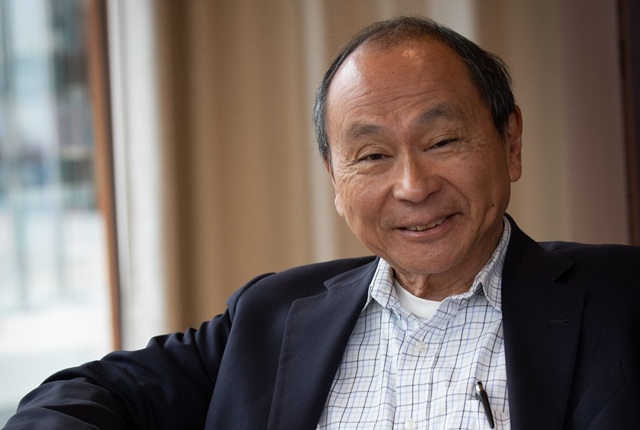
In a recent interview with political scientist and author Francis Fukuyama, Yascha Mounk explored the profound implications of the Trump administration’s policies, particularly its use of executive orders, its stance on foreign policy, and the broader ideological shifts it has triggered both domestically and internationally. This wide-ranging conversation delves into the constitutional challenges posed by Trump’s executive actions, the complexities of his foreign policy maneuvers, and the global consequences of U.S. actions under his leadership.
The Growing Influence of Executive Orders: A Constitutional Crisis in the Making?
Yascha Mounk began the interview by addressing the surge in executive orders under the Trump administration, noting that over a hundred orders have been issued since the president took office. These orders range across a broad spectrum of issues, from dismantling bureaucratic programs like diversity, equity, and inclusion (DEI) initiatives to controversial measures surrounding birthright citizenship. Mounk referred to this flurry of executive actions as a “hodgepodge,” remarking on the complexity of summarizing them all.
Fukuyama, a seasoned political thinker, responded by analyzing the broader trend of executive overreach. He explained that the growing reliance on executive orders is symptomatic of Congress’s dysfunction. “The Trump people are very impatient,” Fukuyama observed, noting that they seemed unwilling to wait for Congress to pass legislation, opting instead for a more direct and unilateral approach. He pointed to the rise of executive actions as a growing problem that could ultimately lead to a constitutional crisis. The primary concern, according to Fukuyama, is the danger of executive orders that may be deemed unconstitutional—such as those regarding birthright citizenship or the deployment of military forces to the southern border.
Fukuyama highlighted the risk of a standoff between the executive and the judiciary. “There will be a justice—and it could even be nine justices—several of whom were appointed by Trump himself, who tell him that he can’t do something,” he said. Such a confrontation could create a dangerous precedent, especially if the administration were to simply ignore the courts’ rulings. This conflict could exacerbate existing tensions between the executive and the judiciary, further destabilizing an already polarized political landscape.
Foreign Policy: Hard-Nosed Realism or a Departure from Global Norms?
The conversation then shifted to foreign policy, with Mounk raising the question of Trump’s unconventional approach to international relations. Fukuyama noted that, in many ways, Trump’s foreign policy exhibits a form of “hard-nosed realism,” an approach rooted in the belief that great powers naturally seek to expand their territorial control and influence. He pointed out that Trump’s interests in Greenland and the Panama Canal reflect this mindset, signaling a return to an older vision of American power that was once more common in the late 19th and early 20th centuries. This contrasted with the post-World War II consensus that favored international cooperation, respect for sovereignty, and adherence to global norms.
Trump’s interest in acquiring Greenland, a large island currently under Danish sovereignty, is one of the more controversial elements of his foreign policy. Mounk referenced reports of Trump’s call with Danish Prime Minister Mette Frederiksen, where he insisted that he was serious about negotiating a deal for the U.S. to take control of Greenland. While the U.S. already maintains a military base there, Trump’s desire for full control has raised eyebrows. “It looks like he really is going to insist on U.S. sovereignty—not just access, but sovereignty,” Fukuyama noted, adding that the push for U.S. control over Greenland might be motivated less by strategic self-interest than by a desire to project national power.
Fukuyama also emphasized the potentially damaging consequences of such aggressive rhetoric. While Greenland could be obtained through a peaceful negotiation with Denmark, Trump’s insistence on a loud, combative approach risks alienating traditional allies and provoking unnecessary diplomatic fallout. The push for U.S. sovereignty over Greenland could undermine NATO’s unity and damage transatlantic relations, Fukuyama warned. This “loud campaign” against an ally could make it harder for the U.S. to maintain strong international partnerships.
NATO, Geopolitics, and a Shifting Global Order
Mounk and Fukuyama further discussed the hypothetical scenario where U.S. forces might march into Greenland and declare it part of the United States. This possibility raised critical questions about NATO’s future and the dynamics of global alliances. Fukuyama warned that such an action could trigger a massive crisis within NATO, particularly regarding the alliance’s Article 5 guarantee, which commits members to defend one another against external threats.
“What happens if one NATO ally is attacking another NATO ally?” Fukuyama mused. The scenario, though highly unlikely, exposes a flaw in NATO’s structure, as it raises the uncomfortable question of whether NATO allies would be forced to defend Denmark—or Greenland—if the U.S. were to act unilaterally. Such an event would almost certainly lead to a breakdown in the moral consensus that has long bound NATO together, Fukuyama suggested.
In response to the potential fallout from a Greenland invasion, Mounk noted that Europe might seek “strategic autonomy,” distancing itself from U.S. influence in favor of pursuing its own defense and foreign policies. However, Fukuyama pointed out that such a move would leave Europe divided and vulnerable to external pressure from Russia, China, and other global powers. Without the U.S. as a central partner, Europe would likely face immense challenges in coordinating effective responses to these threats.
China: A Complex and Contradictory Relationship
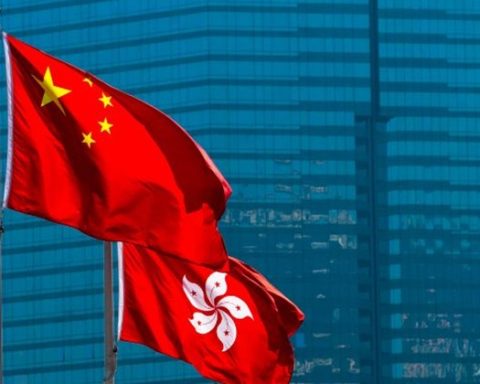
The interview then moved to China, a central focus of the Trump administration’s foreign policy. Mounk raised questions about Trump’s seemingly contradictory stance on China: on one hand, the president has pursued aggressive trade policies aimed at countering China’s economic influence; on the other, he has at times appeared more conciliatory, especially in relation to specific Chinese companies, such as ByteDance and its app, TikTok.
Fukuyama acknowledged the contradiction in Trump’s approach to China, noting that while Trump often portrayed China as America’s chief rival, there was a surprising flexibility in his dealings with Beijing. “You have this potential threat to intervene that there’s no consensus over,” Fukuyama said, referring to Taiwan. He argued that, despite the president’s occasional support for Taiwan, there was no clear indication that Trump would be willing to risk American military involvement in a potential conflict with China over the island.
One of the underlying tensions in the U.S.-China relationship is the notion of “sphere of influence.” Trump, Fukuyama argued, views the world through a lens of territorial control and influence, which often leads to contradictory actions. For instance, while Trump has been tough on China in trade and technology policy, he has also made concessions, as seen in his approach to TikTok. This inconsistent messaging has left observers uncertain about the administration’s long-term strategy for dealing with China.
The Global Fallout: Is the U.S. Losing Its Moral Authority?
As the conversation concluded, Fukuyama raised an important point about the global consequences of U.S. actions under Trump. He argued that the U.S., by pursuing unilateral and aggressive policies—such as the potential annexation of Greenland—could risk losing its moral authority in international relations. He predicted that countries in the Global South, such as India, Brazil, and South Africa, would likely condemn any attempt by the U.S. to assert control over Greenland or similar territories. The U.S. would find itself increasingly isolated, Fukuyama warned, with no support from key global players.
This loss of moral authority would have profound implications for the U.S. as a global leader, particularly in its relationships with authoritarian regimes and emerging powers. As Fukuyama put it, “The U.S. would not get any support, it’d get global condemnation.”
In this thought-provoking interview, Yascha Mounk and Francis Fukuyama shed light on the far-reaching consequences of the Trump administration’s executive orders, foreign policy decisions, and ideological shifts. Whether examining the growing reliance on executive power, the pursuit of territorial control, or the complexities of international diplomacy, it is clear that Trump’s actions will continue to shape the future of both U.S. governance and its role on the global stage.