Turkey, Saudi Arabia and Pakistan are expected to sign a trilateral defence pact at a summit in Jeddah on Friday, according to information obtained by Agence France-Presse (AFP) from Saudi military and government sources, in a move that reflects growing regional security concerns following the conflict involving Iran.
The meeting is expected to bring together Turkish President Recep Tayyip Erdoğan, Saudi Crown Prince Mohammed bin Salman and Pakistani Prime Minister Shehbaz Sharif. According to the sources, the three leaders are due to formalise a joint security agreement during their talks in the Saudi Red Sea city.
Although Saudi authorities have not officially disclosed the agenda for the summit, military and government sources cited by AFP said the signing of the defence pact is expected to be the meeting’s principal outcome.
According to the same sources, the recent conflict involving Iran and its wider regional and global implications have accelerated plans for the agreement. A Saudi military source told AFP that discussions on the proposed pact had been under way for some time but that recent developments in the region had significantly hastened the process.
“The initiative had been under discussion for some time, but recent events in the region have accelerated it,” the source said.
The summit takes place against the backdrop of diplomatic efforts to ease tensions between the United States and Iran. Pakistan has sought to encourage both sides to resume negotiations, positioning itself as a facilitator of renewed dialogue.
Pakistani Prime Minister Shehbaz Sharif and Pakistan’s Chief of Army Staff, General Asim Munir, travelled to Saudi Arabia on Thursday for discussions ahead of the summit. Later that evening, the Turkish presidency announced Erdoğan’s visit to Saudi Arabia at short notice, confirming his participation in Friday’s meeting.
The regional security discussions are also closely linked to developments surrounding the Strait of Hormuz, one of the world’s most strategically important maritime chokepoints for global oil and natural gas shipments.
According to Iranian officials, Iran and Oman have recently agreed on a maritime route intended to allow ships to pass safely through the largely blocked waterway. Pakistan has expressed hope that the arrangement could also create conditions for renewed negotiations between Washington and Tehran.
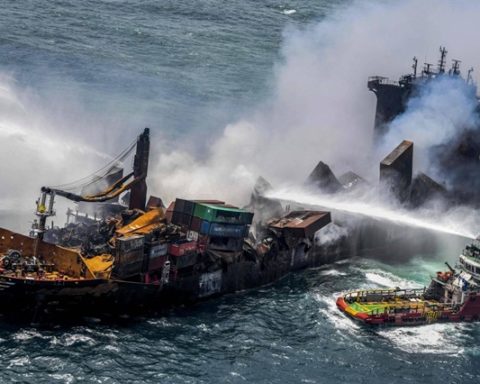
The Strait of Hormuz has remained effectively closed for several months amid heightened regional tensions. Iranian forces have reportedly laid mines in parts of the waterway, while several attacks on commercial vessels have further disrupted maritime traffic.
The continued disruption has raised international concerns over energy security and the stability of global shipping routes. The waterway is regarded as one of the world’s most critical transit corridors for crude oil and liquefied natural gas exports.
US President Donald Trump has repeatedly warned Tehran that it could face severe military action if the Strait of Hormuz is not reopened. On Thursday, he again expressed optimism that access to the waterway would be restored soon.
“The talks are going very well,” Trump told reporters at the White House, adding that he was personally involved in the negotiations.
While details of the proposed defence pact have not been made public, its anticipated signing reflects increasing strategic coordination among Turkey, Saudi Arabia and Pakistan at a time of heightened geopolitical uncertainty across the Middle East. The agreement is expected to coincide with ongoing diplomatic efforts aimed at reducing tensions, safeguarding vital maritime routes and responding to the wider security consequences of the conflict involving Iran.
If concluded as expected, the accord would mark a significant step in defence cooperation among the three regional powers, underscoring the growing importance of collective security arrangements as governments seek to address evolving military, political and economic challenges across the region.