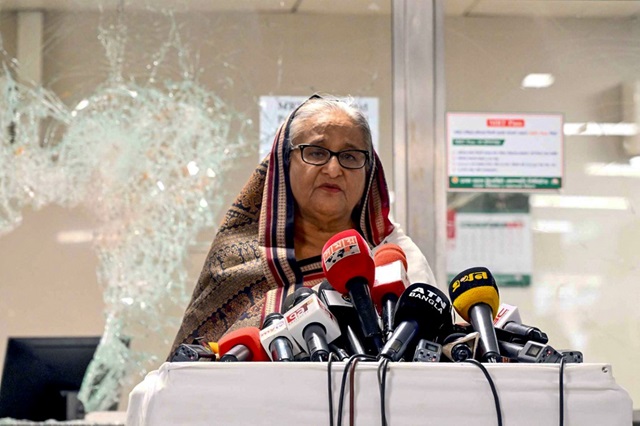
Dhaka, Bangladesh – Prime Minister Sheikh Hasina has reportedly fled her palace amidst escalating protests demanding her resignation. A source informed AFP that Hasina has relocated to a ‘safer place’ as jubilant crowds filled the streets of Dhaka, celebrating and even dancing atop a tank.
Reports from Bangladeshi television suggest that Prime Minister Hasina has resigned and left Dhaka. Meanwhile, her son, Sajeeb Wazed Joy, has called on the country’s security forces to prevent any power takeover, emphasising their duty to uphold the constitution and safeguard the nation.
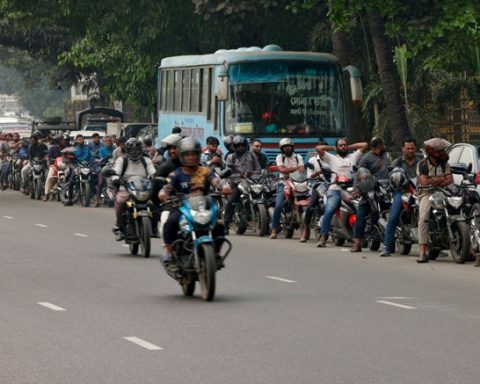
Protests, initially sparked by opposition to civil service job quotas, have escalated into broader demands for Hasina’s resignation. Demonstrators, undeterred by a curfew, have clashed with security forces in what has become the deadliest day of unrest since the demonstrations began last month. An estimated 400,000 protesters took to the streets, according to The Business Standard newspaper.
Sunday saw intense violence with at least 94 people killed, including 14 police officers. Protesters and government supporters engaged in violent clashes, and security forces reportedly opened fire. The total death toll since the protests began in early July has reached at least 300, based on an AFP tally.
The United Nations has condemned the violence, with rights chief Volker Turk urging an end to the bloodshed. Ali Riaz, a professor at Illinois State University and expert on Bangladesh, described the protests as an “unprecedented popular uprising” and noted the unparalleled ferocity of state actors and regime loyalists.
Protesters in Dhaka were seen dismantling a statue of Hasina’s father, Sheikh Mujibur Rahman, the country’s independence leader, in a symbolic act of defiance. Videos on social media, verified by AFP, captured the scene of protesters smashing the statue with hammers.
Bangladesh’s army chief, Waker-Uz-Zaman, is set to address the nation, a move likely to impact the unfolding political crisis. Previously, the military declared an emergency in January 2007 following widespread unrest, installing a caretaker government for two years.
Former army chief General Ikbal Karim Bhuiyan has demanded the government withdraw troops and allow protests to continue. He stressed that those responsible for the nation’s misery must be held accountable.
The ongoing protests have united people from various sectors of society, including celebrities and ordinary citizens, against Hasina’s rule. Her administration, accused of using state institutions to maintain power and suppress dissent, faces mounting pressure as demonstrations continue despite recent concessions on civil service quotas.