The United States and Russia are on the brink of a new nuclear arms race unless a last-minute agreement is reached before the expiration of the New START treaty on February 5, Reuters reports. If the treaty lapses, it would mark the first time in more than five decades that there are no limits on the world’s two largest nuclear arsenals.
New START, signed in 2010 by then U.S. President Barack Obama and Russian President Dmitry Medvedev, caps each side’s deployed strategic warheads at 1,550 and limits the number of delivery systems to 700. It also includes verification and data-sharing mechanisms designed to reduce the risk of miscalculation.
Russian President Vladimir Putin has proposed extending the treaty’s existing limits for one year to allow time for negotiations on a replacement. However, U.S. President Donald Trump has not formally responded and has indicated he may allow the treaty to expire, saying earlier this month that “if it expires, it expires,” while arguing that any replacement should be broader and better.
According to Reuters, divisions are emerging within the United States over how to proceed. Some lawmakers and defense officials argue that rejecting Putin’s offer would give Washington freedom to expand its nuclear arsenal to counter both Russia and China, whose nuclear capabilities are growing rapidly outside any arms control framework.
Trump has said he wants to pursue “denuclearisation” with both Russia and China, but Beijing has rejected calls to join trilateral talks, arguing that its arsenal—estimated at about 600 warheads—is far smaller than those of Washington and Moscow. The Pentagon estimates China could possess more than 1,000 nuclear warheads by 2030.
Arms control experts warn that the collapse of New START could destabilize global security. Without treaty limits, both sides would be forced to assume worst-case scenarios about the other’s capabilities, potentially triggering a self-sustaining arms race. “If you’ve got an unregulated arms race, things will get quite destabilising,” former Russian arms negotiator Nikolai Sokov told Reuters.
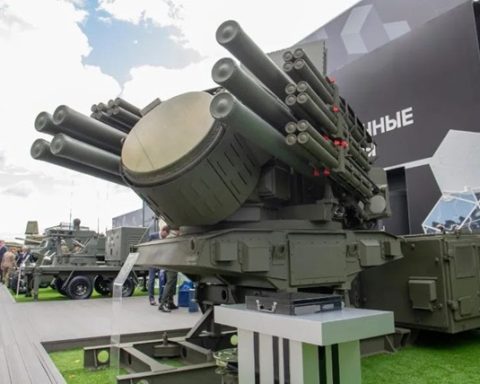
Replacing New START would be particularly challenging. Russia has developed new nuclear-capable weapons systems, including hypersonic missiles and underwater nuclear torpedoes, that fall outside the treaty’s scope. At the same time, Trump has announced plans for a space-based missile defense system that Moscow views as a threat to strategic balance.
A bipartisan U.S. congressional commission warned in 2023 that Washington now faces an “existential challenge” from two nuclear peers simultaneously. Some former officials say the United States could significantly increase its deployed warheads by reloading missiles and returning bombers to nuclear roles, potentially doubling the number allowed under New START.
Others caution against such a move. Senator Ed Markey, a leading arms control advocate, told Reuters that exceeding treaty limits would only prompt Russia to respond in kind and encourage China to accelerate its own buildup. “Ultimately, Trump will have started a new arms race that we do not need, nor can we win,” he said.
The financial stakes are also high. The Congressional Budget Office estimates that modernizing and maintaining U.S. nuclear forces will cost nearly $1 trillion over the next decade, even without expanding the arsenal.
The White House said the president would decide the path forward “on his own timeline.” Meanwhile, Medvedev warned that Russia is prepared for any outcome, saying new threats to its security would be met with a firm response.
As the treaty deadline approaches, the absence of a clear agreement raises the prospect that the world’s two largest nuclear powers could soon operate without any formal constraints on their most destructive weapons, a scenario many analysts fear would revive the dangers of the Cold War era.