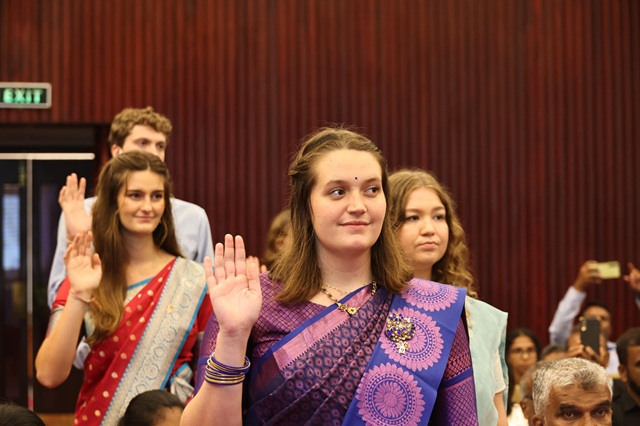
Nineteen U.S. Peace Corps Volunteers took their oaths today in Colombo, marking the second group of Volunteers to return to Sri Lanka since the program’s relaunch last year. The ceremony highlighted the growing partnership between the United States and Sri Lanka and their mutual dedication to education and cultural exchange.
The Volunteers, who arrived in Sri Lanka in September 2024, underwent 12 weeks of rigorous training in Sinhala or Tamil, Sri Lankan culture, and teaching techniques. Over the next two years, they will collaborate with Sri Lankan teachers and school principals in the Central and Uva provinces to enhance English education in rural schools.
U.S. Ambassador to Sri Lanka commended the Volunteers for their adaptability and linguistic progress. “The Peace Corps program exemplifies people-to-people diplomacy. These Volunteers reflect the U.S. commitment to investing in youth and strengthening future partnerships. Together with Sri Lankan communities, they are advancing education, fostering mutual understanding, and building bridges for a brighter future,” the Ambassador stated.

Nimali Baduraliya, Director of the English & Foreign Languages Department at the Ministry of Education, also spoke at the event. “Our collaboration with the Peace Corps enhances English education, creating opportunities for all Sri Lankans. I encourage these Volunteers to embrace the cultural exchange opportunities ahead as they contribute to our schools and communities,” she said. The event also featured remarks by Dr. Nishadh Handunpathirana, Additional Secretary of the Ministry of Education.
The Peace Corps program in Sri Lanka has a history dating back to 1962, with over 500 Volunteers serving until 1998 in areas like education, health, and agriculture. After a two-decade pause, the program was officially relaunched in 2018, focusing on English language education in rural areas to promote inclusivity and foster international ties.
Globally, the Peace Corps has supported over 240,000 Volunteers in 144 countries since its founding in 1961. By engaging in locally prioritized projects, the program continues to strengthen communities, promote cross-cultural understanding, and nurture future leaders.