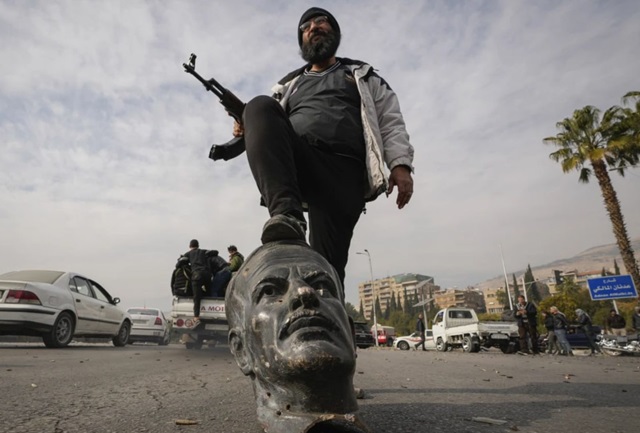
In a surprising move, the United States has begun sharing classified intelligence with Syria’s new government, led by Hayʼat Tahrir al-Sham (HTS), a group previously designated as a terrorist organization by Washington. This development follows HTS’s recent overthrow of the Assad regime and reflects rising concerns about the potential resurgence of the Islamic State (ISIS).
According to The Washington Post, U.S. intelligence played a crucial role in thwarting a planned ISIS attack on the Shiite shrine of Sayyida Zainab near Damascus earlier this month. This intelligence-sharing initiative reportedly began two weeks after HTS came to power on December 8, 2024. While the arrangement underscores mutual interests in preventing ISIS from regaining strength, U.S. officials were careful to note that this does not signal an endorsement of HTS as a legitimate governing entity.
“This is the right, prudent, and appropriate thing to do, given the credible and specific information about threats from ISIS,” said a former U.S. official, who spoke on condition of anonymity due to the sensitivity of the matter. The intelligence exchanges have been conducted through direct channels between U.S. intelligence officials and HTS representatives, both in Syria and a third country.
HTS’s Rise and U.S. Caution
Hayʼat Tahrir al-Sham, once an al-Qaeda affiliate, publicly severed ties with the terror network in 2017. Under the leadership of Ahmed al-Sharaa, also known by his former nom de guerre Abu Mohammed al-Jolani, HTS has sought to distance itself from its extremist origins. Sharaa has made efforts to present a moderate image, pledging to protect Syria’s religious minorities and seeking diplomatic engagement with global leaders.
Despite these overtures, HTS retains its terrorist designation, and its leadership structure includes individuals linked to its militant past, raising concerns about its long-term intentions. Former officials remain cautious, noting the inclusion of foreign fighters in key government positions, including Chechen nationals in the revamped Defense Ministry.
Intelligence and Security Cooperation
The U.S. intelligence collaboration with HTS was driven by the longstanding “duty to warn” policy, which obligates U.S. agencies to alert intended victims of credible threats, regardless of political alignments. Similar warnings have been shared with Russia and Iran in the past, though these were not always heeded.
The Islamic State, though weakened since its territorial defeat, maintains a foothold in Syria’s southern desert. In response, the U.S. military has conducted airstrikes targeting ISIS positions and continues to maintain approximately 2,000 troops in eastern Syria. However, the future of this military presence remains uncertain as HTS calls for the withdrawal of all foreign forces, aligning with President Donald Trump’s stated desire to reduce U.S. involvement in the region.
Concerns About HTS’s Capabilities
Counterterrorism experts and former officials have expressed skepticism about HTS’s ability to effectively contain ISIS. “HTS and ISIS have been at each other’s throats literally for a decade,” said Charles Lister of the Middle East Institute, noting the groups’ deeply entrenched hostility. However, he questioned whether HTS possesses the capacity to neutralize the ISIS threat fully.
As HTS works to consolidate its power, the U.S. approach remains one of cautious engagement, aimed at preventing an ISIS resurgence while navigating the complexities of dealing with a group still regarded with suspicion.