


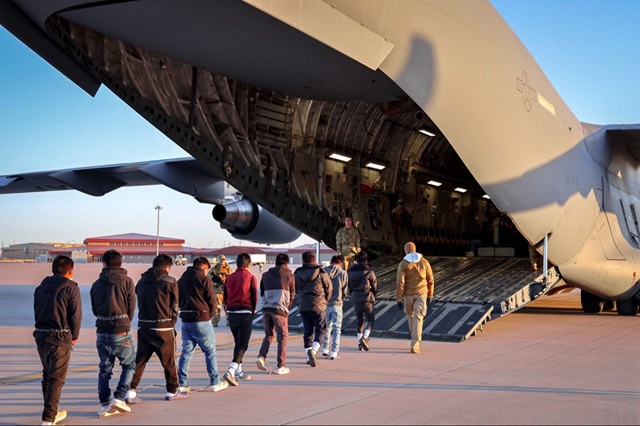
The United States and Colombia have resolved a growing trade dispute stemming from Colombia’s refusal to accept two military flights carrying deported Colombian migrants. Following tense negotiations, the Colombian government has agreed to accept all deportees from the US, including those transported on US military planes, effectively ending the standoff between the two nations.
The White House, claiming victory, announced that Colombia had agreed to President Trump’s terms, which included the unrestricted acceptance of all deported migrants returned from the US, even on military aircraft. In response, Colombian Foreign Minister Gilberto Murillo confirmed that the country would continue receiving deportation flights, and he is expected to travel to the US for further high-level discussions on the matter.
The dispute began when Colombia prohibited two US Air Force C-17 planes, carrying 160 migrants from California, from landing in Bogotá. Just after take-off, the planes were forced to turn back, triggering a diplomatic crisis. Colombian President Gustavo Petro quickly responded, stating that he had ordered the return of the planes because “a migrant is not a criminal and must be treated with dignity.”
This move surprised many, as Colombia had accepted around 120 deportation flights under the Biden administration in 2023, though none of those flights involved military aircraft. Petro’s decision marked a significant departure from previous policy and escalated tensions between the US and Colombia, leading President Trump to impose retaliatory tariffs. In response to Colombia’s refusal, Trump enacted a 25% tariff on all Colombian goods entering the US, threatening to increase the tariff to 50% within a week. He also imposed visa restrictions on Colombian officials and other punitive measures. Colombia, in turn, retaliated by imposing a 25% tariff on all US imports.
The US and Colombia have now de-escalated the situation, with the White House holding Trump’s tariff orders “in reserve” and not signing them. Karoline Leavitt, the White House press secretary, stated that the US would maintain visa restrictions and enhance customs inspections of Colombian goods until the first deportation flight was successfully completed.
Colombian President Petro, who has faced pressure from his country’s left-wing factions, expressed indifference toward the visa restrictions, stating that he “doesn’t like travelling to the US much” and criticized Trump’s environmental policies. He also criticized US oil consumption, claiming it would contribute to the destruction of the planet.
The agreement brings some relief to Colombian exports, including oil, coffee, cut flowers, and precious stones, which are key trade goods for Colombia with the US. However, the deportation dispute has highlighted the growing tensions surrounding US immigration policies, with other Latin American nations, such as Brazil, expressing concern over the treatment of deported migrants. Brazil recently called for clarification from the US government regarding the “degrading treatment” of migrants, after disturbing images surfaced showing deportees arriving in Brazil handcuffed.










