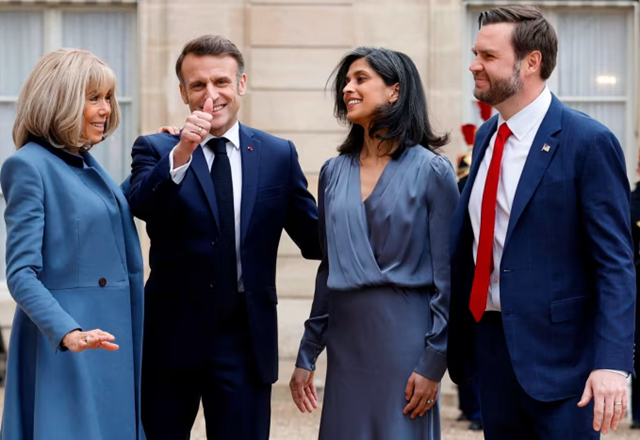
The Financial Times has reported that the US and the UK refused to sign a joint communique on the safe and ethical development of artificial intelligence (AI), which was endorsed by 60 nations at a recent summit. This decision signals a shift in AI policy under the Trump administration, emphasizing innovation over international regulatory agreements.
US Vice President JD Vance reaffirmed America’s commitment to leading in AI development while cautioning against stringent regulations that could stifle technological progress. Speaking at the AI Action Summit in Paris, Vance stated, “The Trump administration will ensure that the most powerful AI systems are built in the US, with American-designed and manufactured chips.”
As part of the administration’s “America First” approach, the US refused to sign the summit’s communique, which called for AI to be “open, inclusive, transparent, ethical, safe, secure, and trustworthy.” The UK similarly withheld its signature, with sources indicating concerns that the language of the agreement was “too restrictive.” This marks a departure from previous AI summits, where both nations had endorsed similar declarations.
The US stance on AI comes amid increasing competition with China in areas such as chip manufacturing, foundational AI models, and AI-powered supercomputing. The emergence of new, cost-effective AI models from Chinese research labs has raised concerns in Silicon Valley, where companies like OpenAI had previously believed they maintained a technological lead.
Europe, meanwhile, is striving to establish its own AI ecosystem to reduce dependence on both the US and China. At the summit, French President Emmanuel Macron announced €200 billion in planned investments for data centers and computing clusters to support AI development across the continent.
Vance, while open to collaboration with allies, made it clear that the US would set its own terms. “America wants to partner with all of you, but to create that kind of trust, we need international regulatory regimes that foster the creation of AI technology rather than strangle it,” he said.
He also warned against AI partnerships with “authoritarian regimes” in a thinly veiled reference to China, citing past examples of subsidized technology exports such as CCTV surveillance systems and 5G networks. “Partnering with them means chaining your nation to an authoritarian master that seeks to infiltrate, dig in, and seize your information infrastructure,” Vance declared.
While China, India, and Germany endorsed the AI declaration, the US objected to language promoting “multilateralism and international collaboration.” Concerns were also raised about Current AI, a foundation launched by France at the summit, with US officials suggesting it might be used to disproportionately fund French-speaking countries.
Keegan McBride, a lecturer at the Oxford Internet Institute specializing in AI geopolitics, described Vance’s speech as “a 180-degree turnaround from what we saw with the Biden administration.” Frederike Kaltheuner, an expert at the AI Now Institute, remarked that the summit aimed to present a European alternative to US-led AI development but noted that Vance’s remarks undercut these efforts. “Vance just dumped water all over that,” McBride added. “It was like, ‘Yeah, that’s cute. But guess what? You know you’re actually not the ones who are making the calls here. It’s us.’”